Last updated Jul 10, 2026
In the rapidly densifying urban landscape of Miami-Dade County, particularly within the 33145, 33134, and 33135 ZIP codes, the utilization of self-storage has transitioned from a temporary logistical bridge used solely during relocation to a semi-permanent extension of the residential footprint. This shift is not merely a reflection of consumer accumulation but a structural necessity driven by a confluence of architectural, climatic, and socioeconomic factors unique to the Coral Way corridor and its adjacent neighborhoods: Shenandoah, Silver Bluff, and the northern fringe of Coral Gables.
For residents of this specific locale, the decision to engage a storage provider is rarely discretionary. It is often necessitated by the "Closet Deficit" inherent in the area's historic housing stock. The Mediterranean Revival and Mission-style bungalows that define Shenandoah and Silver Bluff—largely constructed between the 1920s and 1940s—were designed for a pre-consumerist era, featuring closets that rarely exceed 24 inches in depth and lack the cubic volume required by modern households. Conversely, the modern influx of high-density vertical living in nearby Brickell and "The Roads" area has introduced a different constraint: square-footage premiums that make storing seasonal items, such as hurricane shutters or holiday decor, within the residence economically inefficient.
This report serves as an exhaustive, non-salesy operational guide for evaluating SecureSpace Self Storage at 2811 Coral Way. Beyond a mere facility review, this document functions as a logistical manual for navigating the specific challenges of storing possessions in South Florida's high-humidity environment, managing traffic patterns along the congested Coral Way artery, and understanding the nuances of storage contracts in the Miami market. The analysis synthesizes data from traffic patterns, meteorological records, and architectural analysis to provide a decision-making framework that goes beyond the brochure, addressing the "in-between" questions—from the turning radius of moving trucks on median-divided avenues to the psychrometrics of mold prevention in climate-controlled environments.
To understand the logistical viability of SecureSpace Coral Way, one must first analyze its position within the greater Miami arterial network. The facility is located at 2811 Coral Way, Miami, FL 33145, situated on the north side of the street, nestled between the major intersections of SW 27th Avenue and SW 22nd Avenue. This placement is not accidental but strategic, placing the facility at the nexus of several distinct residential zones: the historic single-family grids of Silver Bluff and Shenandoah to the south and east, the dense multi-family zones of Little Havana to the north, and the affluent, strictly zoned enclave of Coral Gables to the west.
The Coral Way corridor itself functions as a primary east-west connector, relieving pressure from the often-gridlocked SW 8th Street (Calle Ocho) and US-1 (Dixie Highway). For residents of Coral Gables (33134) or West Miami, the facility acts as an eastern outpost before hitting the heavy density of the Brickell/Downtown interface. For residents of Brickell (33129/33131), it serves as a "back-of-house" logistical hub, accessible via a short 10-15 minute drive against the grain of typical rush hour traffic, avoiding the higher price points of storage facilities located directly within the urban core.
One of the most understated but operationally critical features of this specific location is the configuration of the road median. Coral Way is a historic scenic highway, characterized by a wide, landscaped median often populated with mature Banyan trees. In many stretches of this road, the median is continuous for multiple blocks, forcing drivers to make U-turns at major signalized intersections to access businesses on the opposite side of the street.
However, 2811 Coral Way benefits from a significant logistical advantage: the presence of a median cut directly accessible to the facility or in very close proximity. This structural detail profoundly impacts the move-in experience, particularly for non-commercial drivers operating rented box trucks or towing trailers.
Westbound Access: Traffic heading west on Coral Way (originating from Brickell, I-95, or US-1) allows for a straightforward right turn directly into the facility's driveway. This entry is generally unobstructed, though drivers must be mindful of pedestrians utilizing the sidewalks that connect the adjacent commercial plazas.
Eastbound Access: Traffic heading east (originating from Coral Gables, SW 27th Ave, or the Palmetto Expressway) must navigate across the median. The facility's location allows for a left turn capability. This is a critical differentiator; without this median cut, a driver would be forced to proceed to the heavily congested intersection of SW 22nd Avenue or SW 17th Avenue to perform a U-turn—a maneuver that is technically difficult and statistically hazardous in a 26-foot moving truck with limited rear visibility.
For residents of Coral Gables (33134), this accessibility means they can utilize the facility without ever traversing the chaotic US-1/SW 27th Ave interchange, a notorious bottleneck in Miami traffic. They can simply travel east down the scenic, tree-lined Coral Way, execute the left turn, and enter the facility, saving significant time and reducing the stress associated with navigating heavy commercial traffic zones.
While the Banyan trees that line Coral Way are an aesthetic hallmark of the neighborhood, they present a tangible physical constraint for storage logistics. These massive trees, some dating back nearly a century, have sprawling canopies that often extend over the roadway, particularly the right-hand lanes.
Standard passenger vehicles are unaffected, but rental moving trucks—specifically the 15-foot, 20-foot, and 26-foot models which can reach heights of 12 to 13 feet—face a risk of "roof strikes" if the driver hugs the curb too closely. Drivers approaching 2811 Coral Way from either direction are advised to maintain a center-lane position as long as legally possible before merging into the turn lane. The "crown" of the road (the center) typically offers the highest vertical clearance. When executing the final turn into the facility, drivers should take the turn wide to avoid the lower-hanging branches that often encroach near the curb cuts. Failure to account for this vertical constraint is a common cause of damage to rental truck roofs, a cost rarely covered by standard collision damage waivers.
Navigating to 2811 Coral Way requires local knowledge of traffic rhythms, which are heavily influenced by school zones and commuter flows. The facility is located approximately 0.6 miles from Silver Bluff Elementary School, situated to the southeast. While not immediately adjacent, the "ripple effect" of school traffic significantly impacts the surrounding grid.
On weekdays, traffic on Coral Way and the residential feeder streets (SW 22nd St, SW 21st Ter) thickens significantly between 7:30 AM – 8:30 AM (drop-off) and 2:00 PM – 3:30 PM (pickup). During these windows, the right-hand lanes of Coral Way often slow due to parents queuing or turning into side streets. Prospective tenants planning a move-in on a weekday should aim for the "mid-day lull" between 10:00 AM and 1:30 PM. This window avoids the school congestion and the lunch rush associated with the nearby Miracle Marketplace and Miracle Mile dining districts.
Furthermore, the commuter tide on Coral Way follows a predictable tidal pattern. The morning rush (7:00 AM - 9:30 AM) sees heavy eastbound flow toward the financial centers of Brickell and Downtown Miami. During this time, exiting the facility and attempting to turn left (West) is relatively easy, but entering from the West (turning left across traffic) can be difficult due to the sustained volume of oncoming cars. Conversely, the evening rush (4:30 PM - 7:00 PM) sees heavy westbound flow toward the residential suburbs. Exiting the facility and attempting to turn left (East) becomes nearly impossible without aggressive driving. The recommended exit strategy during evening peak hours is to turn right (West) and perform a U-turn at a signalized intersection further down, or navigate the residential side streets to loop back to a controlled intersection.
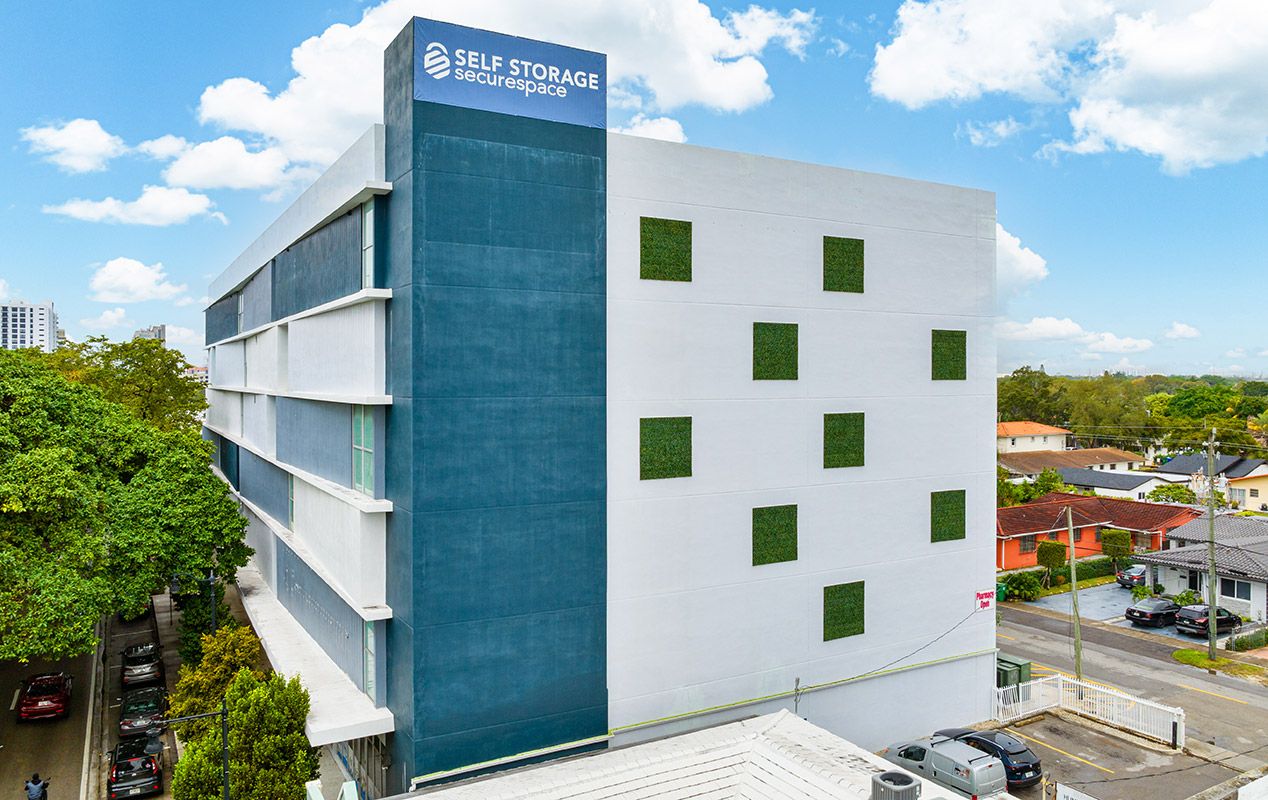
SecureSpace Coral Way operates as a modern, multi-story structure. This vertical orientation is a departure from the sprawling, single-story drive-up facilities often found in Miami's outer suburbs like Kendall or Doral. While verticality allows for climate-controlled density in a prime urban location, it introduces the logistical factor of "Vertical Latency."
Tenants utilizing units on upper floors must account for the time required to move goods from the loading bay to the unit via elevator. The facility is equipped with extra-large elevators specifically designed to accommodate furniture dollies, mattress carts, and bulk items. These elevators are a critical infrastructural component; however, during peak activity windows—typically Saturday mornings and the first/last days of the month—demand for these elevators can create bottlenecks. A move that might take two hours at a drive-up facility could extend to three hours here due to the wait times for elevators and the loading/unloading cycles of other tenants.
Prospective tenants should categorize their storage needs: highly active inventory (items needed weekly) is best situated on the ground floor if budget permits, while deep storage (seasonal items, archives) is perfectly suitable for upper floors where the added latency is a negligible inconvenience.
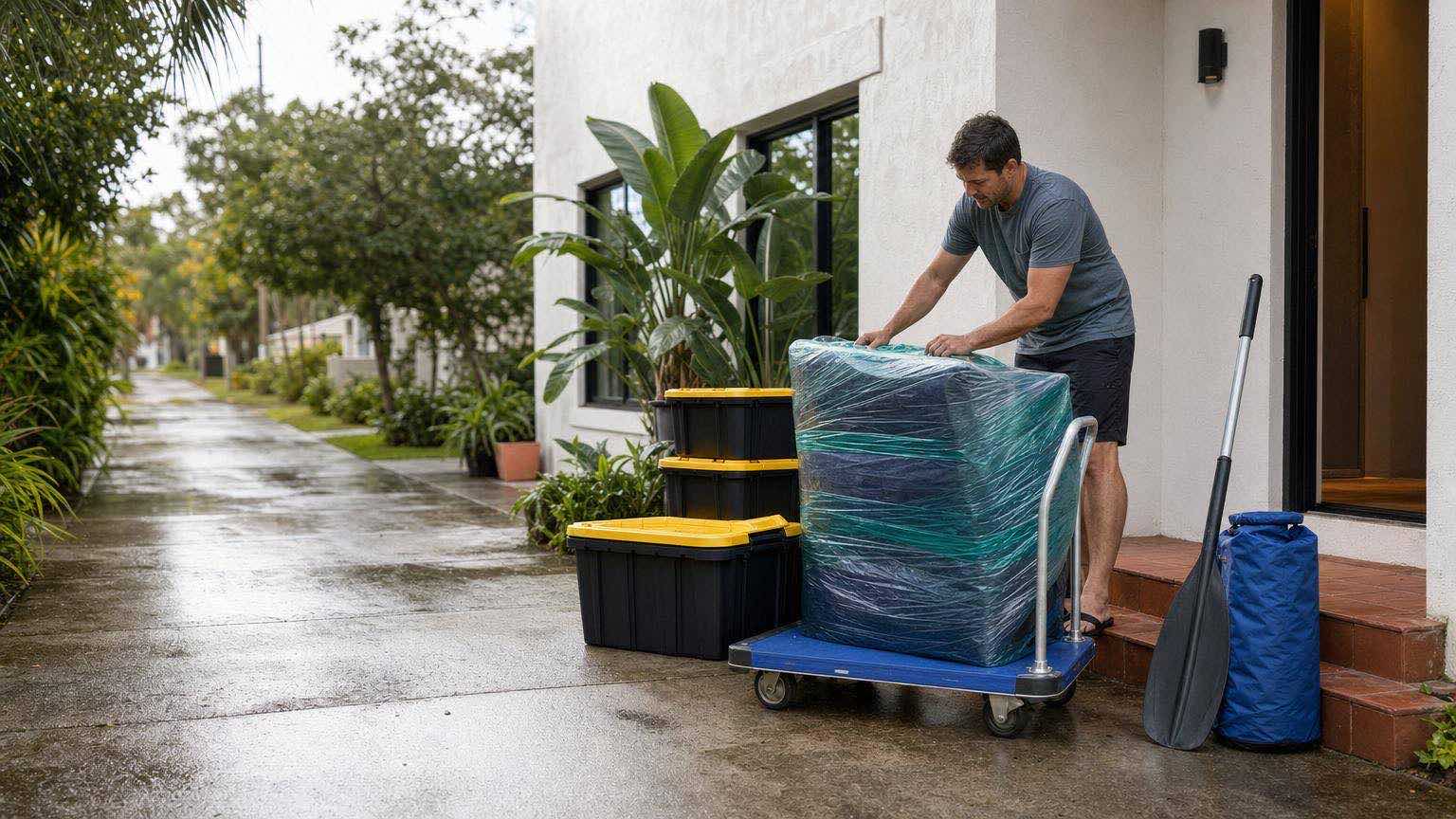
One of the facility's most significant architectural assets is the covered loading area. In Miami's tropical climate, where convective thunderstorms occur almost daily from June through September, typically in the afternoons, a covered loading bay is not a luxury—it is an operational requirement.
This protected zone allows tenants to back their vehicles out of the direct sunlight and rain, ensuring that moisture-sensitive items like mattresses, upholstered furniture, and electronics are not exposed to precipitation during the critical transition from vehicle to building. It also protects the tenants themselves from the intense solar radiation prevalent in South Florida. The availability of carts and dollies in this loading area further facilitates the movement of goods, reducing the physical strain of carrying heavy boxes across the threshold. Tenants are advised to return these carts to the loading bay immediately after use to maintain ecosystem flow, rather than sequestering them inside their units while unpacking.
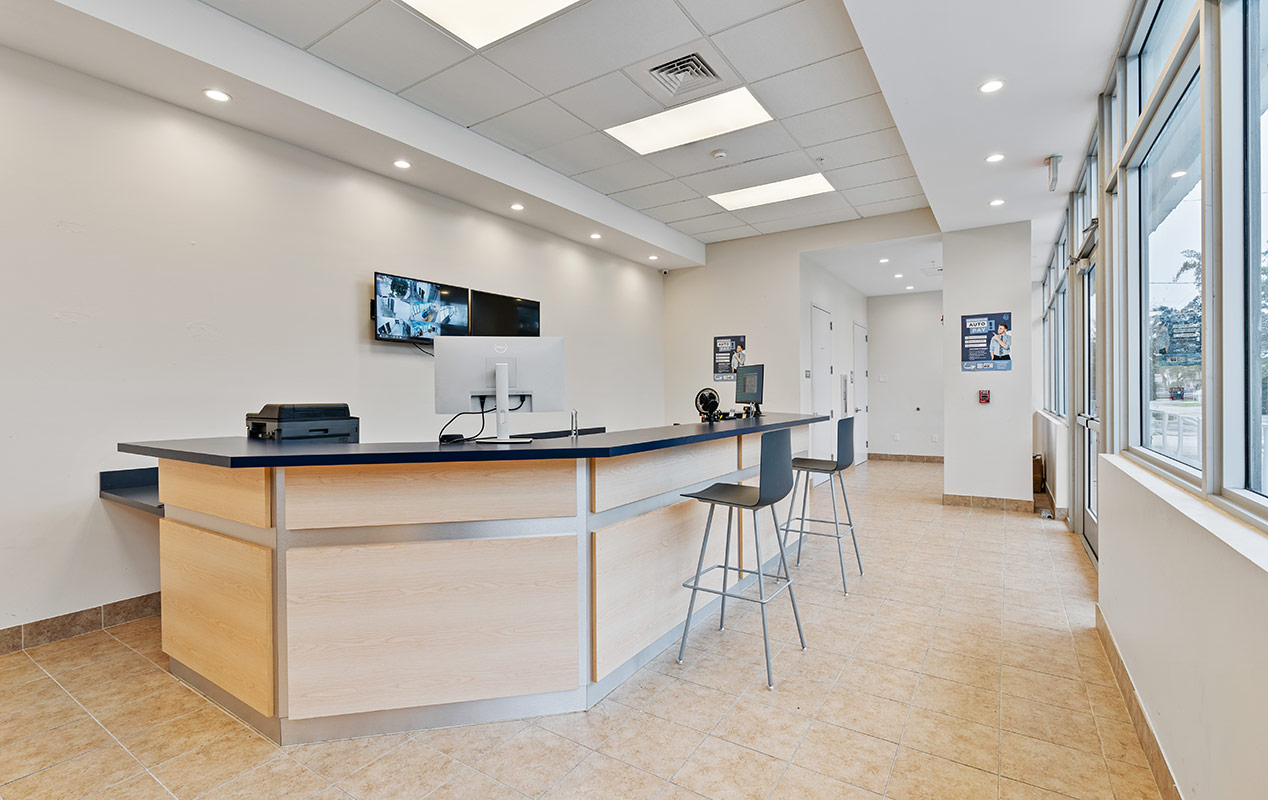
Security in an urban environment like the Coral Way corridor requires a layered approach that moves beyond simple locks. The facility employs a standard but robust suite of security technologies designed to deter unauthorized access and monitor internal activity.
Digital Surveillance: Continuous digital video recording covers common areas, entry points, hallways, and elevator lobbies. This provides a forensic record of activity and acts as a deterrent to casual theft or vandalism.
Access Control: Entry to the facility is governed by controlled access gates and keypad entry systems. This ensures that only current tenants with valid credentials can access the loading areas and elevator lobbies. This access control extends to the elevators themselves in many multi-story facilities, restricting access to specific floors to prevent wandering.
Motion Guard Technology: The facility integrates "Motion Guard" (StorageDefender) technology in select units. This represents a shift toward "active security." Unlike passive cameras that record a crime, Motion Guard acts as an individual alarm system for the specific unit, sending an instant text message to the tenant if motion is detected inside their unit when they are not present. This feature is particularly valuable for business tenants storing high-value inventory or homeowners storing sensitive personal documents.
Lighting and Visibility: The facility is described as "well-lit" and "immaculate". High-lumen LED lighting in hallways and loading areas is a critical safety feature for users visiting during the early morning (access starts at 6:00 AM) or late evening (access ends at 10:00 PM), reducing the "shadow zones" that can make urban storage facilities feel unsafe.
The facility offers a diverse mix of unit sizes, ranging from small 5x5 lockers to expansive 10x30 units. This variety allows tenants to tailor their rental to their specific "Closet Deficit."
Locker Units: These smaller spaces (often 5x4 or 5x5) are ideal for storing document boxes, seasonal wardrobes, or golf clubs—items that clutter a Brickell condo but don't require a full room.
Large Capacity: The 10x15 and 10x20 units are sized to accommodate the contents of a standard 2-3 bedroom home, making them the target inventory for Shenandoah homeowners undergoing major renovations.
Student Storage: Recognizing the proximity to the University of Miami (via Coral Gables) and other educational institutions, the facility markets specific solutions for students needing summer storage for dorm contents.
In the specific climate of Miami-Dade County, "Climate Control" is not a luxury feature; it is a fundamental preservation necessity. The ambient conditions in ZIP code 33145 pose a specific, quantifiable biological threat to stored goods that standard "dry storage" cannot mitigate.
Miami operates within a tropical monsoon climate classification. The average Relative Humidity (RH) frequently exceeds 70-75% year-round, spiking significantly higher during the wet season (May through October) and during early morning hours.
The "Danger Zone" for organic materials is scientifically defined by the growth thresholds of mold and mildew. Mold spores, which are ubiquitous in the atmosphere, typically begin to colonize organic substrates (wood, paper, leather, cotton, cellulose) when the Relative Humidity of the surrounding air exceeds 60% for prolonged periods (typically 24-48 hours).
It is crucial to distinguish between Temperature and Humidity. A storage unit can be cool (e.g., 70°F) but still dangerously damp if the HVAC system is not actively dehumidifying the air. In fact, cooling air without removing moisture increases its Relative Humidity (because cold air can hold less water vapor than warm air). Therefore, a unit that is merely "Air Conditioned" without humidity regulation can inadvertently create condensation on surfaces—a phenomenon often seen on cold metal surfaces in humid environments.
Research data indicates that Miami's ambient humidity stays above the 60% mold-growth threshold for the vast majority of the year. Without mechanical intervention, any porous material stored in a non-climate-controlled environment in 33145 is statistically likely to develop microbial growth, "foxing" (on paper), or dry rot (on fabrics) within a single wet season.
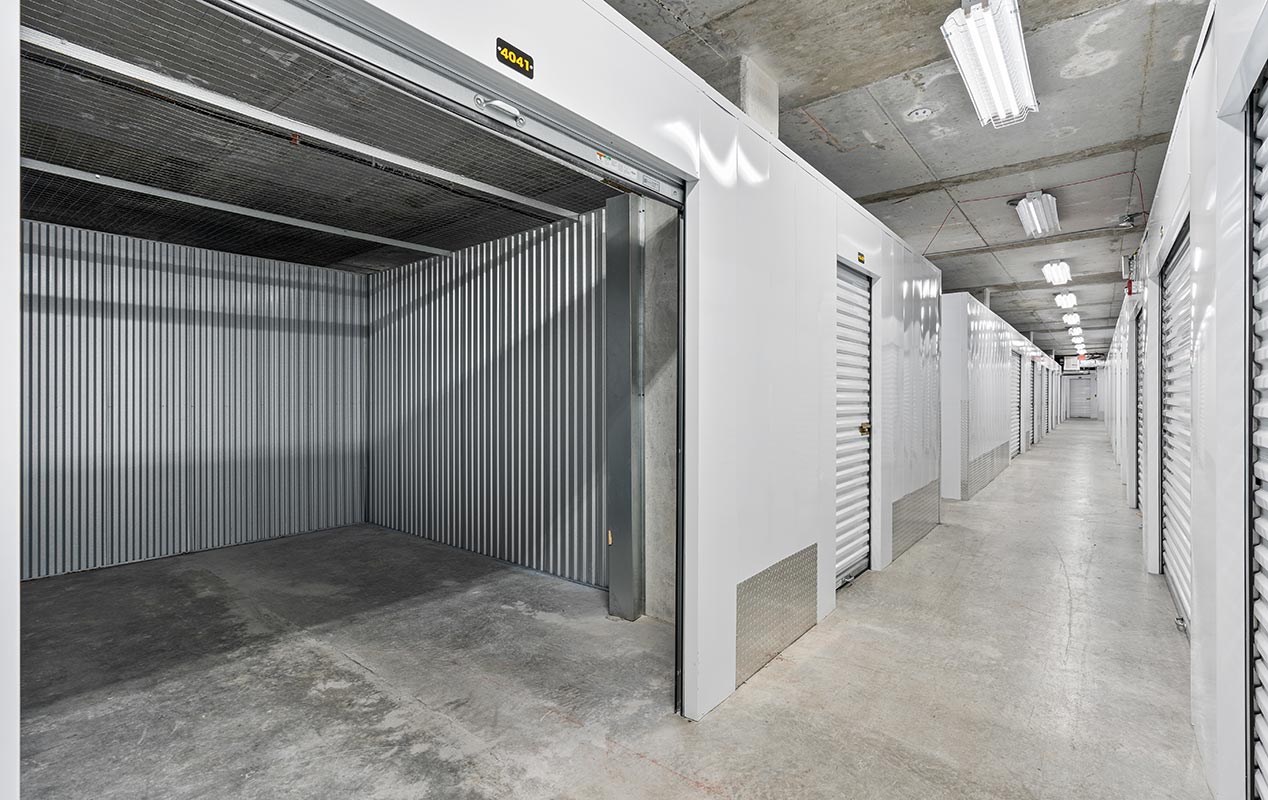
SecureSpace Coral Way advertises and provides climate-controlled units. In the context of this facility, climate control implies a system that regulates temperature within a range typically between 55°F and 80°F, and more importantly, manages humidity levels to keep them below the critical saturation points.
Being a multi-story indoor facility provides an inherent "thermal mass" advantage. Unlike drive-up units where the metal door is directly exposed to the sun—creating wild temperature fluctuations inside the unit (the "oven effect")—indoor units are insulated by the building's envelope. The upper floors are further protected from ground-level moisture migration (rising damp) and pests that primarily traverse the ground perimeter.
The local environmental reality demands specific packing strategies to complement the facility's climate control. Even in a climate-controlled unit, tenants should adopt a "defense-in-depth" approach to preservation.
Leather and Upholstery: Leather is highly hygroscopic (absorbs moisture) and is a prime food source for mold. In Miami, one should never wrap leather furniture in plastic shrink wrap for long-term storage. Plastic traps any residual moisture inside and creates a micro-climate where mold thrives. Instead, utilize breathable cotton covers or moving blankets that allow the leather to "breathe" and equilibrate with the climate-controlled air.
Electronics: Circuit boards and metallic contacts can corrode in high humidity. Storing these items on upper floors, away from any potential ground-level moisture, is a non-negotiable best practice. The stable temperature also protects battery integrity and prevents the warping of plastic chassis components.
Paper and Archives: The "foxing" of paper (the development of reddish-brown spots) is an oxidative process accelerated by humidity and fungal activity. Standard cardboard boxes are porous; they absorb atmospheric moisture and can attract pests like silverfish which feed on the glue. For long-term document storage in Miami, acid-free archival boxes or plastic bins are superior.
The "Plastic Bin" Rule: Research consistently highlights that for Miami storage, clear plastic bins with latching lids are superior to cardboard. Cardboard acts as a sponge for humidity and a nesting material for roaches. Plastic provides a waterproof barrier (crucial if a neighboring unit has a spill) and allows for easy visual inspection of contents without breaking the seal.
The neighborhoods of Shenandoah and Silver Bluff, located immediately to the south and east of the facility, form a primary feeder market for SecureSpace Coral Way. These districts are characterized by a high concentration of historic single-family homes, many built in the "Boom Time" era of the 1920s through the post-war 1940s.
The architectural styles—Mediterranean Revival, Mission, and Bungalow—are aesthetically prized but functionally challenged by modern storage standards. These homes were designed in an era before the proliferation of consumer goods, fast fashion, and big-box retail. Consequently, the bedrooms typically feature closets that are shallow (often only 24 inches deep) and narrow. A standard 1925 Shenandoah bungalow might offer a total of 15-20 square feet of closet space for the entire master bedroom—a fraction of the space found in a modern walk-in closet.
This "Closet Deficit" drives a specific type of storage demand: the "Extension of Home" model. Residents do not use storage here solely for moving; they use small 5x5 or 5x10 units as permanent external walk-in closets. They cycle seasonal wardrobes, holiday decorations, and recreational gear (golf clubs, camping equipment) between the home and the facility, effectively renting the closet space their historic home lacks.
The desirability of Shenandoah and Silver Bluff has led to a wave of renovation and restoration projects. Unlike new construction where the home is empty, these renovations often occur while the family remains in residence or moves to a temporary rental nearby.
This creates a high demand for short-term (6-12 month), high-volume storage. Homeowners need to clear entire rooms to allow for flooring replacement, plaster repair, or the updating of electrical systems. SecureSpace's proximity allows these homeowners to visit the unit frequently to retrieve tools or materials, functioning almost as an on-site storage container but with the safety of climate control—vital for protecting antique furniture during the dusty, chaotic renovation process.
To the west lies Coral Gables, and to the east, "The Roads." Both are affluent communities known for strict zoning and aesthetic codes. In Coral Gables, the storage of boats, RVs, or even commercial work trailers in residential driveways is strictly prohibited by city ordinance. Even leaving a garage door open for extended periods can attract code enforcement attention.
This regulatory environment makes off-site storage a legal necessity for residents who own recreational vehicles or operate small businesses with physical inventory. SecureSpace provides a compliant "backstage" area where these assets can be stored securely and legally, mere minutes from the strict residential zones.
While Coral Gables is famous for its mansions, it also contains significant density in the form of older apartment buildings and duplexes near the Coral Way commercial strip. Residents in these units face similar space constraints to those in Shenandoah but often with higher price points per square foot. The "overflow" storage model—keeping bulky items like bicycles or paddleboards off-site—allows these residents to maintain the minimalist aesthetic prized in modern Coral Gables interior design while enjoying an active outdoor lifestyle.
Although SecureSpace is located in 33145, a significant portion of its tenant base likely originates from the adjacent 33129 and 33131 ZIP codes—Brickell and the Financial District. Brickell is characterized by extreme vertical density, where the cost per square foot of residential space is among the highest in Florida.
Modern condos in Brickell are designed with "efficiency" layouts. Storage cages in the garage levels are often nonexistent, waitlisted, or prohibitively expensive to rent from the condo association. Furthermore, garage storage in coastal zones like Brickell is rarely climate-controlled and is vulnerable to flooding from king tides and storm surge.
For a Brickell resident, renting a storage unit within Brickell or Downtown comes with a steep "urban premium." By driving just 1.5 to 2 miles west along Coral Way to the 33145 ZIP code, the price per square foot of storage typically drops. The "Reverse Commute" to storage—driving away from the city center to access goods—is a financially savvy move. The logistical friction is minimal because the drive is short and, if timed correctly (against the morning rush or mid-day), takes less than 15 minutes.
To the north and west lie Little Havana (33135, 33125) and Flagami (33126, 33144). These neighborhoods are often characterized by higher population density and multi-generational households. It is common for adult children to live with parents or for grandparents to share the home. This density compresses available living space, turning spare bedrooms into active living quarters and displacing stored items.
These neighborhoods are also hubs of entrepreneurial activity, home to many independent contractors, tradespeople, and small online retailers. For these micro-enterprises, a storage unit serves as a cost-effective warehouse. It keeps inventory safe and accessible without the need for a commercial industrial lease, which would require a much longer commitment and higher overhead. The access hours (6 AM to 10 PM) at SecureSpace are particularly relevant for these business users who may need to pick up equipment early or drop off inventory late.
For residents of the 33145 area, self-storage serves a critical function in the annual hurricane preparedness cycle. The facility is not just a warehouse; it is a bunker for outdoor assets.
Many older homes in Silver Bluff and Shenandoah rely on removable metal or clear polycarbonate hurricane panels rather than permanently installed accordion shutters or impact windows. These panels are incredibly effective but notoriously difficult to manage.
The Problem: A typical home requires 20-40 panels. They are heavy, have sharp metal edges, and are cumbersome to stack. Storing them in a garage or shed invites rust (if metal) or scratching (if clear), and they consume valuable floor space.
The Solution: A small 5x5 or 5x10 unit at SecureSpace is an ideal "off-season" home for these panels.
The Logistics: Tenants must be strategic. The panels should be retrieved early—ideally in May or at the very first mention of a tropical wave. Waiting until a Hurricane Watch is issued is disastrous; traffic gridlock on Coral Way and high facility activity can make retrieval impossible. The best practice is to store them at the facility if the house is being vacated for the summer (snowbirds) but to keep them on-site if the family is in residence during the peak months of August and September.
The facility offers parking and vehicle storage options. During hurricane threats, the demand for covered or indoor vehicle storage skyrockets. Residents of low-lying areas or those with street parking (common in The Roads and Little Havana) seek to move cars to higher ground or covered structures to protect against flooding and flying debris.
Elevation: 2811 Coral Way is located inland, set back from the immediate storm surge zones of Coconut Grove (Zone A/B). However, local street flooding is common in Silver Bluff during heavy rain events due to drainage saturation. Indoor, upper-level storage for motorcycles or small vehicles (if permitted by the specific facility policy for the unit type) offers superior protection compared to street parking.
Prohibited Items: It is imperative for compliance and safety to note that tenants cannot store fuel cans, propane tanks, or generators that contain fuel inside the storage unit. This is a strict fire code violation. Equipment must be drained of all flammable liquids before storage.
Driving a personal vehicle to 2811 Coral Way is straightforward, but piloting a 15-foot or 26-foot moving truck requires strategic planning due to the median constraints and tree canopy of Coral Way.
Approaching from the East (Brickell/I-95): The approach is a straight shot westbound on Coral Way. Drivers should stay in the center lane to avoid low-hanging Banyan branches near the curb. The turn into the facility is a standard right turn.
Approaching from the West (Coral Gables/826): Drivers will be traveling eastbound. They must identify the median cut near SW 27th Ave/SW 22nd Ave to execute a left turn into the facility. This maneuver requires patience. If traffic is heavy, it is often safer to proceed past the facility to a signalized intersection (like SW 22nd Ave), turn left (North), and navigate the grid to re-emerge on Coral Way heading West, converting the difficult left turn into an easier right turn.
The facility's covered loading area is the operational heart of the move-in process.
Rain Strategy: Rain in Miami often falls horizontally due to wind gusts. While the bay is covered, backing the truck as far in as possible is essential. Tenants should arrive with "staging tarps" to cover goods if the bay is full and they must wait or offload partially exposed.
Cart Etiquette: The facility provides flatbed carts. In a multi-story ecosystem, these are a shared resource. "Cart hoarding"—keeping the cart inside the unit while organizing—is a major breach of etiquette that causes bottlenecks in the lobby. The protocol is: Load cart → Elevate → Unload cart into unit → Return cart to lobby immediately → Repeat.
To minimize friction, prospective tenants should align their move-in times with local traffic lulls:
Best Time: Tuesday–Thursday, 10:30 AM – 2:00 PM. This window is post-school drop-off, pre-pickup, and avoids the lunch rush traffic.
Worst Time: Saturday mornings (high competition for carts/elevators) and weekdays 4:00 PM – 6:30 PM (Traffic gridlock on Coral Way prevents easy entry/exit).
The self-storage industry, including major operators like SecureSpace, typically utilizes dynamic pricing models similar to those used by airlines or hotels.
The "Street Rate" vs. The "Teaser": A rate advertised online (e.g., "$16/month" or "$41/month") is often a promotional introductory rate designed to capture new tenants. This rate may be valid for the first month or a set promotional period.
Rate Adjustments: Tenants on month-to-month leases should anticipate potential rate adjustments. This is standard industry practice. These adjustments usually occur after the first 3 to 6 months of tenancy. The contract will specify the notice period required for a rate increase (typically 30 days).
Mitigation Strategy: When signing the lease, it is prudent to explicitly ask the manager about the "rate guarantee period." Some contracts may offer a price lock for 6 or 12 months, providing budget stability.
Storage facilities require tenants to insure their stored goods against loss or damage.
Facility Policies: The facility will offer a proprietary insurance policy that can be added to the monthly rent. This is the path of least resistance but often offers lower coverage limits for a relatively high monthly premium compared to third-party options.
The Homeowners Loophole: Residents of 33145 with existing homeowners or renters insurance (e.g., for their condo in Brickell or home in Shenandoah) should check their policy declarations. Many policies include "Off-Premises Coverage" which covers personal property stored at a storage facility up to a certain limit (often 10% of the total personal property limit). Providing proof of this existing coverage (the Declaration Page) to the facility manager at lease signing can often waive the facility's mandated insurance fee, resulting in monthly savings of $10–$20.
Most storage leases are month-to-month contracts.
Pro: This offers maximum flexibility. If a renovation finishes early or a move is expedited, the tenant is not locked into a long-term commitment.
Con: It leaves the tenant vulnerable to the aforementioned pricing changes.
The Pro-Rating Warning: It is critical to understand that most storage facilities do not pro-rate the final month's rent. If a tenant moves out on the 2nd day of their billing cycle, they are typically responsible for the full month's rent. To maximize value, tenants should plan their move-out for the 28th, 29th, or 30th day of their billing cycle.
To fully evaluate the proposition of 2811 Coral Way, one must compare it against the alternative storage archetypes available in the 33145/33134 area.
SecureSpace (2811 Coral Way):
Type: Indoor, Multi-Story, Climate Controlled.
Pros: High security, preservation of goods (humidity control), clean/modern environment, central location between Gables/Brickell.
Cons: Elevator latency (slower move-in), potentially higher price per sq ft than industrial drive-ups.
Best For: Furniture, electronics, documents, long-term storage, residents of 33145/33134/33129.
Typical "Old School" Drive-Up (Industrial Zones):
Type: Single-story, metal doors facing exterior.
Pros: Fastest access (drive right up to door), usually cheaper.
Cons: "Oven Effect" heat, dust/pest intrusion risk, higher flood risk (ground level), often in less desirable industrial areas.
Best For: Tools, lawn equipment, construction materials, non-sensitive items.
Modern Competitors on US-1 (Dixie Hwy):
Type: Similar multi-story climate controlled.
Pros: Comparable amenities.
Cons: Traffic. Accessing facilities on US-1 often involves navigating some of Miami's worst congestion. The Coral Way location offers a calmer, more predictable traffic environment.
SecureSpace Self Storage at 2811 Coral Way represents a Class-A storage asset explicitly serving a demographic that prioritizes preservation and accessibility over rock-bottom industrial pricing. Its location is a strategic compromise—it sits on a major thoroughfare (Coral Way) ensuring connectivity, but benefits from the "median cut" and the calmer traffic flow relative to the US-1 corridor.
For the prospective tenant, the decision ultimately hinges on the value of preservation. In Miami's 33145 ZIP code, where humidity is a silent but relentless destroyer of property, the facility's modern climate control infrastructure is its strongest value proposition. While the elevator-based logistics add time to the move-in process compared to a drive-up unit, the protection afforded against the tropical elements makes it the prudent choice for anyone storing furniture, electronics, textiles, or sentimental items.
Final Recommendation:
Prioritize this facility if you reside within the Silver Bluff/Shenandoah/Coral Gables triangle or are a Brickell resident seeking a cost-effective spillover solution. It is the optimal choice for storing "High-Stakes Inventory"—items that would be damaged by heat or mold. Verify your existing insurance to save on monthly fees, plan your move-in for a mid-week morning to bypass the Silver Bluff Elementary school traffic, and invest in plastic bins rather than cardboard to ensure your possessions survive the Miami climate in pristine condition.
Everything you need to store your belongings securely, on your schedule.
Visit us online