Last updated Jul 10, 2026
In the high-density urban fabric of Manhattan's Upper East Side, specifically within the Yorkville enclave defined by Zip Code 10128, the management of physical space is not merely a domestic concern—it is a complex logistical discipline. For residents and businesses operating within the primary service areas of 10128, 10028, 10075, and extending into the adjacent zones of 10029 and 10162, the acquisition of square footage is the single greatest capital expense. Consequently, the off-site management of inventory—whether personal heirlooms, seasonal wardrobes, or commercial stock—becomes a critical component of the "Total Cost of Occupancy."
This report serves as a comprehensive operational guide for evaluating the self-storage facility located at 424 East 90th Street, operated by SecureSpace. Unlike standard consumer reviews that focus on superficial metrics, this document analyzes the facility through the lens of urban infrastructure, addressing its role within the neighborhood's traffic ecosystem, its architectural response to the specific climate challenges of the East River waterfront, and its utility in navigating the complex administrative landscape of New York City co-op governance.
The analysis adopts a "Mixed" market lens, acknowledging that while hyper-local storage offers superior accessibility, it competes with remote options in the Bronx, Queens, and New Jersey. The decision to utilize 424 East 90th Street is rarely driven by base rental rates alone, but rather by a "Time Cost of Access" calculation that weighs the premium of local proximity against the friction of travel. This report guides the reader through the physical, environmental, and administrative realities of utilizing this specific facility to maximize operational efficiency in an environment where space is the ultimate luxury.
To understand the operational capacity of 424 East 90th Street, one must first understand its structural lineage. The site, situated between First Avenue and York Avenue, is deeply rooted in the industrial history of Yorkville, a neighborhood that once served as a manufacturing and transportation periphery to the wealthier enclaves of Fifth and Park Avenues.
Historically, this specific lot was occupied by the Weprin & Glass Building, a modest two-story brick garage erected in 1924 by Russian immigrants. The site's utility was largely defined by the neighborhood's "brewery district" origins, eventually transitioning to support the burgeoning automobile culture of the mid-20th century. For decades, the location functioned as a vital node in the city's transportation network, most recently housing an Avis car rental facility. This history is significant because it established the site's zoning and footprint as a place of transit and temporary housing for large assets—first vehicles, and now, household goods.
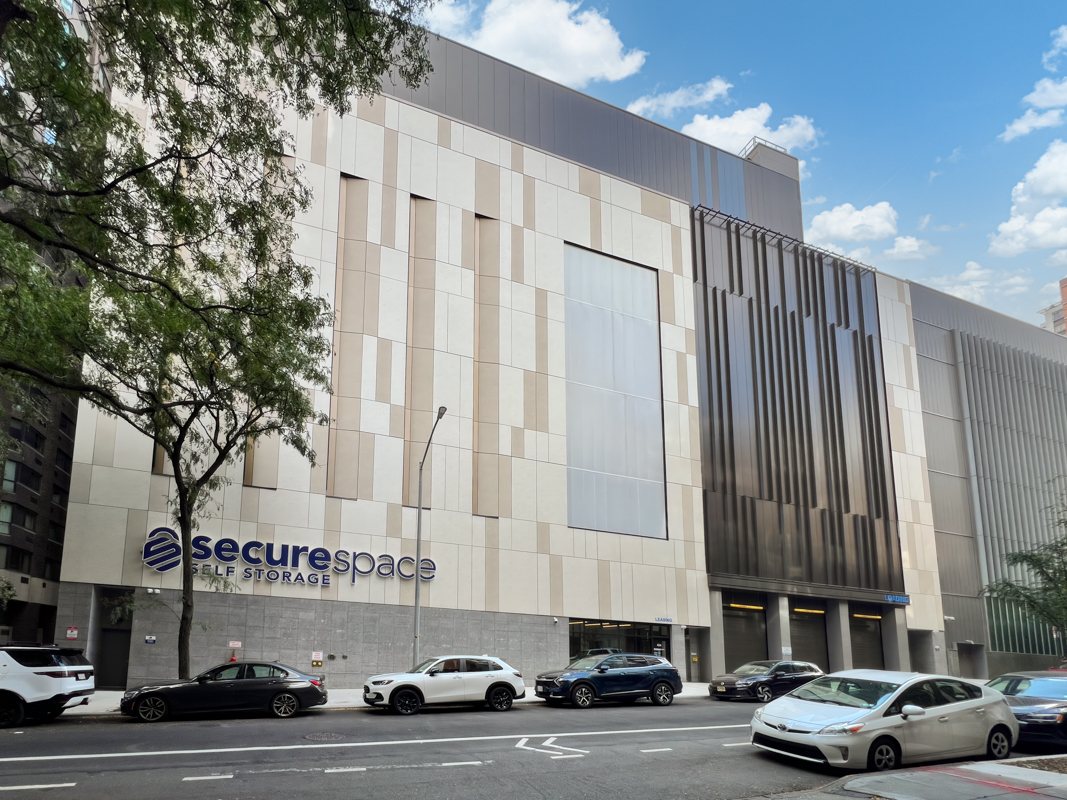
The transformation from a vehicle depot to a ten-story, 104,000-square-foot self-storage facility represents a shift in urban land use efficiency. The Parkland Group, the developers behind the project, recognized that as residential density increased, the need for "dead storage" (parked cars) was being eclipsed by the need for "live storage" (household overflow). The current structure maximizes the verticality allowed by local zoning, yielding approximately 80,000 to 90,000 square feet of rentable volume. This vertical orientation is a critical architectural response to the scarcity of land in Yorkville, necessitating a design that relies heavily on elevator efficiency rather than the sprawling single-story layouts found in suburban markets.
The building's envelope reflects its function. Designed by Tao Architecture + Design, the facade is composed largely of beige paneling with gray accents, with glass limited primarily to the northern elevation. This reduction in glazing is not merely aesthetic; it is a functional requirement for climate control. Excessive windows in a storage facility create "solar gain," heating the interior and forcing HVAC systems to work harder to maintain stable temperatures. By minimizing glass, the building acts as a thermal battery, insulating the contents from the sweltering heat of New York summers.
For any Manhattan storage user, the "Last 50 Feet"—the distance from the transport vehicle to the elevator—is the most critical operational metric. In a city defined by aggressive parking enforcement, inclement weather, and narrow streets, the loading infrastructure of a facility dictates the stress level of the move. 424 East 90th Street distinguishes itself with an internal loading infrastructure designed to mitigate the chaos of the street.
The Covered Loading Area:
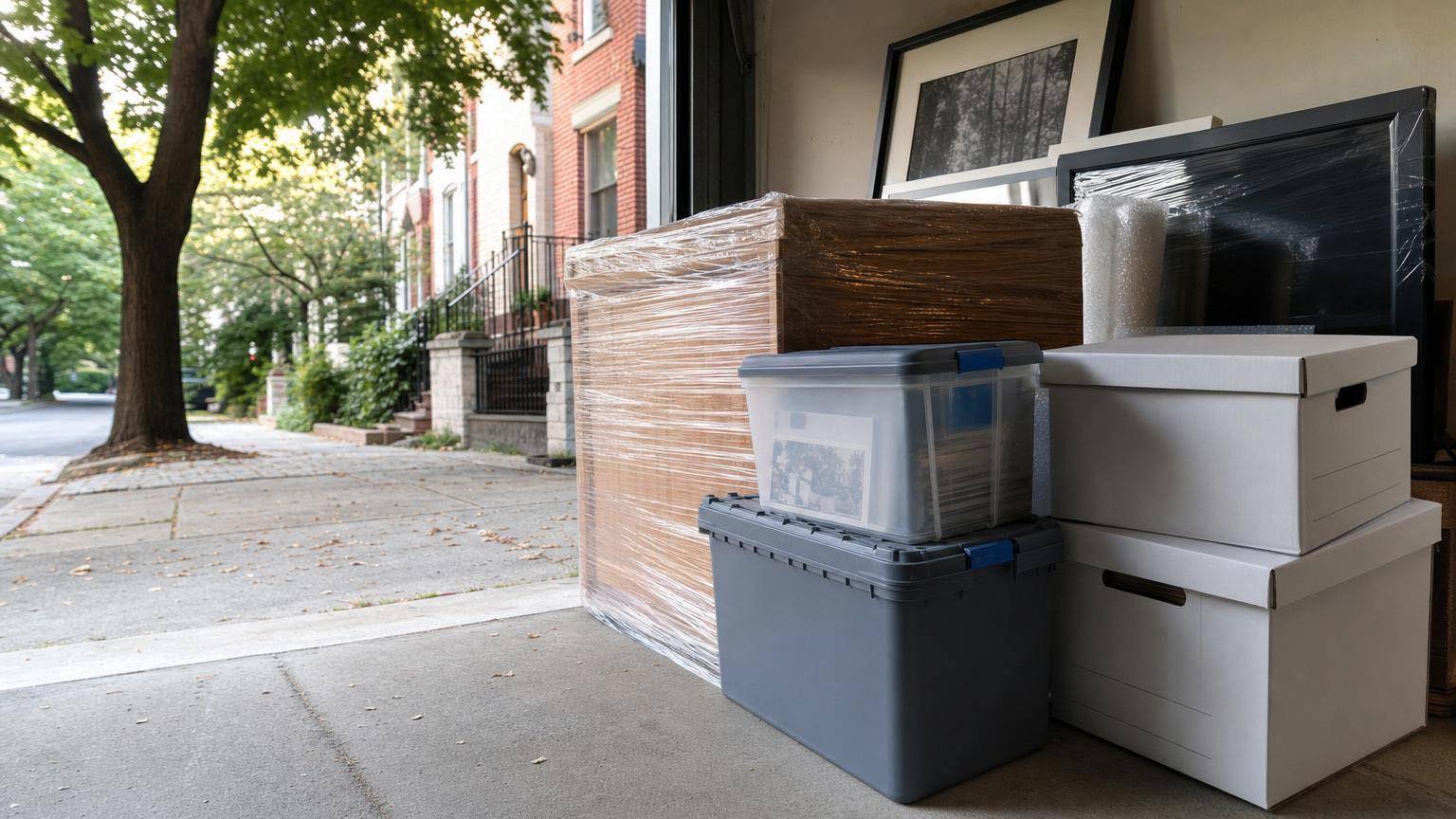
The facility features a covered loading area, a design necessity that is frequently overlooked until a move takes place during a rainstorm. In typical Manhattan walk-up moves, items are unloaded curbside, exposed to the elements while waiting to be carried up stairs or into a lobby. This exposure is catastrophic for hygroscopic materials—upholstery, unsealed wood, mattresses, and archival boxes—which can absorb ambient moisture instantly. The covered bay at 424 East 90th Street allows the transport vehicle (whether a professional moving truck or a personal SUV) to enter a protected zone. This "dry chain" custody ensures that items remain shielded from precipitation, wind, and the grime of street traffic during the vulnerable transition from vehicle to building.
Capacity and Throughput:
The facility is equipped with three loading berths. In the context of the Upper East Side, where double-parking is a primary cause of traffic congestion and ticketing, off-street loading berths are an operational asset. They decouple the moving process from the street traffic of 90th Street, allowing for a more deliberate and less rushed unloading process. However, potential users must recognize that "three berths" is a finite resource for a building with over 100,000 square feet of storage. During peak operational windows—specifically the end of the month (lease turnover) and Saturday mornings—queuing protocols may be in effect. The presence of an on-site manager to orchestrate this queue is essential to prevent the "loading dock rage" common in unmanaged facilities.
Vertical Transport Efficiency:
Once inside the loading bay, the logistical flow depends on vertical transport. The facility utilizes extra-large elevators designed to accommodate bulk items and moving carts. This is a critical efficiency factor often underestimated by first-time users. Small residential elevators in Yorkville walk-ups often necessitate the disassembly of furniture (taking legs off tables, dismantling bed frames) to fit into the cab. The presence of freight-grade vertical lift capacity means that items can often remain assembled, reducing the labor time and physical risk associated with moving. The availability of on-site moving carts further streamlines the transfer of goods from the loading dock to the unit, allowing a single user to move multiple boxes in one trip rather than making repetitive manual carries.
Security in a hyper-local facility serves two distinct functions: the protection of assets from theft or damage, and the personal safety of the user accessing the facility, potentially during off-hours. 424 East 90th Street employs a multi-layered security architecture that leverages both physical barriers and digital surveillance to create a secure zone.
The Turing and Motion Guard Systems:
The facility is described as "Turing Enabled" and features "Motion Guard" technology. While specific technical schematics are proprietary, in the context of modern self-storage security, these terms generally refer to advanced AI-driven surveillance and unit-specific monitoring.
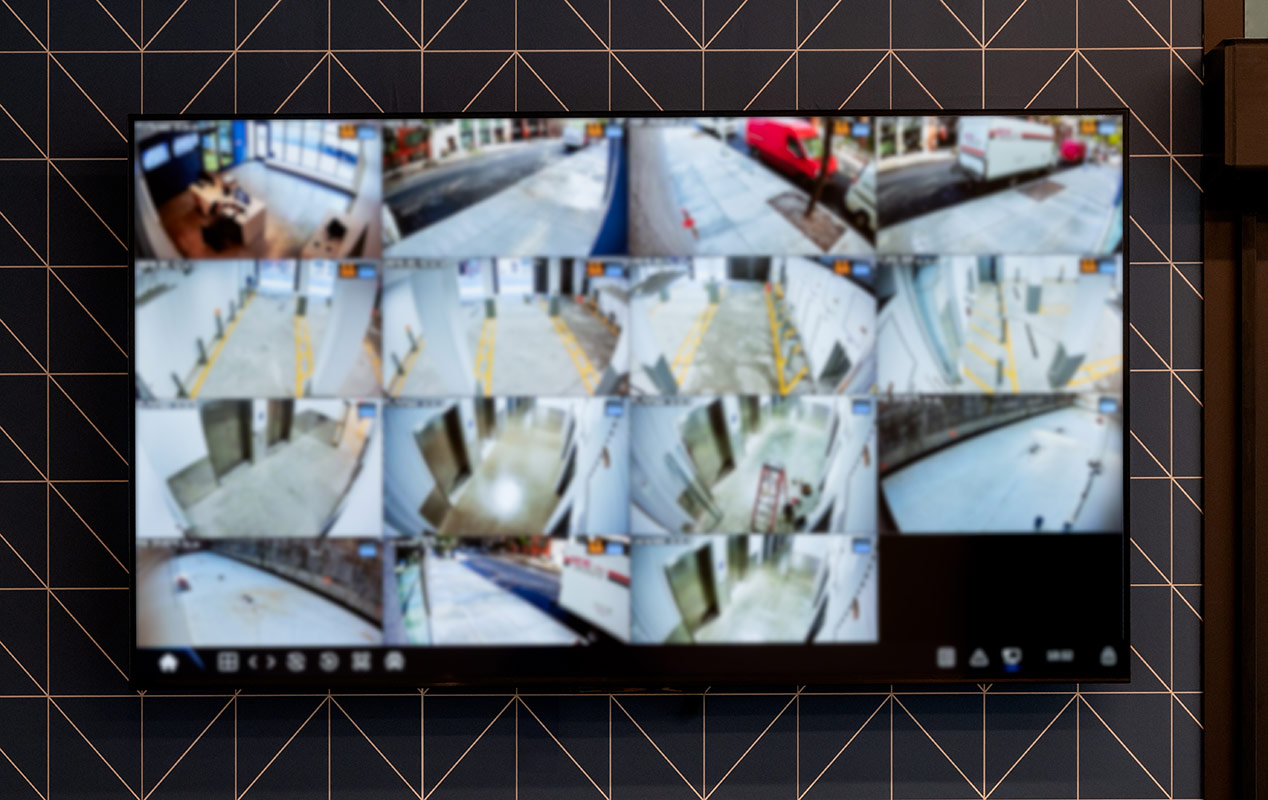
Video Surveillance: The facility operates a 24/7 digital video recording system with cameras positioned to monitor common areas, loading bays, and hallways. The "state of the art" nature of the system implies high-definition capture capabilities, crucial for forensic review in the event of an incident. Unlike older analog systems that overwrote footage every 24 hours, digital systems typically retain data for longer periods, allowing for retroactive investigation.
Access Control: Entry is governed by a coded gate and keypad system, ensuring that only authorized leaseholders can access the loading and unit areas. The "Logged Access" feature creates a digital audit trail of every entry and exit, associating specific user codes with specific timestamps. This audit trail is a powerful deterrent against internal theft and provides a verifiable record of visitation.
Unit-Level Intelligence: The mention of "Motion Guard" suggests that security extends beyond the hallway. Some modern facilities integrate motion sensors inside individual units that alert the tenant or management if movement is detected inside a locked space when the tenant is not on-site. This closes a common security gap in older facilities where unit interiors are unmonitored "blind spots."
The Human Element:
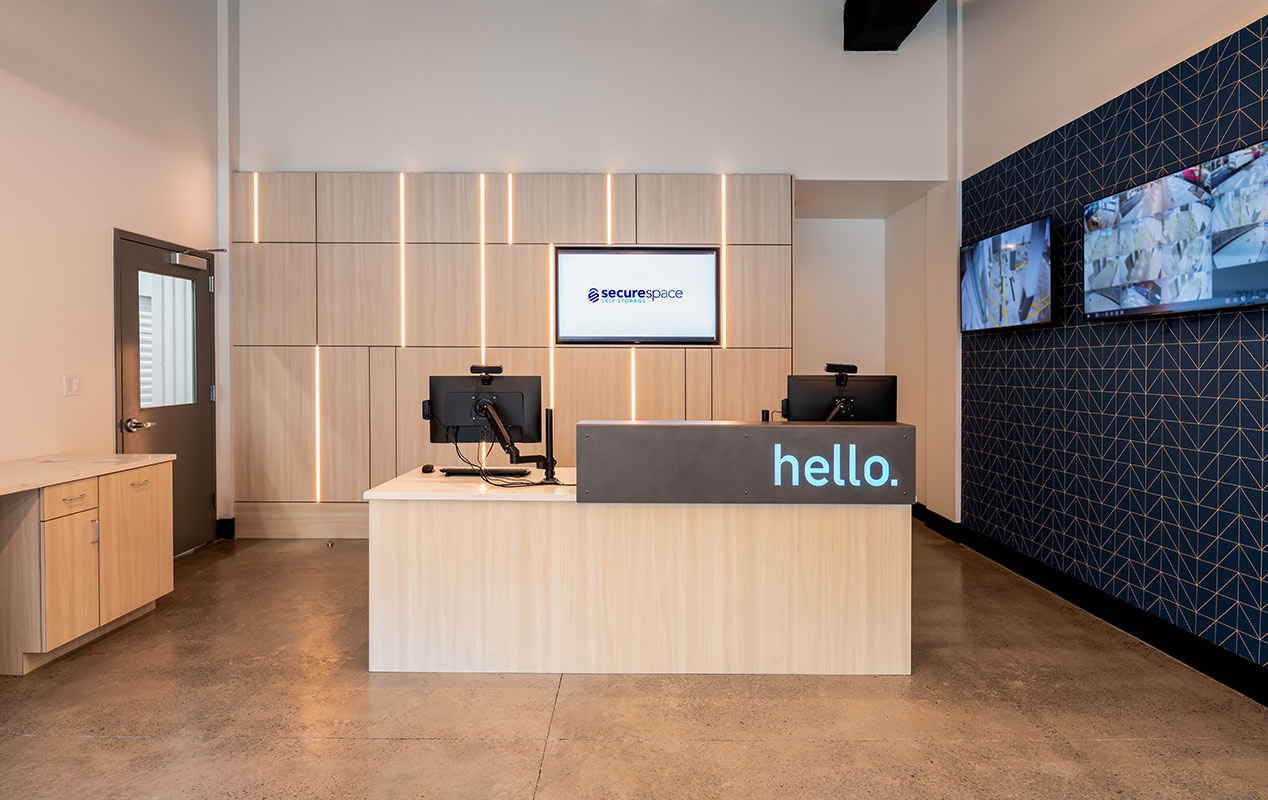
Despite the heavy reliance on technology, the presence of an on-site manager provides a necessary layer of human oversight. Reviews consistently highlight the role of specific staff members (individuals like Julius and Danysha are frequently mentioned) in facilitating the move-in process and maintaining a "spotless" environment. In the automated world of self-storage, the on-site manager acts as the "sysadmin" of the physical plant, addressing malfunctions, managing loading dock disputes, and overseeing cleanliness. Their presence during business hours transforms the facility from a passive warehouse into a managed service environment.
The utility of a storage facility is defined by its accessibility. A storage unit is only as useful as the ease with which one can visit it. Located at 424 East 90th Street, between 1st Avenue and York Avenue, the facility sits at a complex nexus of residential traffic, school bus routing, and arterial infrastructure. Navigating this grid requires strategic planning.
Understanding the directional flow of the Upper East Side grid is prerequisite for any successful trip to the facility.
East 90th Street Flow: In the Manhattan grid, even-numbered streets typically run Eastbound. However, local traffic patterns can present anomalies. Users must verify current signage, but the general flow allows access from the avenues. Most crucially, 90th Street is a significant crosstown connector.
Avenue Context: 1st Avenue: Runs Northbound (Uptown). This is the primary approach vector for users coming from Midtown or Lower Manhattan. It is a wide, multi-lane avenue that generally moves efficiently, although it can congest during rush hour as traffic filters toward the Willis Avenue Bridge. York Avenue: Runs North/South (Two-Way). This is a vital local artery serving the far eastern edge of the island, including the major hospital complexes (Weill Cornell, etc.) located just south of the facility. The facility is located on the block strictly between 1st and York. FDR Drive Proximity: The facility is geographically close to the FDR Drive but does not have a direct "Exit 90." The nearest exits are at 96th Street (Exit 14) and 71st Street (Exit 13). This means there is no "highway-direct" access; all approaches involve navigating the local grid for at least several blocks.
The Approach Strategy:
From Downtown/Midtown: Take 1st Avenue North to 90th Street. Turn Right (East) onto 90th Street. The facility will be on the right (south side of the street). This is the most direct route.
From the FDR (Southbound): Exit at 96th Street (Exit 14). This exit dumps traffic onto 96th Street. Drivers must proceed West to 2nd Avenue (Southbound) or York Avenue (Southbound), then navigate south to 90th Street. Note that York Avenue is two-way, allowing for a southbound approach, but 2nd Avenue is strictly Southbound.
From the FDR (Northbound): Exit at 61st St or 96th St. The lack of a direct off-ramp at 90th Street creates a "last mile" complexity. Exiting at 61st requires a long drive up 1st Avenue or York Avenue. Exiting at 96th requires a backtrack.
A defining feature of the traffic landscape on East 90th Street—and a variable that non-local users often fail to account for—is the presence of Asphalt Green, a major recreational and aquatic center located nearby at 555 East 90th Street (between York and East End Ave). While Asphalt Green is physically located one block east of the storage facility, its operational footprint engulfs the entire 90th Street corridor.
The Bus Convection:
Asphalt Green operates an extensive bus network for its camps, swim teams, and after-school programs. The "Blue," "Bronze," and "Gold" bus routes all converge on the Upper East Side, with drop-offs and pickups scheduled tightly between 8:00 AM – 8:30 AM and 4:20 PM – 5:30 PM.
Impact on Storage Access: During these windows, the intersection of York Avenue and 90th Street—and the block of 90th Street east of York—can become a choke point of idling buses, parents double-parking to drop off children, and general pedestrian density. While SecureSpace is west of York (between 1st and York), the spillover traffic affects the turning radius onto 90th Street from 1st Avenue and creates gridlock at the York Avenue intersection.
Operational Recommendation: It is highly advisable to avoid scheduling large move-ins or move-outs during the Asphalt Green intake/dismissal windows (8:00–9:00 AM and 4:00–5:30 PM on weekdays). Saturday mornings also see high activity due to sports leagues and swim meets. Attempting to maneuver a 20-foot moving truck through this congestion adds significant time and stress to the process.
For users who are not utilizing the facility's internal loading bay—for example, a quick visit to retrieve a document box or drop off a single suitcase—parking is a significant challenge. The "quick stop" is a myth in Manhattan unless planned carefully.
On-Street Reality:
Alternate Side Parking (ASP): Strict ASP rules are in effect on 90th Street and the surrounding avenues. Users must check the signs carefully.
Double Parking: While culturally common for commercial vehicles in NYC, double parking passenger vehicles is illegal at all times. An occupied illegally parked vehicle causes the same safety hazard and congestion as an unoccupied one, and traffic enforcement agents (TEAs) frequent this corridor due to the bus traffic.
Hydrants and Driveways: The density of the block means legitimate on-street spots are rare.
School Zones: Nearby schools (The Dalton School, etc.) create "School Slow Zones" and often have designated "No Standing - School Days" zones that further reduce available curb space.
Off-Street Options:
For longer visits where the loading bay is not an option or is full, local garages provide a fallback, though they come with their own physical constraints.
Icon Parking (York & 90th): Located at 435 E 90th St. Warning: The maximum vehicle height is listed as 7 feet.
Whitney 90 Parking: Another nearby option, but with an even stricter height restriction of 6'8".
Height Clearances: The critical takeaway for storage users is that most local residential garages cannot accommodate a rental moving van. A standard Ford Transit van might fit in a 7-foot garage, but a U-Haul or Penske box truck (typically 9-12 feet high) will absolutely not fit. Rental trucks must use the facility's loading bay or park legally on the street. Attempting to enter a residential garage with a moving truck is a recipe for property damage and liability.
The Upper East Side is a riverfront community. The proximity of 424 East 90th Street to the East River creates a specific microclimate characterized by fluctuating humidity levels that differ slightly from the inland concrete canyons of Midtown. This environmental reality makes climate control not a luxury feature, but a preservation necessity for specific inventory types common in this zip code.
The Science of Hygroscopy:
Materials such as wood, leather, paper, and natural fabrics (wool, silk) are hygroscopic—they absorb and release moisture to reach equilibrium with the surrounding air.
Summer Saturation: NYC humidity averages 60-70% in the summer, often spiking higher near the water. Without climate control, trapped humidity in a sealed storage unit can create a greenhouse effect. This moisture supports the germination of mold spores, particularly on organic materials like leather furniture or vintage clothing. It also causes wood veneers to swell and delaminate.
Winter Desiccation: Conversely, in winter, the combination of cold outdoor air and central heating systems drives humidity down, sometimes below 20%. This extreme dryness sucks moisture out of materials. Wood contracts, leading to "checking" (cracking) in antique furniture. Glues dry out and fail. Papers become brittle.
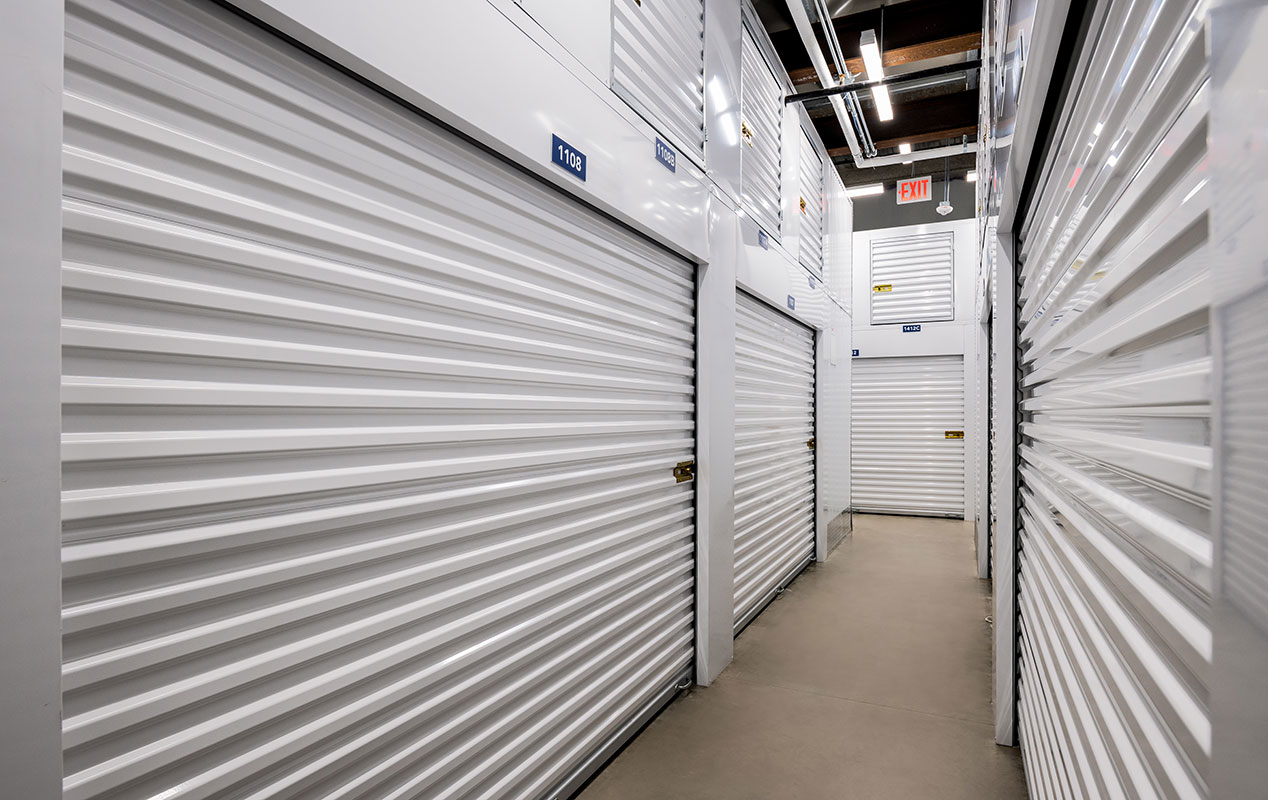
424 East 90th Street offers climate-controlled units. In the context of the storage industry, "climate-controlled" typically means maintaining a temperature range (often roughly 55°F–80°F) that prevents the extremes of freezing or baking. While the facility does not offer pharmaceutical-grade temperature guarantees, the system acts as a massive thermal stabilizer.
The "Steam Heat" Factor:
Many residents of Yorkville (10128) and Carnegie Hill (10128/10029) live in pre-war buildings equipped with radiator steam heat. These apartments are notoriously difficult to regulate—often sweltering in the winter (leading residents to open windows) and relying on window AC units in the summer. Moving items from a steam-heated apartment to a non-climate-controlled environment (like an outdoor garage in Queens) would subject them to massive thermal shock. The climate-controlled unit provides an environment that is often more consistent than the apartment itself.
Specific Vulnerabilities by Inventory Type:
Heirloom Furniture: The UES is home to a high concentration of antiques. Fluctuating humidity is the enemy of joinery.
Art and Wine: While specialized wine storage is a distinct category, moderate climate control is sufficient for short-term storage of consumer-grade wine collections and standard artwork, preventing the heat damage that cooks wine or warps canvas stretchers.
Business Records: Paper degrades rapidly in high humidity, becoming foxed and moldy. Legal and medical professionals storing archives must prioritize humidity control.
The demand for storage at 424 East 90th Street is driven by the architectural constraints of the surrounding residential stock. The primary catchment area includes Zip Codes 10128 (Yorkville), 10028 (Upper East Side/Yorkville), and 10075 (Lenox Hill/UES). Each presents a unique "storage deficit."
Yorkville is characterized by a mix of pre-war tenements, brownstones, and post-war high-rises.
The Walk-Up Constraint: Many affordable units in Yorkville are in 4-5 story walk-ups. These buildings typically have zero basement storage for tenants. The closets are shallow, designed for 1920s wardrobes, not modern consumer volumes. For these residents, a storage unit is essentially a "detached closet."
The Post-War "White Brick" Towers: Buildings constructed in the 1960s often have basement storage, but waiting lists can be years long. New arrivals to these buildings often find that while the apartment is spacious, the auxiliary storage is nonexistent.
Moving west towards Park and Madison Avenues, the housing stock shifts to larger, grander pre-war co-ops.
The "Maid's Room" Conversion: Historically, these apartments had service wings that offered storage. In modern renovations, these rooms are often converted into home offices or additional bathrooms, consuming the internal storage buffer.
Formal Living vs. Practical Storage: These apartments prioritize formal entertaining space over utility storage. Residents often have extensive seasonal decor, luggage for travel, and off-season wardrobes that simply do not fit the aesthetic of the living quarters.
To the north, East Harlem (10029) is seeing rapid gentrification and new development. Newer luxury rentals often market "storage cages" as a premium amenity, charging rates that can rival self-storage fees on a per-square-foot basis. Residents in these new builds often find that external self-storage offers more security and better climate control than the wire-mesh cages in a humid building basement.
A significant percentage of storage users in the Upper East Side are not "hoarders" but "renovators." The renovation process in NYC co-ops is governed by a draconian document known as the Alteration Agreement. Understanding this document is key to understanding the strategic value of 424 East 90th Street.
Most Co-op Alteration Agreements impose strict time limits on construction—typically 90 to 120 days for a standard renovation.
The Penalty: Failure to complete work within this window can result in daily fines or, in extreme cases, a stop-work order.
The Storage Solution: A storage unit acts as an accelerator. By moving all furniture and non-essential items off-site before the contractor begins, the resident allows the crew to work on the entire apartment simultaneously rather than shuffling furniture from room to room ("checkerboarding"). This efficiency can shave weeks off a project, ensuring compliance with the board's timeline.
Co-op boards are obsessed with the "Quiet Enjoyment" of neighbors. Dust migration is a primary source of complaints.
The Risk: Keeping furniture in the apartment during a renovation, even under heavy tarps, exposes it to "construction dust"—a fine particulate often containing silica and plaster. This dust is abrasive and nearly impossible to clean from upholstery.
The Strategic Move: Moving soft goods (sofas, mattresses, rugs) to a climate-controlled unit at 424 East 90th Street protects the assets. More importantly, it demonstrates to the Co-op Board and the building superintendent that the shareholder is taking proactive steps to minimize disruption and mess. It is a political gesture as much as a logistical one.
A common real estate play in Yorkville is the "combination unit"—buying the adjacent apartment to create a larger home. This process often takes 6-12 months of planning and permitting before walls can even be breached. During this limbo period, the second apartment often needs to be cleared, or the primary apartment needs to be decluttered to allow for architectural surveys. A nearby storage unit allows for the flexible staging of contents during this protracted pre-construction phase.
For the long-term resident, the storage unit becomes a seasonal valve, regulating the flow of goods into and out of the apartment based on the calendar.
The most common ritual is the seasonal wardrobe exchange.
Mechanism: In October, summer linens, AC units, and beach chairs go to storage; heavy coats, woolens, and holiday decor come home. In April, the cycle reverses.
The 5x5 Unit: A standard 5x5 unit (25 sq. ft.) is typically sufficient for this purpose. It essentially adds a walk-in closet to the apartment for a monthly fee that is far lower than the cost of upgrading to a larger apartment with that extra closet included.
Zip code 10128 has a high density of families whose children attend sleepaway camps.
The Bulge: These camps require massive "trunks" or duffels filled with gear that is utterly useless in a Manhattan apartment for 10 months of the year.
The Cycle: These trunks live in the storage unit from September to June. They are retrieved, packed, shipped to camp, and then returned to storage upon the child's return. The facility's loading bay is particularly useful here, as loading these heavy trunks into a car curbside is a back-breaking endeavor.
The Upper East Side takes holiday decorating seriously.
Volume: Artificial trees, wreaths, menorahs, and ornament collections take up significant cubic footage.
Timing: Accessibility is key. Residents need to be able to grab these items in early December and banish them in January. The "covered loading bay" at SecureSpace is a major asset in January, allowing residents to unload post-holiday boxes without standing in freezing rain or snow.
A critical decision for the user is whether to pay the "Manhattan Premium" for 424 East 90th Street or to utilize cheaper options in the "Outer Boroughs" (Queens, Bronx) or New Jersey. This is a calculation of the Time Value of Money.
Pricing in Manhattan is consistently higher than in College Point, Maspeth, or New Jersey. A unit in Maspeth might be 30-40% cheaper. However, the "sticker price" is deceptive.
The "Active User" Calculation:
Profile: A family rotating seasonal wardrobes, a business accessing inventory weekly, or a renovator needing frequent access.
Verdict: Local Storage (424 E 90th) wins.
Travel Cost: A round-trip Uber to Maspeth or the Bronx can cost $60-$100 depending on surge pricing. If a user visits the unit once a month, this travel cost erodes the rental savings.
Time Cost: A trip to Queens or NJ involves crossing bridges or tunnels. Traffic is unpredictable. A "quick trip" can easily turn into a 3-hour ordeal. For a UES professional billing hundreds of dollars an hour, or a parent with a tight schedule, 3 hours of travel time is an unacceptable expense.
Convenience: The ability to walk or take a 5-minute cab ride to 90th Street allows for "micro-visits"—dropping off a single box or grabbing one file—that are impossible with remote storage.
The "Deep Storage" Calculation:
Profile: Someone storing tax records for 7 years, heirloom furniture for a child who won't graduate for 2 years, or a long-term traveler leaving the country.
Verdict: Remote Storage wins. If access is required less than once every 6 months, the premium for 90th Street is hard to justify. Facilities in Maspeth (approx. 4 miles away) or College Point (approx. 5.7 miles away) offer significantly lower rates. Services like "Piece of Cake" or "Clutter" that offer bin pick-up may also be viable for this profile.
Feature — SecureSpace Manhattan (424 E 90th) — Typical Outer Borough / NJ Facility
Accessibility — Walkable / Short Taxi. High convenience. — Requires car/truck. Tolls likely (bridges/tunnels).
Price Point — Premium (Manhattan Market Rates). — Moderate to Low (Value Rates).
Loading — Covered loading bays. Elevators. — Often vast parking lots; sometimes drive-up unit doors.
Climate — Climate Controlled (Standard). — Mixed (Some drive-up units are not climate controlled).
Ideal For — Frequent access, fragile items, high value density. — Long-term archival, vehicles, large household moves.
Traffic Risk — Local congestion (Asphalt Green, etc.). — Bridge/Tunnel traffic (significant unpredictable delays).
For local businesses, 424 East 90th Street serves a function that goes beyond simple storage: it acts as a "micro-distribution center" or "forward operating base."
Retail rents in the Upper East Side are among the highest in the country. Using prime retail square footage to store back-stock, seasonal displays, or slow-moving inventory is economically inefficient.
The Strategy: Retailers and e-commerce businesses use the storage unit to hold inventory nearby. This allows for daily replenishment of the shop floor without the cost of leasing a larger storefront.
Pharmaceutical Reps: The proximity to major hospitals (Weill Cornell, Mount Sinai, Lenox Hill) makes this location ideal for pharmaceutical sales representatives who need a secure, climate-controlled base to store samples and literature, which they can access before their daily rounds.
The facility's ability to accept deliveries on behalf of tenants is a massive operational advantage.
The Problem: Small business owners often cannot be physically present at a shop or home office to sign for every UPS or FedEx shipment.
The Solution: SecureSpace can receive inventory shipments. This decouples the business owner's schedule from the delivery driver's schedule, ensuring that the supply chain remains unbroken.
Despite the digital revolution, certain industries (law, medicine, real estate) are legally required to retain physical paper trails for years.
Security: The "Logged Access" and video surveillance at SecureSpace provide a chain of custody that a basement file cabinet cannot match.
Climate: As noted in Section 3, climate control is essential for preventing paper rot in long-term archival storage.
Operating within the rules of the facility and the city is essential for a smooth experience.
Self-storage operators do not automatically insure the goods inside the unit. They insure the building.
Tenant Insurance: Users are typically required to provide proof of insurance or purchase a policy offered by the facility.
Homeowners/Renters Policy: Check your existing policy. Many NYC renters insurance policies cover "off-premises" property, but usually at a reduced percentage (e.g., 10% of the total personal property limit). If storing high-value art or antiques, a dedicated rider or the facility's insurance offering is recommended.
Price Volatility: Reviews indicate that rental rates can increase after the initial promotional period. This is a standard industry practice known as "revenue management." Users should read the lease terms regarding rate adjustments carefully. There is no "rent control" in self-storage.
Move-Out Protocol: Most facilities require notice before vacating to avoid being charged for the next month. Prorating is rare in the industry; leases are typically month-to-month.
Locks: Users must typically provide their own lock or purchase one on-site. The industry standard is the Disc Lock, which is resistant to bolt cutters.
A common friction point in urban storage is waste disposal.
No Dumpsters: Reviews note a lack of trash cans on the premises for tenant use. This is intentional to prevent tenants from using the facility as a dump for unwanted items.
The Rule: "What you bring in, you must take out." Do not leave broken furniture, empty boxes, or trash in the loading bay or hallways. This is a violation of the lease and can result in fines.
SecureSpace at 424 East 90th Street represents a strategic asset for the residents of Yorkville and the Upper East Side. It is a modern, high-security, climate-controlled answer to the perennial problem of Manhattan density.
For the user, the decision to rent here should be framed by the logistics of access. If your items are part of your active life—seasonal wardrobes, business stock, renovation overflow—the facility's location and covered loading infrastructure justify the Manhattan premium. The time saved in travel and the protection afforded by the climate control system provide a tangible return on investment.
However, users must navigate the local operational realities: the traffic patterns of 90th Street, the congestion caused by Asphalt Green buses, and the strict administrative policies of the self-storage industry. By planning move-ins around traffic windows, utilizing the covered loading bays effectively, and understanding the lease terms regarding insurance and rate adjustments, residents can transform this facility from a mere expense into a powerful extension of their home or business.
In the end, storage in NYC is not just about renting a metal box; it is about reclaiming the most valuable luxury in the city: living space.
Everything you need to store your belongings securely, on your schedule.
Visit us online