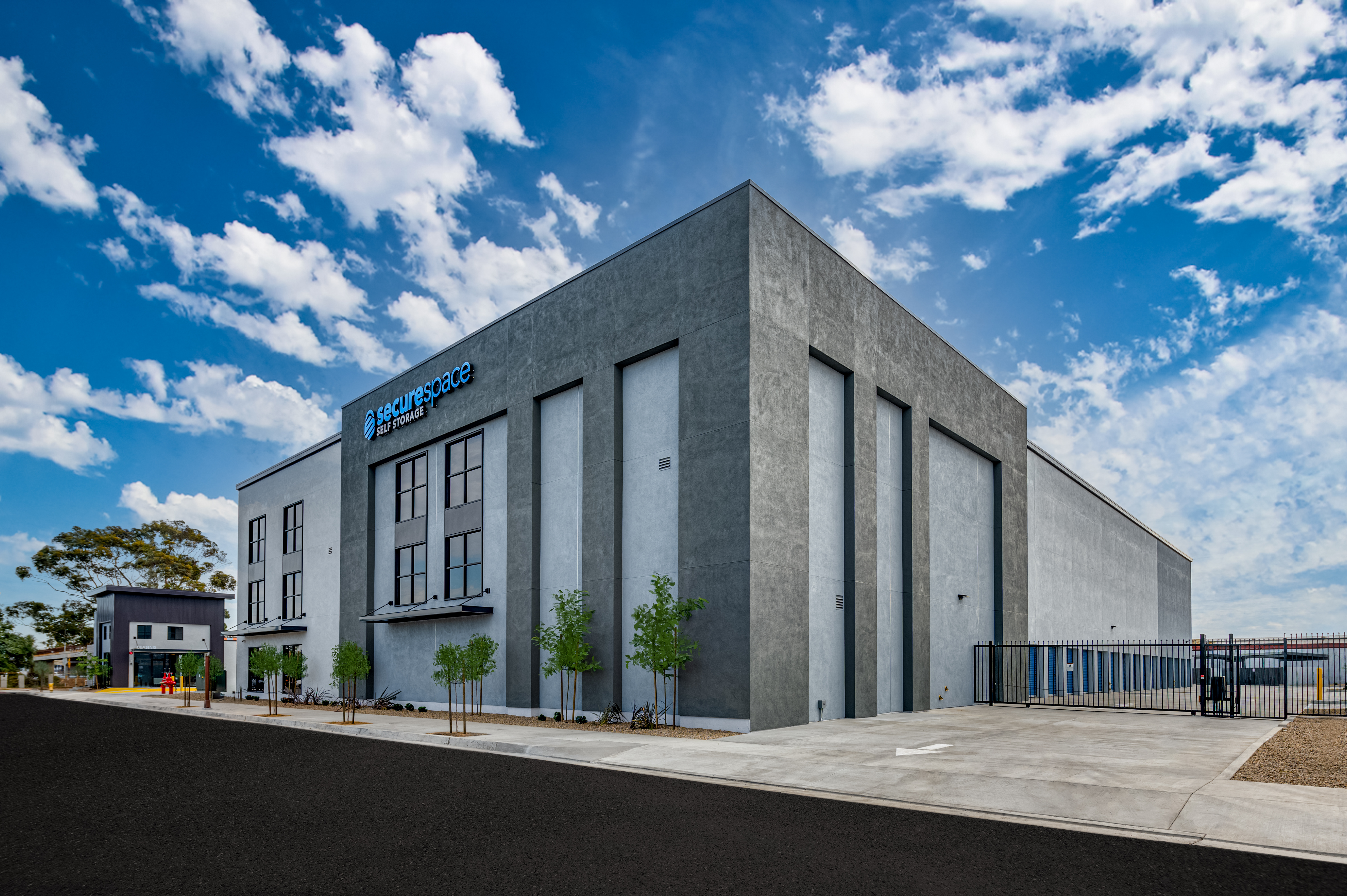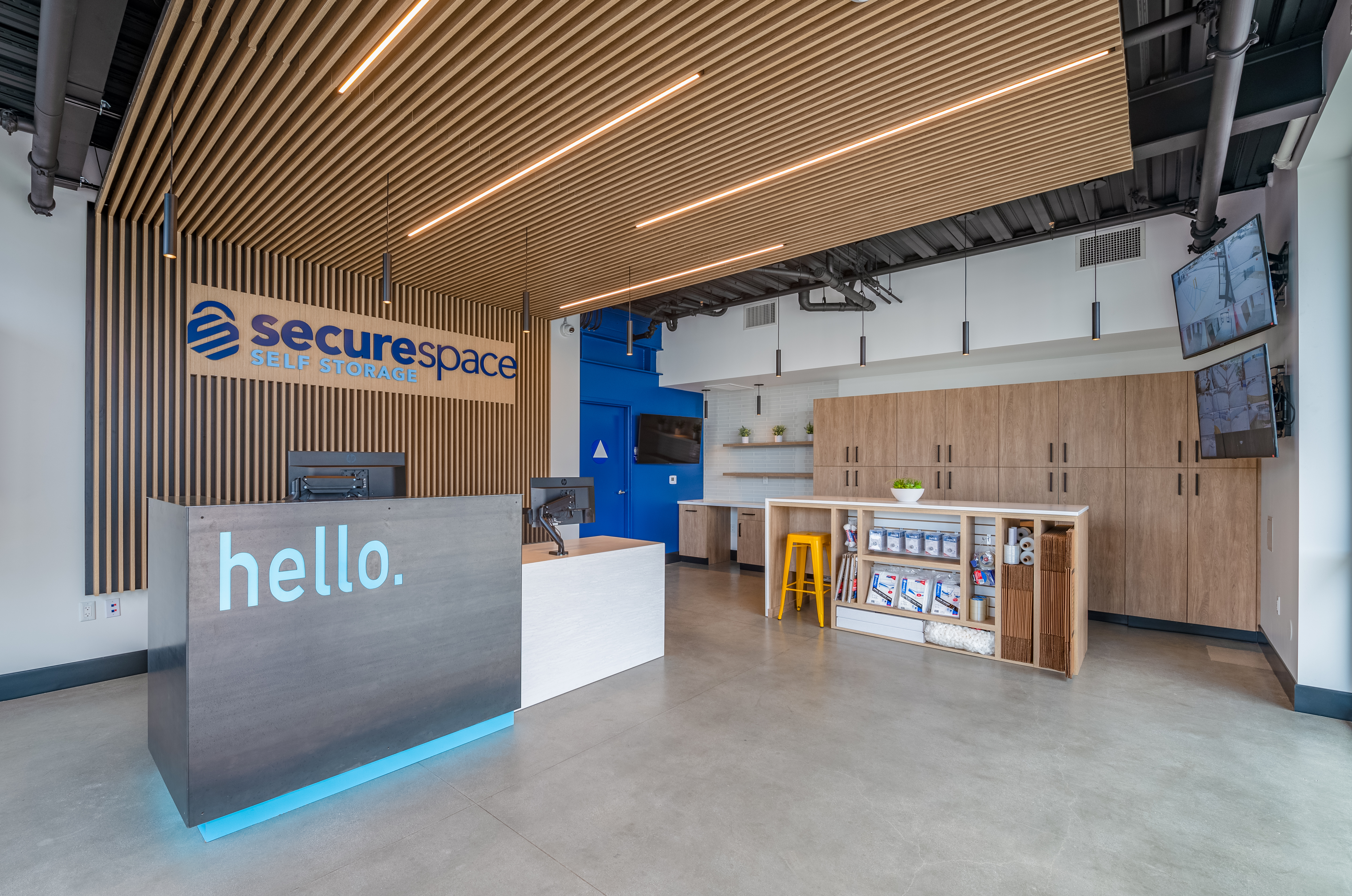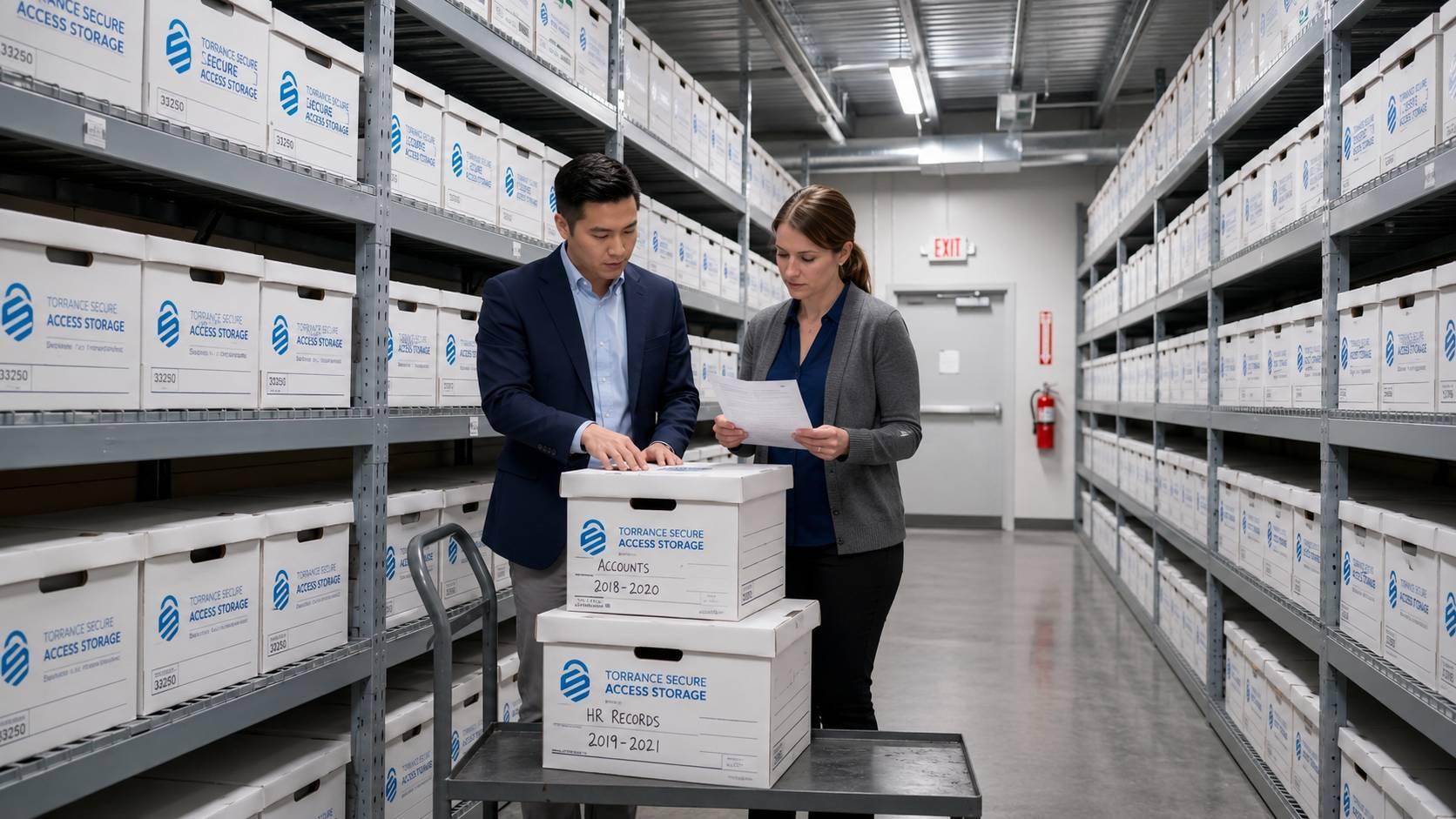
Torrance stands as a thriving hub for commercial innovation in the South Bay. From major healthcare providers and medical offices to aerospace and advanced manufacturing businesses, local organizations process a significant volume of sensitive information every single day. Managing this paperwork consumes valuable office space and can introduce compliance risks. Facility managers, practice owners, and corporate officers need a practical way to store these physical assets.
If your office is overflowing with old files, you are likely looking for a practical way to protect your documents while freeing up room for your team to work. We will explore how business storage can support organized off-site document storage for your company. You will learn about the state retention laws driving this need, the environmental considerations involved in preserving paper records, and the access features that help keep your business running smoothly.
The decision to move your corporate archives to an off-site storage unit is driven by two major factors. First, the high cost of local real estate makes storing boxes on-site expensive. Second, managing sensitive information requires careful attention to privacy laws, retention schedules, and internal document-handling procedures.
Commercial real estate in the South Bay region commands premium rates. Leasing Class A office space in the financial district along Hawthorne Boulevard is a major financial commitment. Dedicating a portion of this expensive footprint to rows of metal filing cabinets drains your budget.
Moving static archives to an off-site storage facility allows you to reclaim that square footage immediately. You can transform a cramped storage room into a new revenue-generating workstation or a more comfortable client reception area. Off-site storage can act as a useful real estate optimization strategy. It lowers your overhead expenditures and shifts boxes of retained documents out of your primary workspace.
California businesses face some of the most rigorous privacy and data retention laws in the country. Depending on your industry, you may need to hold onto specific files for several years before they can be legally destroyed.
The Internal Revenue Service advises keeping employment tax records for at least four years after the tax becomes due or is paid. Similarly, the California Department of Tax and Fee Administration requires businesses to maintain required records for a minimum of four years unless given specific written authorization to discard them sooner. Healthcare and legal sectors may face longer retention expectations depending on the record type, business policies, and applicable regulations.
The California Privacy Rights Act also reinforces the principle of data minimization. Businesses should avoid retaining personal information longer than is reasonably necessary for the purpose for which it was originally collected. Failing to implement a disciplined disposal schedule can increase compliance risk under privacy and retention rules.
To maintain compliance, the California Secretary of State outlines the importance of developing a concrete records retention schedule. A storage unit can support that process by giving your team a dedicated place for boxed records, but your business should still manage retention timelines, disposal schedules, and document destruction through your own internal policies or qualified compliance advisors.
Paper degrades when exposed to improper environmental conditions. Extreme temperature fluctuations, high humidity, and pests can damage critical business records over time. Standard storage conditions may not be ideal for sensitive legal, financial, or medical files, especially if those records need to remain legible for many years.
Proper storage conditions can help keep ink legible and paper intact over a long retention period. The National Archives and Records Administration recommends storing paper records and bound volumes in controlled environments with temperatures between 50 and 65 degrees Fahrenheit. Those archival standards are useful guidance for sensitive records, though ordinary business storage needs can vary by document type and retention timeline.
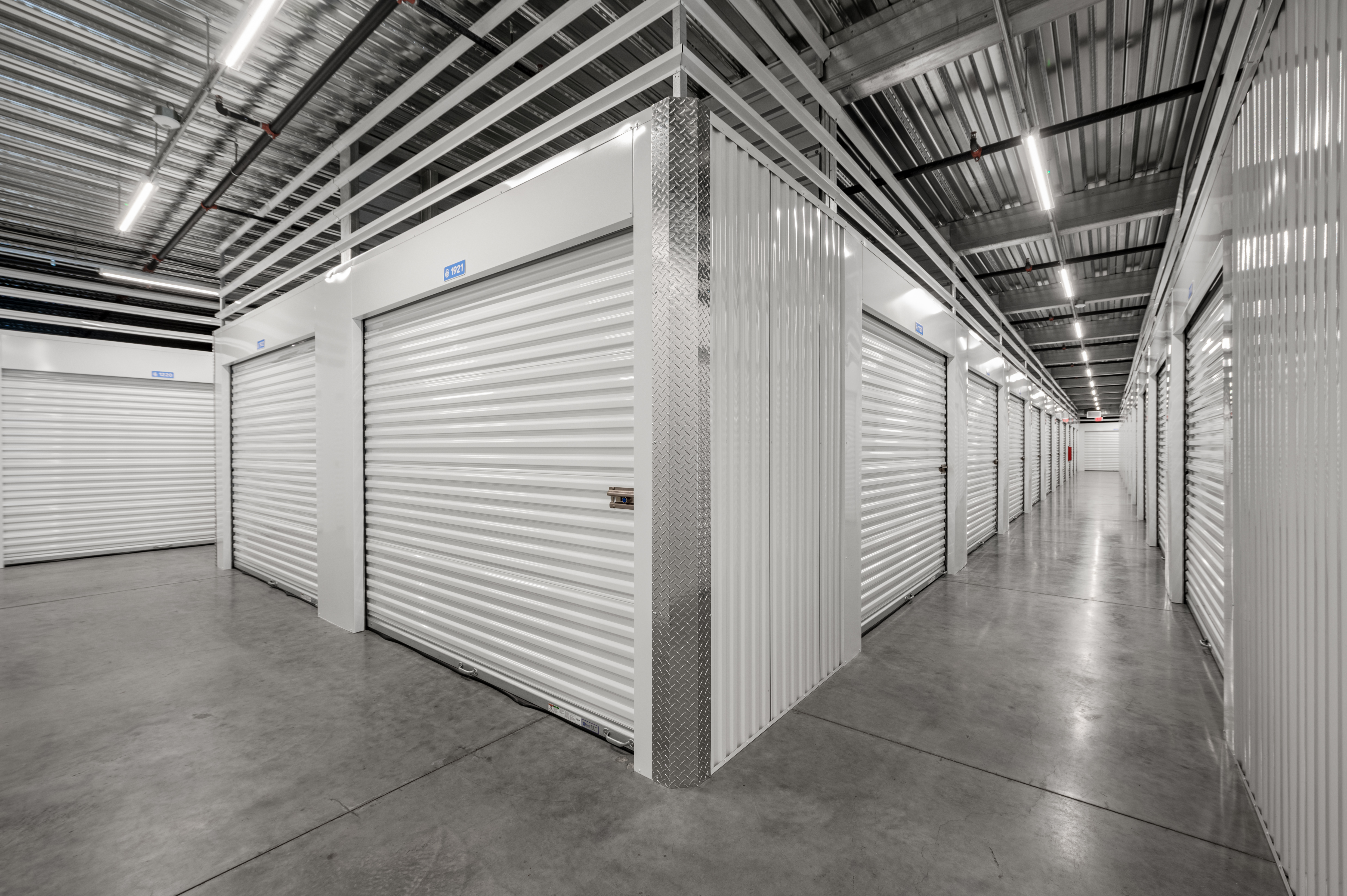
SecureSpace Self Storage West Carson Torrance offers climate-controlled storage, which can help reduce exposure to temperature swings compared with non-climate-controlled spaces. Climate-controlled storage should not be treated as a guarantee against mold, fading, humidity damage, or paper degradation, but it can be a practical option for businesses storing boxed records, office files, and other paper-based materials.
Torrance sits close to regional fault systems, making emergency preparedness a real concern for local business owners. Standard office shelving can shift or collapse during a major earthquake, resulting in an unorganized, damaged pile of critical files.
Keeping organized off-site copies of important records can be part of a broader disaster recovery plan. Following official emergency guidance from Ready.gov regarding safeguarding critical documents, businesses should identify essential documents, keep copies in secure locations, and plan for recovery after an emergency. For fire, seismic, insurance, or disaster-resilience requirements, businesses should evaluate their own risk profile and confirm facility features before storing irreplaceable records.
Security and legal compliance are important considerations in any document storage plan. However, the most common concern for office administrators is how quickly they can access files when a surprise audit occurs, an internal review begins, or a client needs information. A practical storage solution should balance security features with reliable customer access.
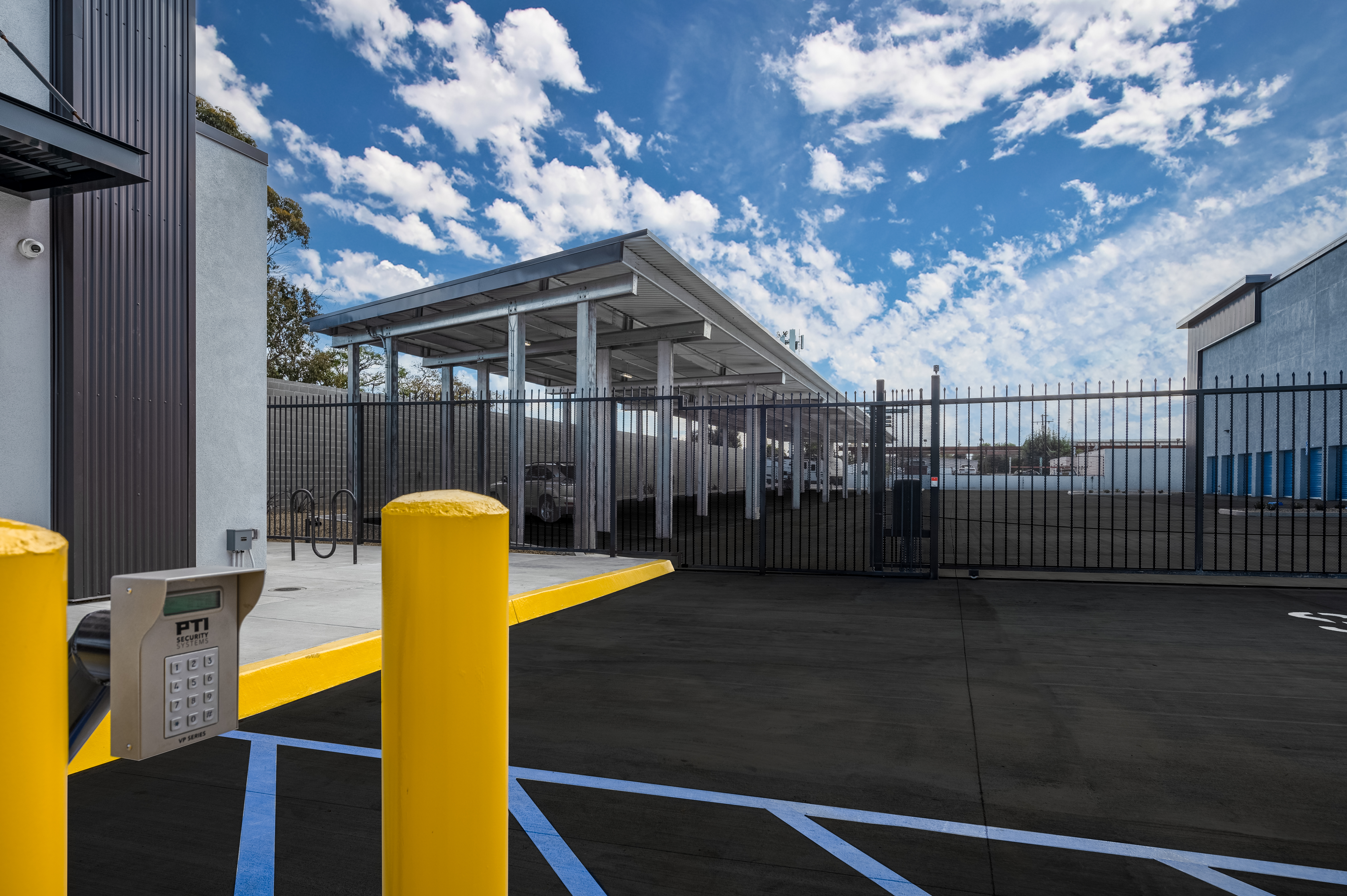
Security requires much more than a simple padlock on a door. SecureSpace Self Storage West Carson Torrance offers digital video recording, gated access, touchless computer-controlled access, logged access, and overnight surveillance.
Your business remains responsible for organizing boxes, labeling files, maintaining internal access procedures, and tracking who handles sensitive documents. Using clear box labels, inventory logs, and internal check-out procedures can help your team maintain better control over stored records without relying on unsupported chain-of-custody or records-management services.
Physical distance should not unnecessarily slow down your daily workflow. Instead of keeping boxes in a cramped office closet, businesses can store organized archives in a dedicated storage unit and retrieve files when needed.
SecureSpace Self Storage West Carson Torrance offers 7-day access, with gate hours daily from 6:00 AM to 10:00 PM. Businesses that need scan-on-demand services, courier delivery, emergency document retrieval, or staff-managed file handling should arrange those services separately or confirm availability before relying on them.
Different sectors possess very different operational requirements. A practical storage plan should reflect the record types, access needs, and regulatory obligations of your specific field.
Medical clinics operating near major South Bay hospital networks must carefully manage patient charts, billing files, and other sensitive records. Healthcare organizations should follow applicable privacy laws and internal compliance procedures when storing regulated documents. A storage unit can help create space for boxed records, but businesses should confirm whether their storage process, document handling, and access controls meet their own HIPAA and retention obligations.
Aerospace contractors and advanced manufacturing companies often need to preserve engineering documents, quality records, supply chain paperwork, and project files. Protecting intellectual property and maintaining organized records can be important for internal audits and customer requirements. Climate-controlled storage and secure access features can support organized storage, but businesses should maintain their own document tracking and confidentiality controls.
Financial institutions, wealth management groups, and law firms manage sensitive client portfolios, tax records, and audited financial statements. They require careful tracking to comply with retention rules, privacy expectations, and internal document policies. A dedicated storage unit can help keep older records organized and out of active office space, while the business manages retention calendars, access logs, and secure destruction procedures.
A standard self-storage unit should not automatically be treated as a HIPAA or HITECH-compliant records management solution. SecureSpace Self Storage West Carson Torrance offers storage units with security features such as gated access, digital video recording, touchless computer-controlled access, logged access, and overnight surveillance. Healthcare businesses should confirm their own compliance requirements and document-handling procedures before storing medical records.
SecureSpace Self Storage West Carson Torrance offers 7-day access, with gate hours daily from 6:00 AM to 10:00 PM. Your team can retrieve stored boxes or files during those access hours. Scan-on-demand, courier delivery, emergency rush delivery, and next-business-day file delivery are not standard confirmed features, so businesses needing those services should arrange them separately.
A storage unit can help your business organize retained documents in a dedicated off-site space, but compliance remains your responsibility. Businesses should maintain their own records retention schedule, inventory system, legal-hold process, and document destruction plan. Consult legal, tax, or compliance advisors for requirements specific to your industry.
SecureSpace Self Storage West Carson Torrance offers confirmed facility features such as gated access, digital video recording, logged access, overnight surveillance, and climate-controlled storage. Seismically rated shelving, fireproof storage, localized fire suppression, and specialized archival vault protection are not confirmed features. Businesses storing irreplaceable documents should evaluate their own disaster recovery needs and confirm relevant facility details before renting.
Optimizing your workspace and organizing your vital records can be simpler with the right storage plan. By moving static archives to a climate-controlled storage unit, you can reduce office clutter, free up valuable workspace, and keep boxed records accessible during daily gate hours.
SecureSpace Self Storage West Carson Torrance offers climate-controlled storage, gated access, digital video recording, touchless computer-controlled access, logged access, overnight surveillance, elevator access, carts and dollies, and 7-day access from 6:00 AM to 10:00 PM. For regulated documents, businesses should continue to manage their own compliance, retention, and document-handling procedures.
Ready to reclaim your office space and organize your corporate archives? Explore flexible storage options for business documents, supplies, and office overflow today.
Visit us at: https://securespace.com/storage-units/ca/torrance
Everything you need to store your belongings securely, on your schedule.
Visit us online