Last updated Jun 23, 2026
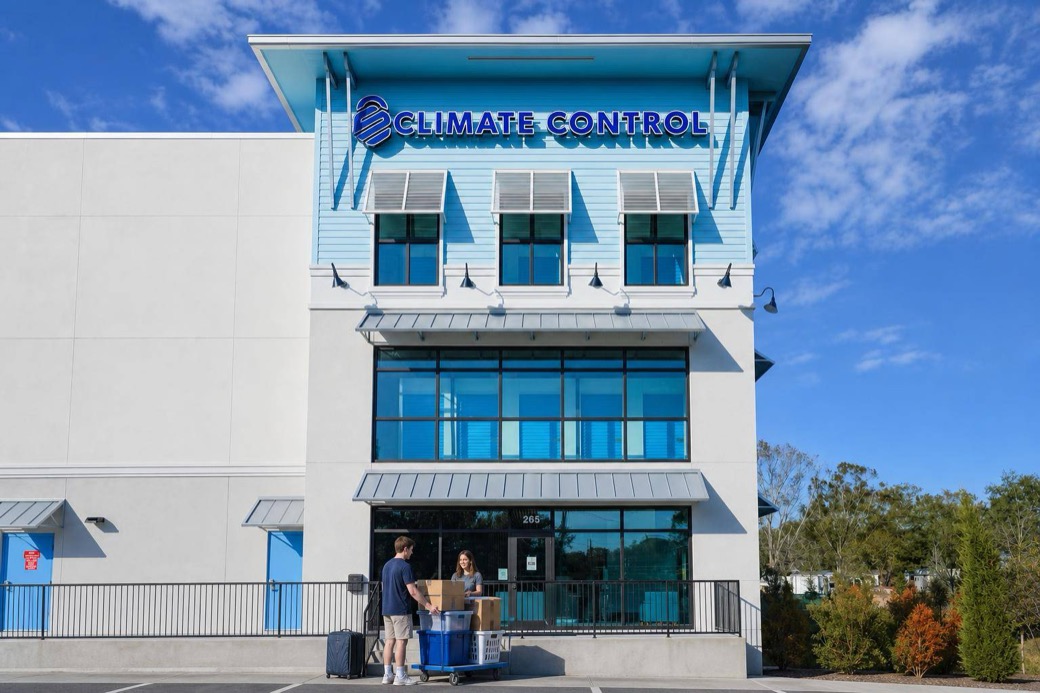
Moving out of a college dorm room or off-campus apartment can bring a unique set of logistical headaches. For students attending schools around the Tampa Bay area-such as St. Petersburg College, the University of South Florida, or the University of Tampa-the end of the academic term often means packing, transporting, and temporarily storing personal belongings.
Transporting an entire room's worth of furniture, books, clothing, and electronics back home may not be practical, especially for out-of-state students or students moving between apartments. A local self-storage unit can provide flexible space between semesters, during summer break, or while waiting for a new lease to begin.
This guide explains how to choose the right storage size, how to prepare belongings for Florida heat and humidity, and what facility features to compare before renting student storage in Palm Harbor.
If you are storing bedding, electronics, textbooks, or furniture, storage conditions matter. In coastal Florida, heat and humidity may affect some belongings over time, especially if items are stored in garages, sheds, moving trucks, or other spaces exposed to broader outdoor conditions.
A typical student's belongings may include composite wood furniture, bedding, clothing, textbooks, small appliances, electronics, and decor. Some of these items can be sensitive to moisture, heat, and poor airflow.
Humidity may contribute to musty odors, material wear, or mildew on fabrics if items are packed damp or left in poor conditions. Heat may also affect certain electronics, adhesives, plastics, and paper items over time.
Before storing, make sure clothing, bedding, towels, shoes, and mini-fridges are clean and fully dry. Avoid packing food, liquids, damp textiles, or anything prohibited by the storage lease.
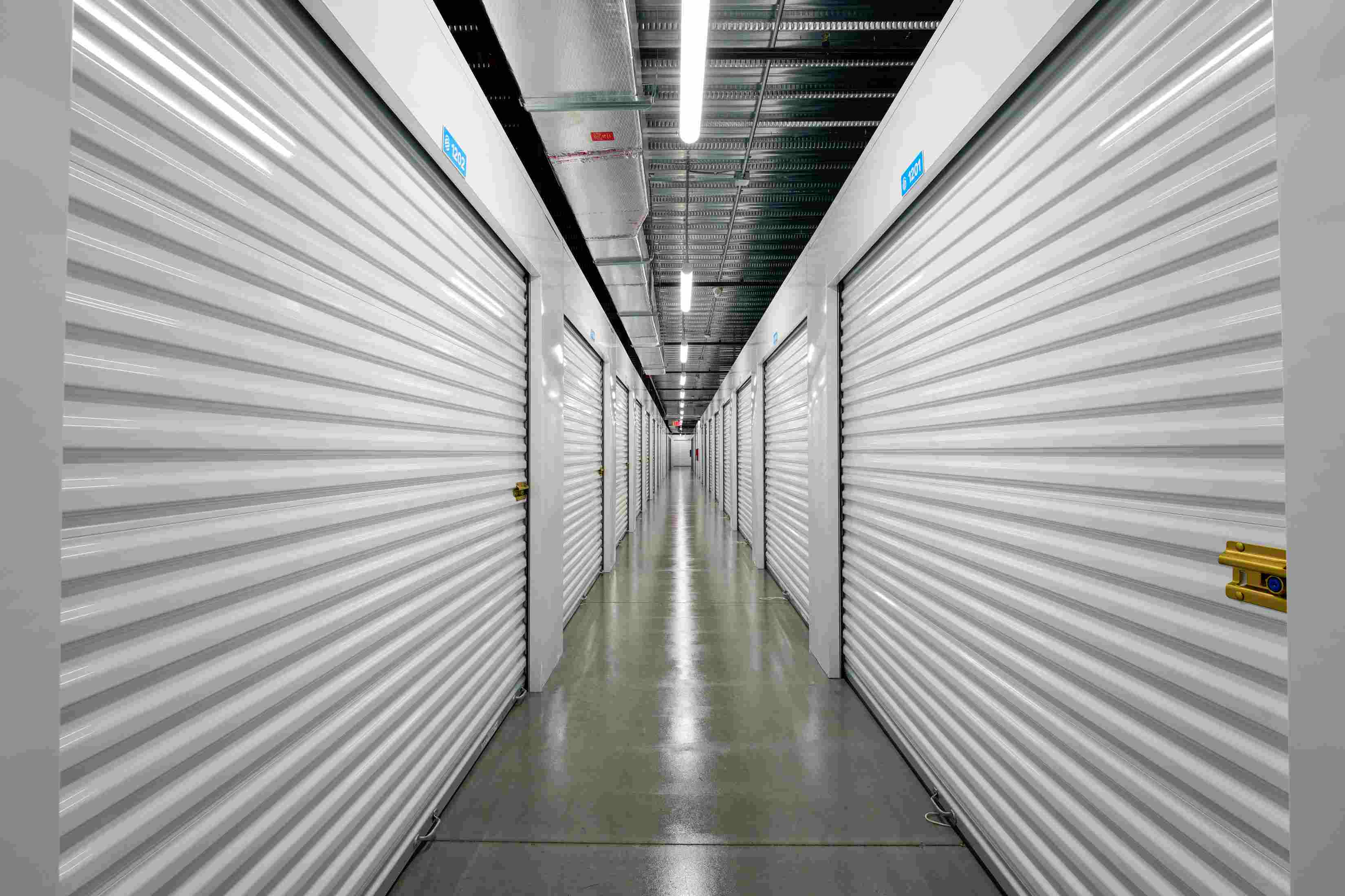
Climate-controlled storage can help reduce exposure to temperature swings compared with garages, sheds, moving trucks, or other areas exposed to broader outdoor conditions. This may be useful for dorm items such as:
Bedding and clothing
Textbooks and paper records
Electronics
Small furniture
Photos and decor
Musical instruments
Household items shared between roommates
Climate-controlled storage is not a guarantee against humidity-related damage, so careful packing still matters. Use sturdy bins or boxes, avoid sealing damp fabrics in plastic, and follow manufacturer guidance for electronics and appliances.
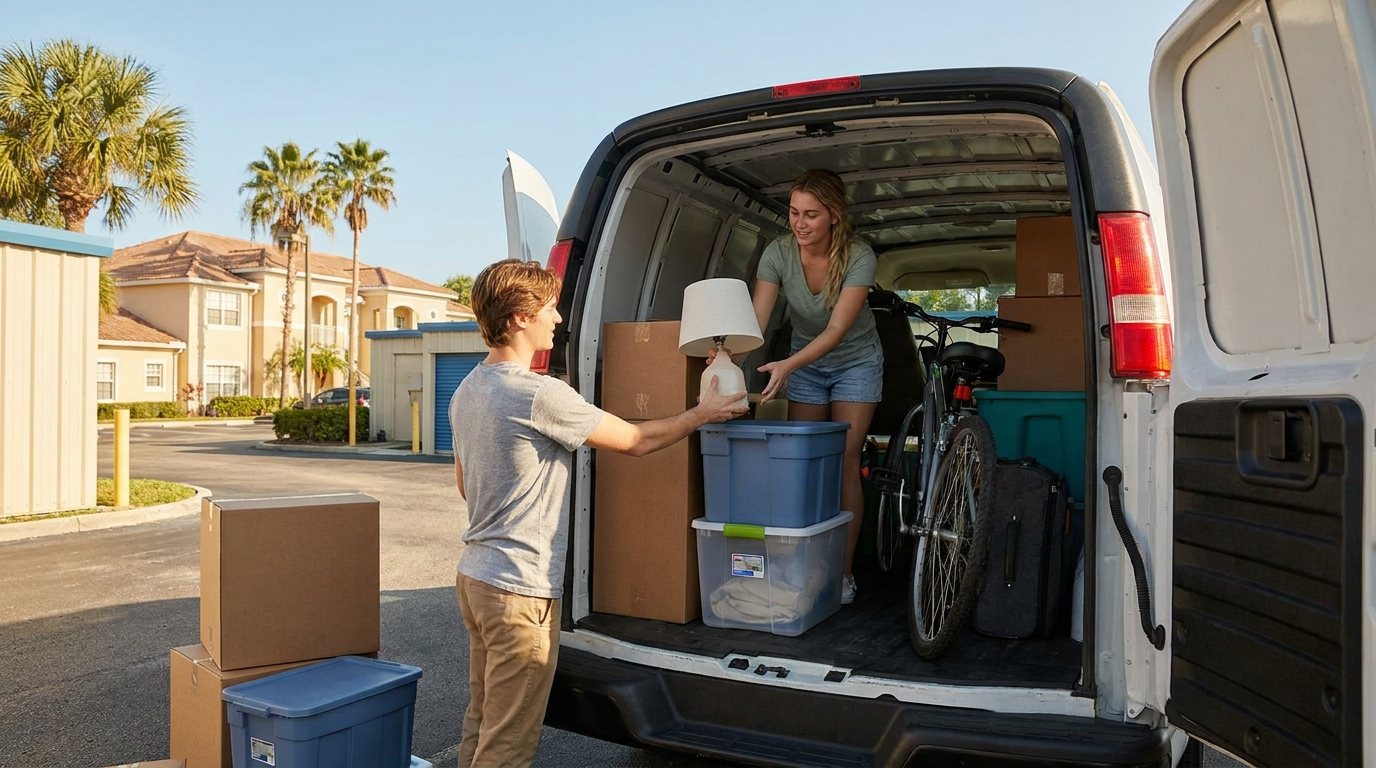
One of the most common challenges students face is visualizing how their belongings will fit into a storage unit. The right size depends on your furniture, box count, and whether you are storing items alone or sharing space with a roommate.
A 5x5 unit is a compact 25-square-foot option, similar in size to a small closet. It may be a practical choice for a student storing a limited number of dorm items.
A 5x5 unit may fit:
Several moving boxes or plastic bins
A desk chair
Bedding and seasonal clothing
Small decor
A mini-fridge, if allowed and properly cleaned/dried
Compact dorm items
Capacity depends on each item's size, the packing layout, and whether you need space to reach boxes later. If you are storing a mattress, larger furniture, or multiple bulky items, a 5x5 may be too tight.
A 5x10 unit doubles that footprint to 50 square feet and may be a better fit for students moving out of a studio, shared apartment, or larger off-campus room. Depending on the layout, it may fit a mattress set, small couch, dresser, boxes, and compact furniture.
A 10x10 unit may be useful if multiple roommates are sharing storage or if you are storing items from a larger apartment. Exact fit depends on furniture size, box count, appliance dimensions, and whether you need access to items during the rental period.
Before renting, list your items, measure bulky pieces, and compare available unit sizes.
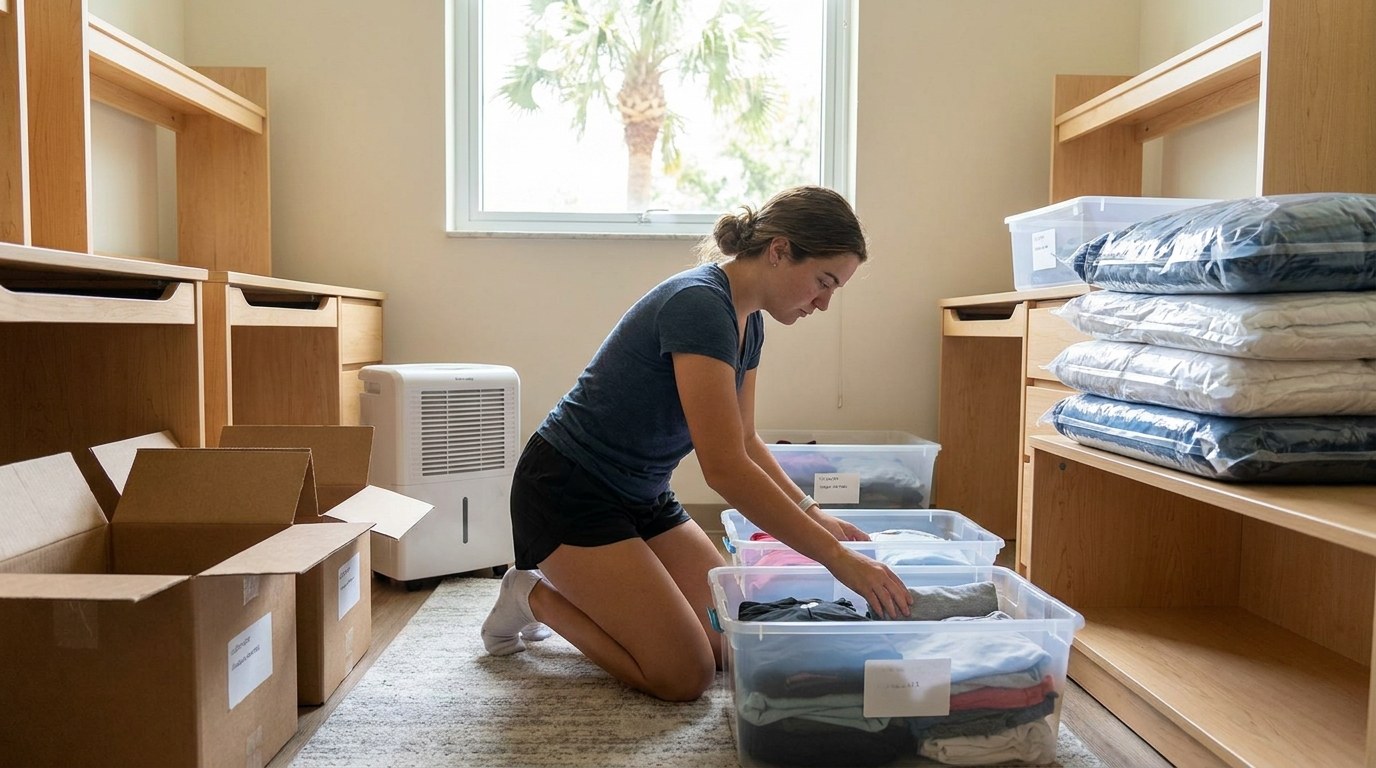
A frequently overlooked part of student storage is packing. Good packing helps keep items organized and reduces the chance of damage during transport and storage.
Use sturdy boxes or plastic bins, depending on what you are storing. Plastic bins can be useful for clothing, bedding, books, and small items, but make sure everything is completely dry before sealing the lid.
Vacuum-sealed bags may help compress bulky bedding or clothing, but they are not right for every fabric or item. Avoid trapping dampness in sealed bags or containers.
Consider general moisture-absorbing products where appropriate, but do not rely on them as a complete solution. Always follow product instructions and facility rules.
Before move-in:
Clean and dry all clothing, towels, and bedding
Defrost, clean, and dry mini-fridges before storage
Remove food, liquids, candles, and prohibited items
Pack books and papers in sturdy containers
Label boxes by category or room
Keep frequently needed items near the front
Confirm whether shelving, pallets, batteries, or appliances are allowed
Palm Harbor can be a convenient storage location for some students and families in northern Pinellas County, especially those moving between home, apartments, and Tampa Bay-area schools.
The region connects to several academic institutions, including St. Petersburg College's nearby campuses, USF, and the University of Tampa. Drive time will vary, so students should choose storage based on their housing location, campus location, move-out dates, and transportation plans.
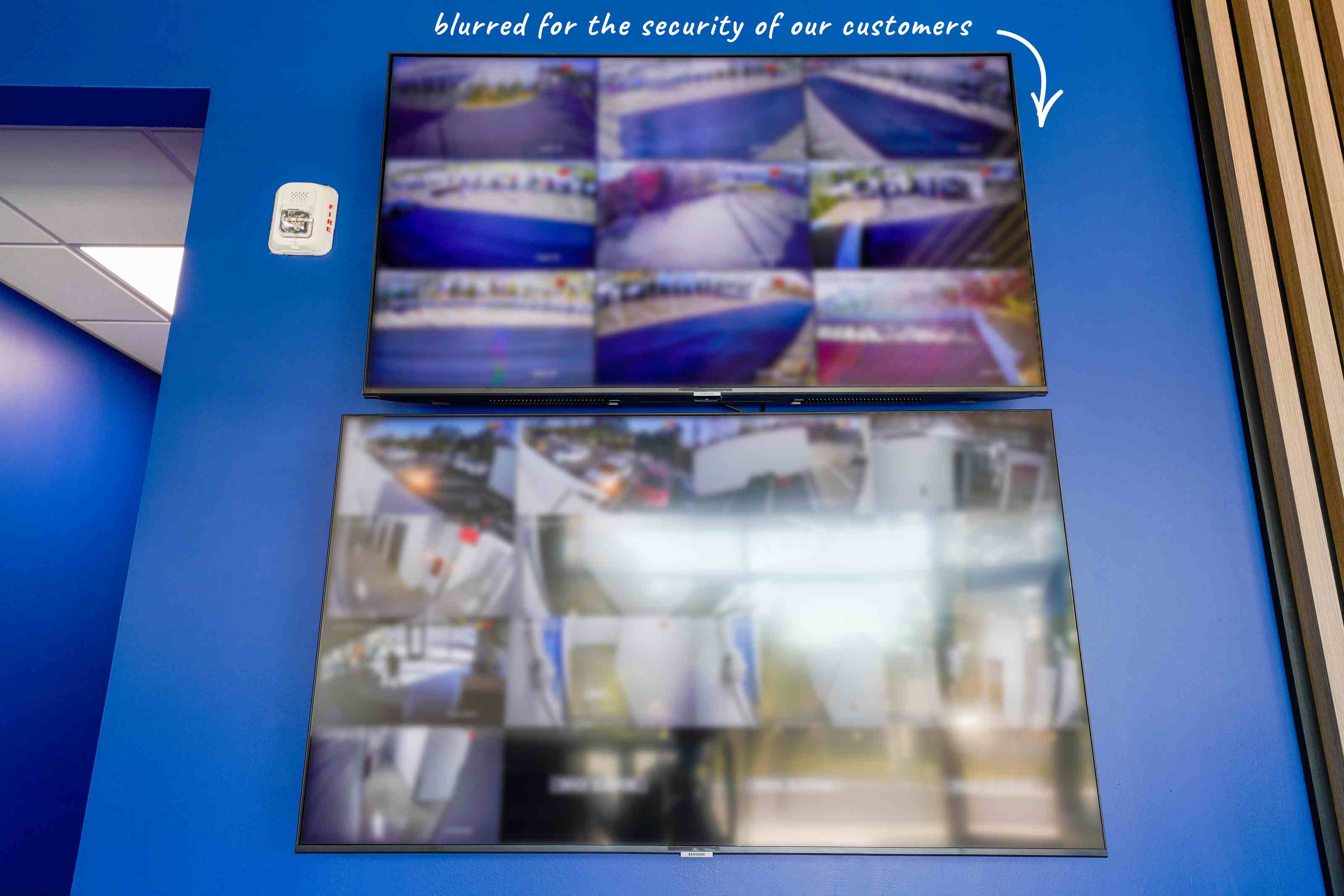
Parents and students often want to compare security-related features before storing belongings for the summer. At this Palm Harbor facility, those features include an access gate, digital video recording, overnight surveillance, logged access, and touchless computer-controlled access.
These features can support a more controlled storage environment, but no facility can eliminate every risk. Use an appropriate lock, keep an inventory, avoid storing prohibited items, and maintain insurance or coverage where appropriate.
Access hours matter, too. Daily gate access at this Palm Harbor facility runs from 6:00 AM to 10:00 PM, which can help when moving items around class schedules, work shifts, or summer travel plans.
Student storage costs can vary based on unit size, climate control, availability, promotions, move-in date, and rental terms. Before renting, compare the full cost rather than only the advertised monthly rate.
Students can reduce costs by choosing the smallest unit that realistically fits their belongings, sharing a larger unit with a roommate when allowed, and comparing current promotions.
SecureSpace Self Storage may offer introductory promotions or online specials on select units. Visit SecureSpace Self Storage to review current options, and check the Palm Harbor facility page for local availability, pricing, and rental details.
Before reserving, review:
Current monthly rate
Promotion length
Post-promotion rate
Administrative fees, if applicable
Insurance or protection requirements
Lock requirements
Lease terms
Gate access hours
Move-in instructions
SecureSpace Self Storage offers month-to-month leases, which can be helpful for summer break, short-term transitions, or semester-to-semester storage needs.
Many students start by comparing 5x5 and 5x10 units. A 5x5 unit may work for boxes, bedding, a chair, a mini-fridge, and compact dorm items. A 5x10 may be more practical if you have a mattress, dresser, small couch, or extra furniture. Fit depends on item dimensions, packing style, and how much access space you want to leave.
Climate-controlled storage may be useful for items that could be affected by Florida heat or temperature swings, such as electronics, bedding, textbooks, small furniture, photos, clothing, and musical instruments. It is not a guarantee against humidity-related damage, so clean, dry packing is still important.
Promotions vary by facility, unit size, season, and availability. Check current availability, pricing, promotions, and rental terms before reserving. Month-to-month leases can also help students avoid committing to storage longer than needed.
Pack only clean, fully dry items. Use sturdy boxes or plastic bins, remove food and liquids, clean and dry mini-fridges, and avoid sealing damp clothing or bedding in plastic. Climate-controlled storage can help reduce exposure to temperature swings, but careful packing still matters.
Transitioning between dorm rooms, apartments, and home does not have to mean hauling everything across the state. With the right unit size, careful packing, and a storage facility that fits your schedule, students can keep belongings organized between semesters.
SecureSpace Self Storage Palm Harbor offers climate-controlled storage, elevator access, carts and dollies, online payments, touchless move-in, daily gate access from 6:00 AM to 10:00 PM, and month-to-month leases. The facility also has security-related features such as an access gate, digital video recording, overnight surveillance, logged access, and touchless computer-controlled access.
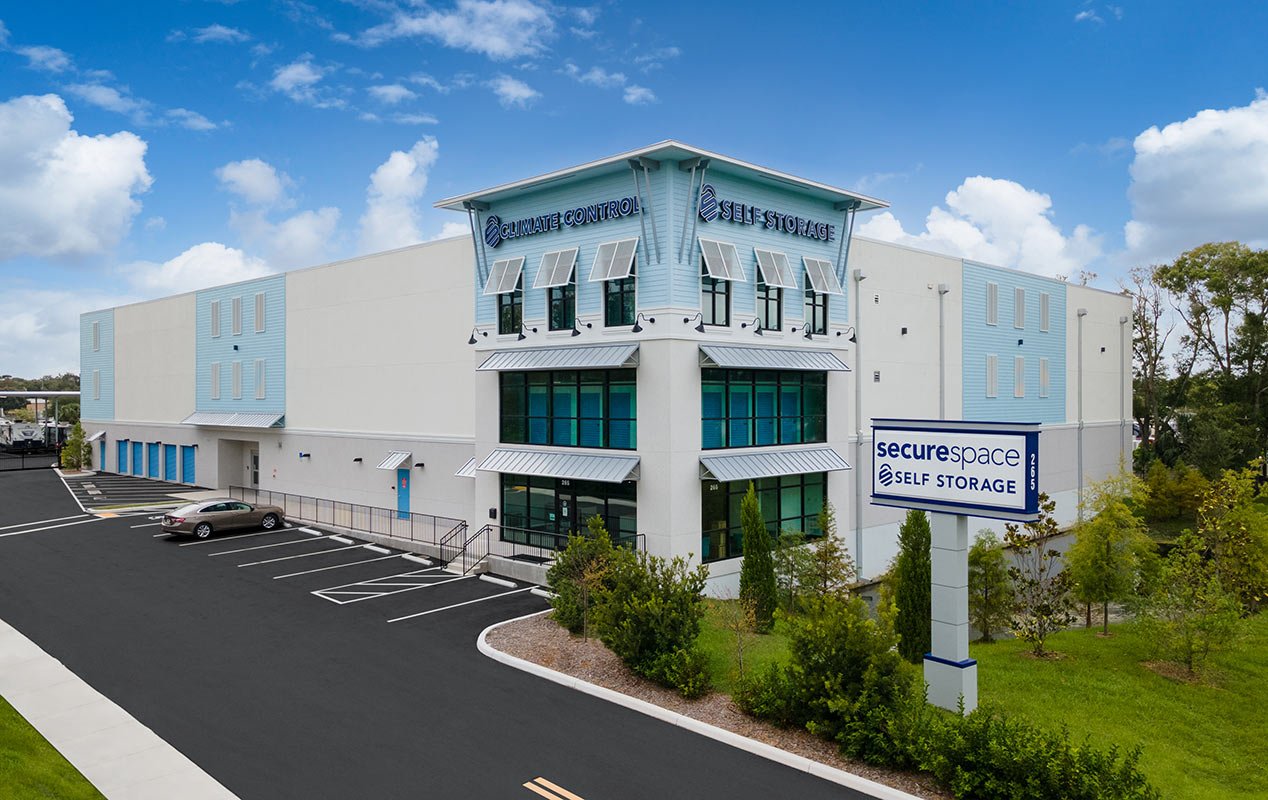
Visit SecureSpace Self Storage Palm Harbor at 265 US Alt 19 to check current availability, pricing, promotions, and unit details before reserving.
Everything you need to store your belongings securely, on your schedule.
Visit us online