Last updated Aug 12, 2026
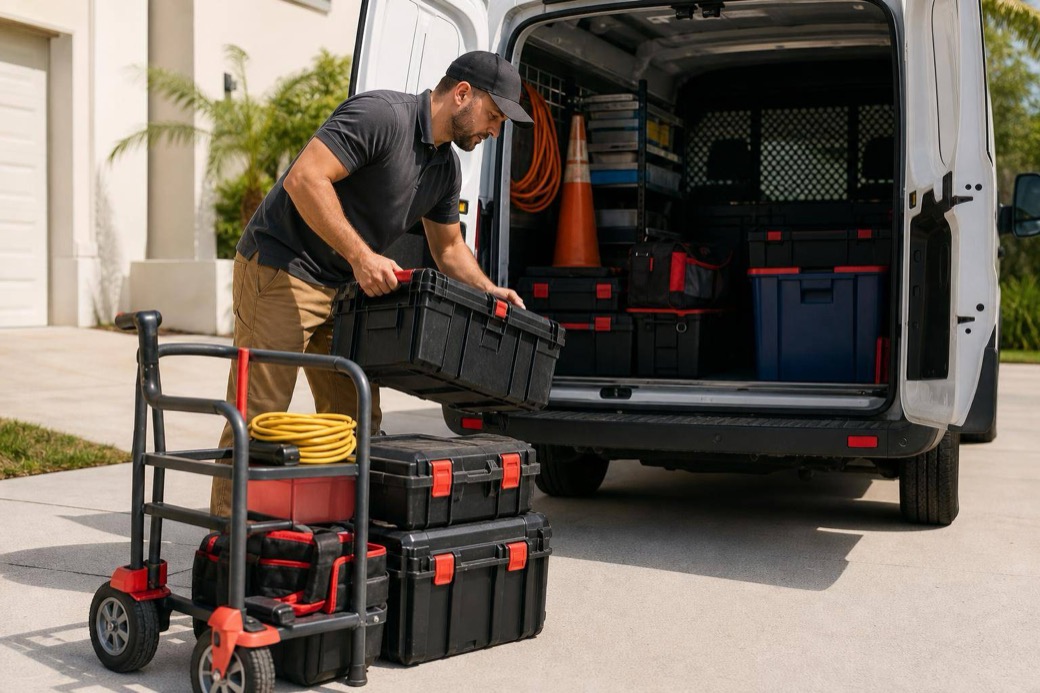
If you live or work in Riverview, you already know the struggle. Your garage is full. Your truck bed is crowded. And every new project seems to bring another tool that needs a home. With Riverview's population projected to hit 116,251 residents in 2026-a 21% jump from 2020 (World Population Review)-more people than ever are running out of space.
This guide breaks down what to know about storing tools in Riverview. You'll learn why Florida's climate can be hard on equipment, how to reduce theft risk, and what to look for in a storage facility. Whether you're a contractor with valuable gear or a weekend DIYer reclaiming your garage, the right storage setup can make a big difference.
Riverview has grown fast. Master-planned communities like FishHawk Ranch and Winthrop Village have brought thousands of new homes-but many come with compressed lots and garages built for cars, not workshops (Frank Albert Realty). With the average local household owning two vehicles (Data USA), the garage fills up quickly. There's often little room left for tools, ladders, bins, and project supplies.
Building a backyard shed isn't always the answer either. In Hillsborough County, structures over 150 square feet may require building permits and detailed site plans. On top of that, many local Homeowners Associations enforce rules on sheds, including placement, exterior materials, roofing, and visibility from the street. For a lot of homeowners, the hassle just isn't worth it.
This is where a dedicated storage unit can become a practical solution. It frees up your garage, reduces clutter at home, and gives your equipment a more organized place to stay.
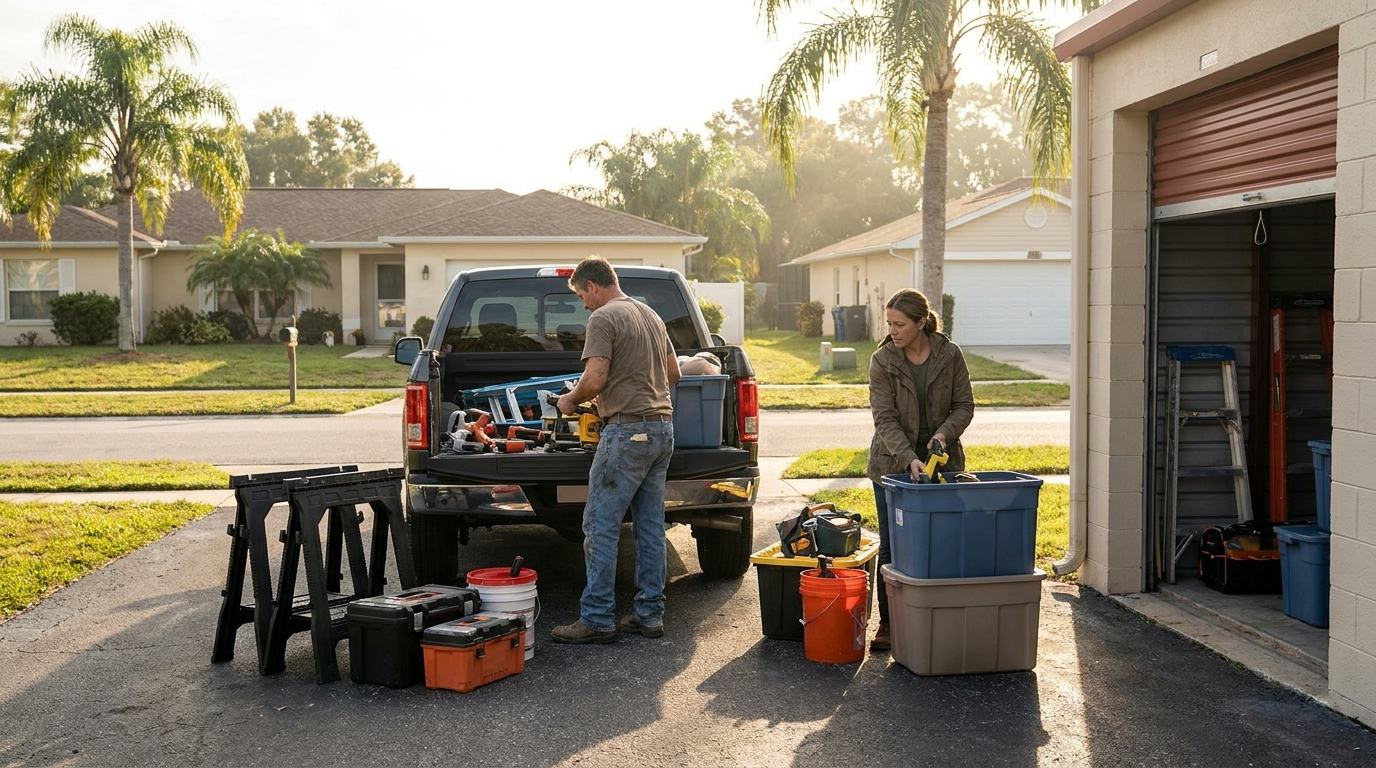
Florida's climate can be tough on equipment, especially when tools are left in garages, sheds, truck beds, or unconditioned spaces for long periods. Heat, moisture, and seasonal storms can all create problems for metal tools, power tools, and batteries.
Metal tools can rust when they're exposed to damp air, water intrusion, or poor ventilation. Cast iron table saws, drill presses, clamps, blades, and hand tools are especially vulnerable if they're stored without cleaning, drying, or protective oil.
A climate-controlled storage option can help reduce exposure to temperature swings compared with a standard garage or shed. For better results, wipe tools clean before storing them, keep metal items off bare floors, and use covered bins or tool chests for smaller pieces.
Most modern power tools run on lithium-ion batteries, which should be stored according to the manufacturer's instructions. Avoid leaving batteries in hot vehicles, damp garages, or areas where they could be exposed to water. If you're storing tools for more than a few weeks, remove batteries from the tool, keep chargers organized, and check manufacturer guidance for charge levels.
Climate-controlled storage may be worth considering for batteries, electronics, chargers, and precision tools, while larger hand tools, ladders, and job-site supplies may fit well in a drive-up unit depending on how often you need access.
A garage, shed, or unventilated container can trap heat and make it harder to keep equipment clean and organized. Items can get buried behind household storage, and tools left near doors or open walls may be more exposed to weather and pests.
A storage unit can help separate tools from everyday household clutter, making it easier to group items by project, trade, or frequency of use.
Tool theft is a real concern for contractors, homeowners, and anyone who keeps equipment in a truck, trailer, garage, or driveway. Construction tools are valuable, portable, and often easy to resell, which makes them a common target.
A storage facility can help move tools out of a vulnerable driveway or truck bed and into a more controlled environment. Look for features such as gated access, digital video recording, logged access, overnight surveillance, and individually locked units. At home or on the job, it also helps to mark tools, photograph serial numbers, keep a simple inventory, and avoid leaving high-value gear visible in vehicles.
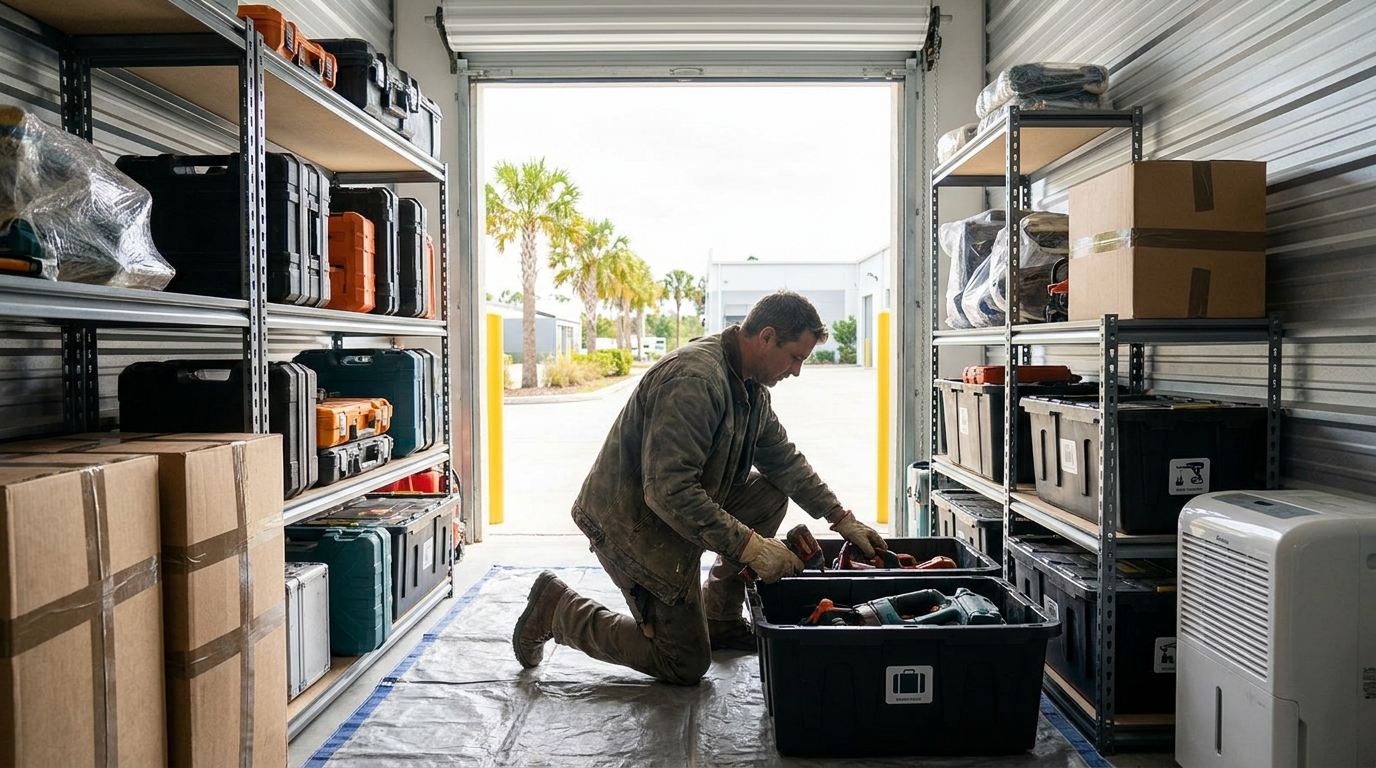
Not all storage units are the same. For tools and equipment, a few features matter more than the rest.
Drive-up units let you load and unload near the unit entrance, which is helpful for heavier items like compressors, saws, tool chests, ladders, and bins of supplies. For contractors who need to rotate gear between jobs, drive-up access can save time compared with carrying items through long hallways.
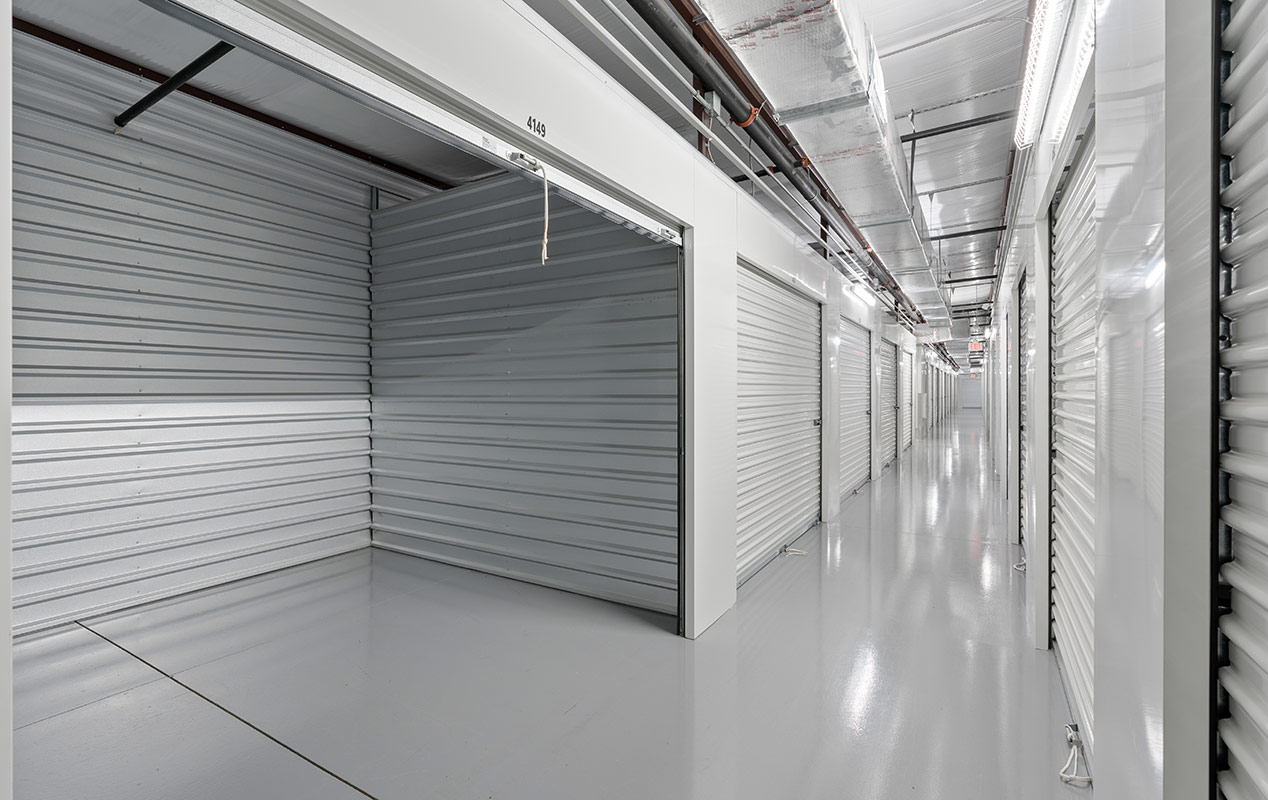
Climate-controlled storage can be useful for power tools, batteries, electronics, manuals, paperwork, and precision equipment. It is not a guarantee against damage, but it can help create a more stable storage environment than an unconditioned garage or shed.
A facility only works if it's easy to reach. Job schedules don't always follow a 9-to-5, and nobody wants to fight extra traffic just to drop off equipment. A location near major routes like I-75 and US-301 can make storage easier to work into daily routines.
Some tools travel with a trailer, small work vehicle, or larger equipment setup. At this Riverview location, eligible vehicles and trailers may be stored in certain drive-up units when they fit the unit dimensions and meet facility rules. SecureSpace does not offer separate outdoor parking spaces for rent at this facility, so confirm vehicle or trailer dimensions, availability, and storage requirements before renting.
Choosing the right size keeps you from paying for space you won't use. A simple way to choose is to think about how often you'll need access and whether you need aisle space inside the unit.
A 5x5 unit can work for hand tools, small power tools, fasteners, and a few totes of supplies. A 5x10 unit gives you more room for longer items, small shelving, seasonal equipment, or a compact tool collection.
A 10x10 unit can hold the contents of a small workshop or a larger set of tools and supplies. A 10x15 or 10x20 may be a better fit for contractors storing gang boxes, ladders, compressors, miter saws, and job-site materials.
For larger tool collections, bulk supplies, or eligible vehicles and trailers stored inside approved drive-up units, sizes such as 10x25 or 10x30 may be worth considering. Measure your longest items, leave room to walk, and keep frequently used gear near the front so you're not unloading half the unit to reach one tool.
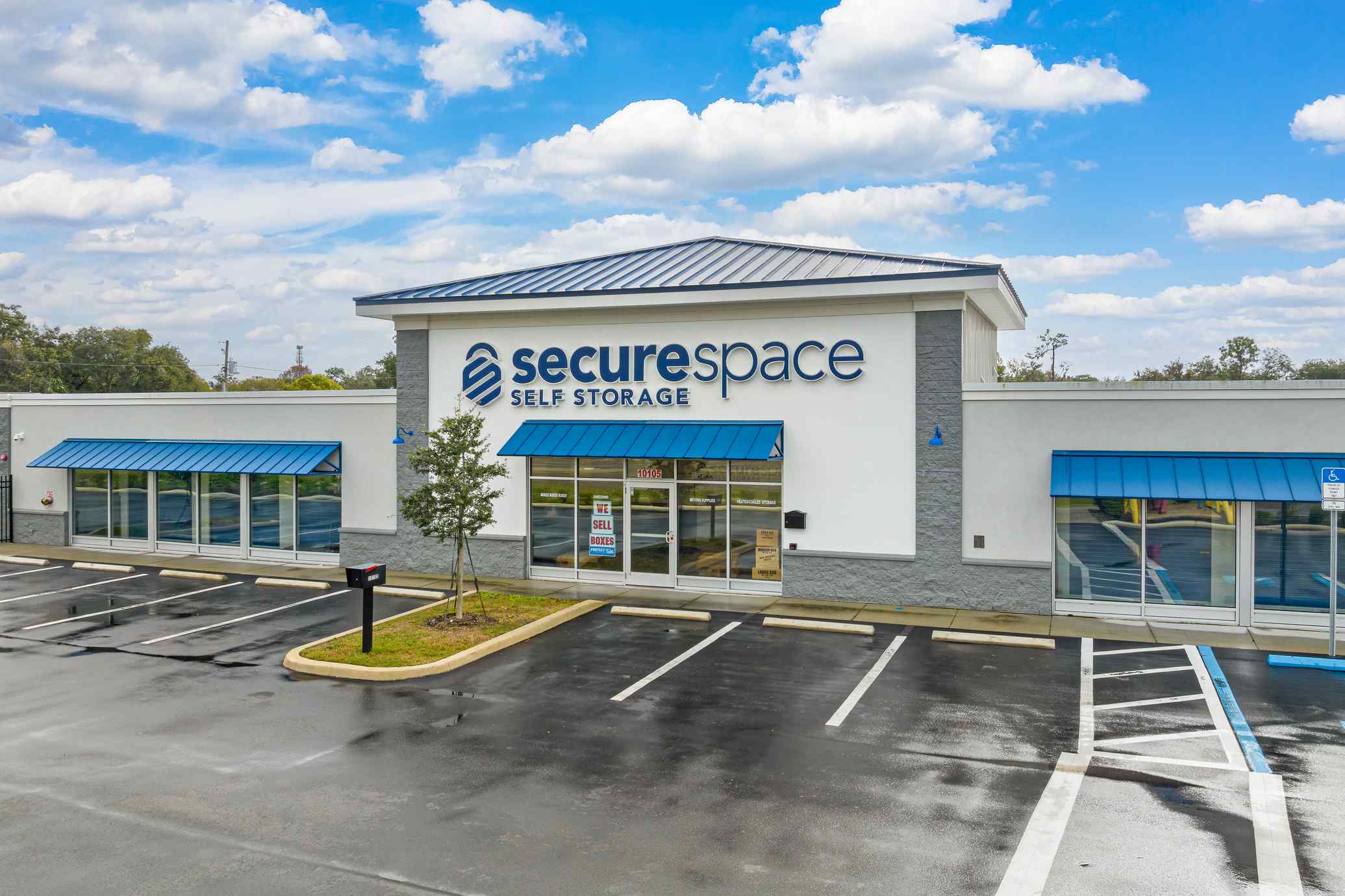
SecureSpace Self Storage at 10105 Gibsonton Drive is designed with local tradespeople and homeowners in mind. The facility sits near Interstate 75 and US-301, making it a practical stop for customers moving between home, job sites, and errands.
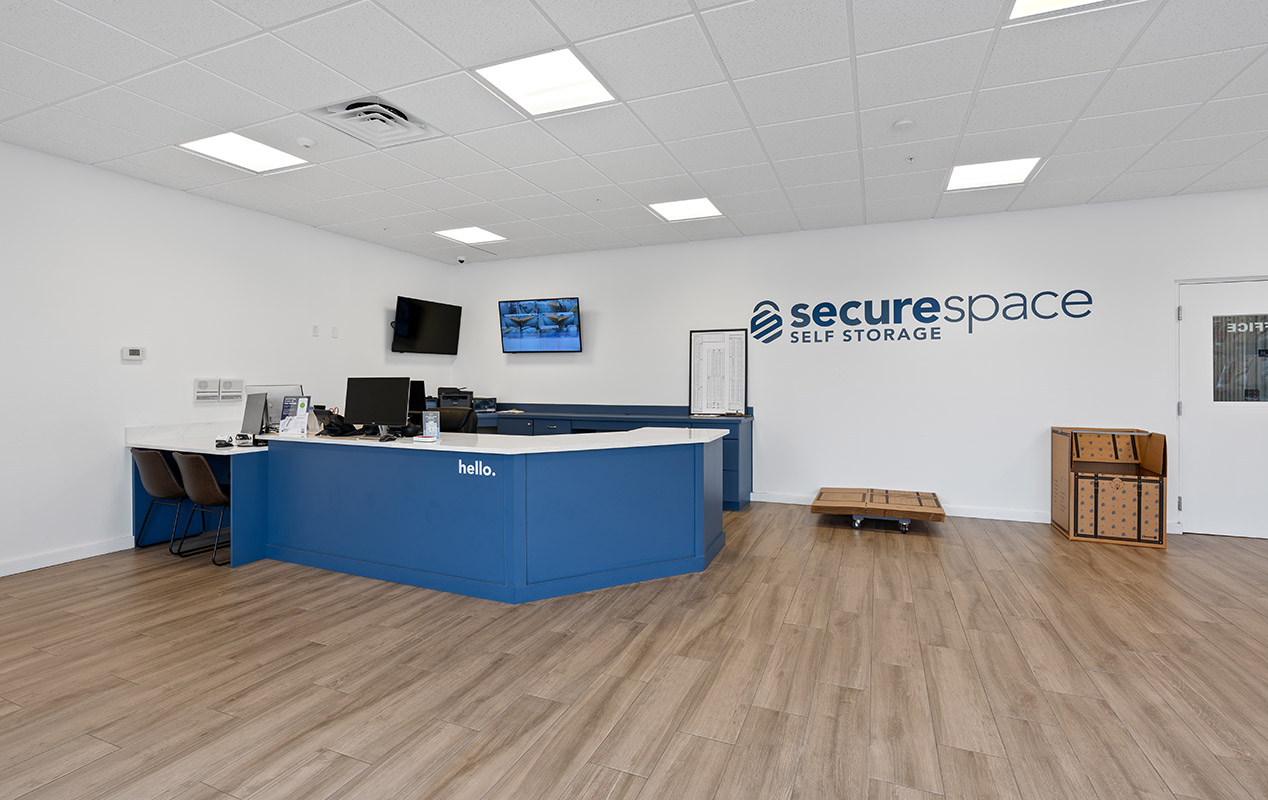
This single-story facility offers self storage, climate-controlled storage, drive-up units, carts and dollies, and daily gate access from 6:00 AM to 10:00 PM. Security features include an access gate, digital video recording, logged access, overnight surveillance, and touchless computer-controlled access.
For contractors near FishHawk, Brandon, and the wider Hillsborough County area-or homeowners simply trying to reclaim their garage-it's a practical place to keep tools organized and easier to access.
It depends on what you're storing. Climate-controlled storage can be useful for power tools, batteries, electronics, chargers, and precision equipment because it can help reduce exposure to temperature swings. For batteries, always follow the tool manufacturer's storage instructions.
Yes. SecureSpace at 10105 Gibsonton Drive offers drive-up units. These can help with loading and unloading heavy tools, compressors, ladders, bins, and large tool chests. Availability varies, so check current unit options before planning a move-in.
Possibly, if the trailer fits inside an eligible drive-up unit and meets facility rules. SecureSpace Riverview does not offer separate outdoor parking spaces for rent, so confirm trailer dimensions, unit availability, and storage requirements directly with the facility before renting.
Prices vary by unit size, features, and current availability. Smaller units generally cost less than larger spaces, while climate-controlled and drive-up options may have different rates. Check current pricing online before choosing a unit.
Use shelving where appropriate, store hand tools in labeled bins, and place frequently used gear near the door. Keep batteries separate from tools when recommended by the manufacturer, wipe down metal tools before storing them, and leave a clear path so you can reach what you need quickly.
Don't let a packed garage or crowded truck bed slow down your next project. A storage unit can help keep tools organized, accessible, and out of the way at home.
Review current availability for tool storage at SecureSpace Riverview and choose the unit size that fits your equipment.
Everything you need to store your belongings securely, on your schedule.
Visit us online