Last updated Jul 10, 2026
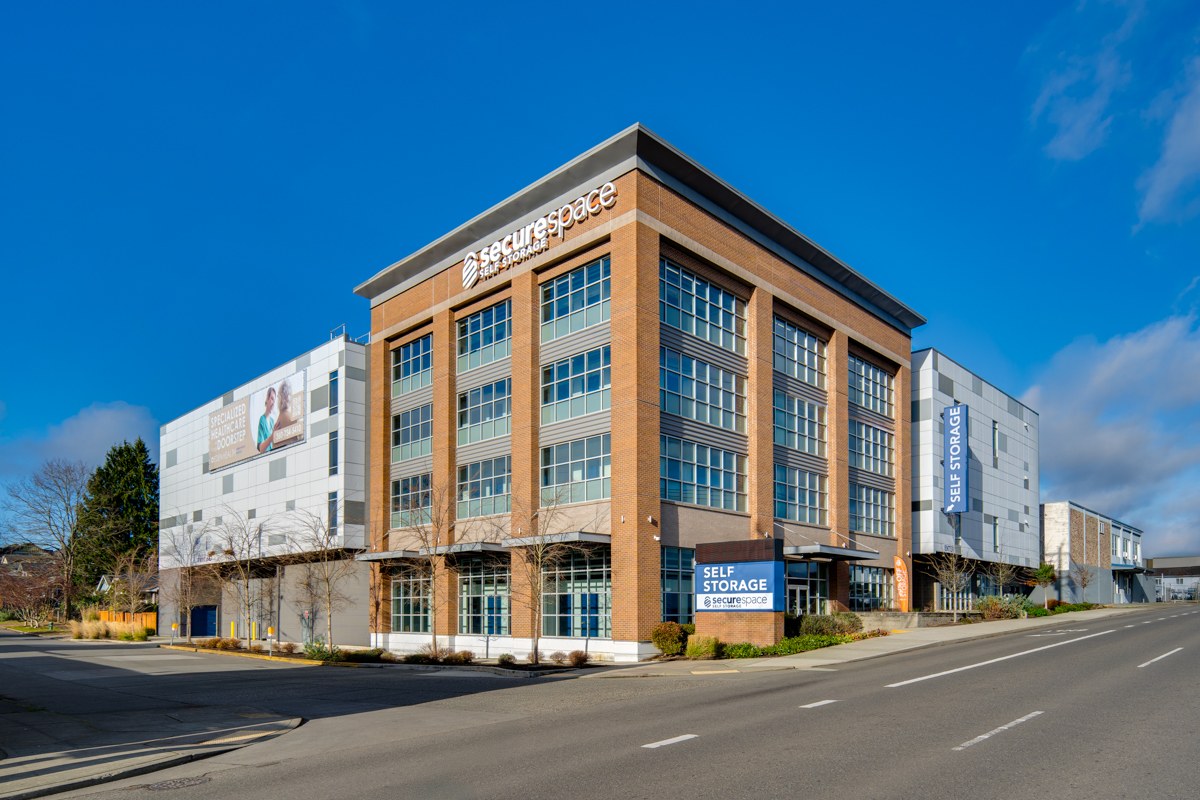
The selection of an off-site storage facility in the hyper-dense, geologically complex, and climatically distinct environment of North Seattle is a decision that extends far beyond simple price comparisons per square foot. For residents and businesses operating within the ZIP codes of 98103, 98133, 98105, 98117, and 98125, the choice of a facility at 9309 Aurora Avenue North involves a complex interplay of logistical accessibility, asset preservation physics, and urban housing dynamics. This report serves as a definitive, operational decision guide for SecureSpace Self Storage Seattle Greenwood, analyzing its utility through the lens of a "mixed" market—accommodating the diverging needs of micro-apartment renters in Green Lake and detached accessory dwelling unit (DADU) developers in Crown Hill.
Our analysis indicates that while the facility offers a modern, high-security infrastructure characterized by climate-controlled environments and covered loading bays—features critical for mitigating the Pacific Northwest's persistent humidity—its utility is heavily modulated by the traffic engineering constraints of the Aurora Avenue North corridor. The presence of median barriers, recent turn restrictions at North 93rd and North 95th Streets, and the implementation of 24-hour bus lanes significantly alter the ingress and egress equations for prospective tenants.
Furthermore, the evolving housing stock in Seattle, which now features the smallest average apartment size in the United States at 649 square feet for new builds, has transformed self-storage from a discretionary service into a necessary utility for residential viability. This report dissects these variables, providing a risk-assessed, operationally grounded framework for decision-making without resorting to direct sales rhetoric or speculative pricing models. It is designed for the informed consumer who views storage not merely as space, but as a logistical component of their urban lifestyle or business operations.
The demand for off-site storage in North Seattle is structurally driven by specific shifts in the region's land-use policies and development patterns. To understand the necessity of a facility at 9309 Aurora Ave N, one must first understand the architectural pressures exerted on residents in the surrounding catchment areas. The "Mixed" market lens reveals a dichotomy: the shrinking footprint of rental units and the densification of single-family lots.
Data from recent housing studies indicates a stark trend in Seattle's multi-family development sector. Over the last decade, the average size of new apartments in the city has decreased by approximately 3.6%, dropping to an average of 649 square feet in 2024—the smallest average unit size among major U.S. cities, trailing even space-constrained markets like Manhattan and San Francisco. This phenomenon is particularly acute in neighborhoods such as Green Lake (98103) and the University District (98105), where "efficiency" studios and micro-housing projects have proliferated to meet demand.
For the resident of a 500-square-foot unit, the mathematical reality is unforgiving. Standard household inventory—seasonal wardrobes, recreational equipment like kayaks or skis (ubiquitous in the Pacific Northwest), and bulk consumables—simply cannot physically coexist within the primary residence. Consequently, the storage unit ceases to be a repository for "junk" and functions instead as a "detached closet" or "remote attic." This shift necessitates a facility that is not only secure but also operationally efficient for frequent, short-duration visits, a factor that brings the location and accessibility of 9309 Aurora Ave N into sharp focus.
Conversely, in the single-family zones of Greenwood (98103), Crown Hill (98117), and Licton Springs (98133), the primary driver of storage demand is the liberalization of Accessory Dwelling Unit (ADU) regulations. The City of Seattle's code reforms have simplified the permitting process for Detached Accessory Dwelling Units (DADUs), commonly known as backyard cottages.
The construction of a DADU often occurs on the footprint of an existing detached garage. This development pattern results in the immediate and total displacement of the items typically housed therein: lawnmowers, tools, holiday decorations, and overflow household goods. Homeowners engaging in these projects face a "displacement crisis" lasting 12 to 18 months during construction. For this demographic, the storage requirement is high-volume (often necessitating 10x15 or 10x20 units) and duration-specific. The proximity of the Greenwood facility to these "construction zones" allows for the seamless staging of materials and the preservation of household order during the chaotic building phase.
Between these two extremes lies the "Missing Middle"—townhomes and rowhouses in Ballard (98107) and Wallingford (98103). These vertical residences often feature carports or extremely narrow single-car garages that are repurposed as home offices or gyms, displacing vehicle-related and outdoor gear to off-site locations. The "Mixed" market lens thus reveals a uniform pressure across diverse housing types: the expulsion of non-essential daily items from the residential core to the logistical periphery.
The address 9309 Aurora Avenue North places the facility on State Route 99, a major arterial that functions more like an urban highway than a neighborhood street. While high visibility is an asset, accessibility is the primary operational constraint. The "Aurora Factor" complicates the simple act of arriving at the facility, particularly for those operating large moving trucks or navigating during peak traffic windows.
Aurora Avenue North is characterized by high traffic volumes, significant speed differentials between lanes, and rigid channelization. The facility is located on the west side of the street, serving southbound traffic directly. For a driver approaching from the north (e.g., from Shoreline or 145th St), access is a straightforward right turn into the facility's driveway. However, for the majority of the population centers in Seattle—Green Lake, Wallingford, Downtown, and Ballard—the approach is naturally northbound, which presents a significant geometric challenge.
The central median along this stretch of Aurora is not merely a painted line; it effectively functions as a barrier due to turn restrictions. Recent safety improvements by the Seattle Department of Transportation (SDOT) have installed restrictions on left turns and thru-movements at key intersections to reduce collision rates. Specifically, the intersection at North 93rd Street, adjacent to the facility, does not support a southbound left turn for northbound traffic. Consequently, northbound drivers must execute a "loop maneuver"—proceeding past the facility to a signalized intersection where a U-turn or a series of left turns is legal and safe.
The most viable turnaround points for northbound traffic are North 95th Street and North 105th Street.
North 95th Street: While closer, this intersection can be tight for larger vehicles. Turn restrictions may apply during specific hours, and the residential nature of the side streets can make maneuvering a 26-foot truck difficult.
North 105th Street: This is a major arterial intersection. It offers wider turning radii and dedicated turn lanes, making it the preferred turnaround point for moving trucks and vehicles towing trailers. From here, a driver can merge onto Aurora Southbound and execute a safe, wide right turn into the SecureSpace driveway.
For users renting large commercial trucks (e.g., U-Haul or Penske 26-footers), this "approach from the north" strategy is non-negotiable. Attempting a U-turn at narrower intersections on Aurora is dangerous and often illegal due to the roadway geometry and traffic speeds.
A critical recent development on Aurora Avenue is the implementation of 24/7 bus lanes. As of 2024/2025, SDOT and King County Metro have converted curbside lanes into dedicated bus lanes to support the RapidRide E Line.
The Right-Turn Exception: Drivers are permitted to enter the bus lane to make a right turn into a business driveway. However, this creates a specific conflict point. Drivers must decelerate to enter the facility while potentially obstructing a bus approaching from behind, or conversely, must yield to a bus before merging into the turn lane.
Visibility and Deceleration: The high speeds on Aurora (often exceeding the posted limit) mean that deceleration must be rapid once in the turn lane. The driveway at 9309 is the only ingress point; missing it requires a lengthy detour involving another loop maneuver.
The usability of the facility fluctuates with the tidal flow of commuter traffic.
Morning Peak (Southbound): Between 7:00 AM and 10:00 AM, the lanes adjacent to the facility are heavily congested with commuters heading toward downtown Seattle and South Lake Union. Exiting the facility during this window requires merging into a dense, high-speed stream of traffic.
Evening Peak (Northbound): From 3:00 PM to 7:00 PM, the northbound lanes are congested. While the facility is on the southbound side, cross-traffic at intersections (like 95th and 105th) becomes gridlocked, significantly increasing the time required to execute the approach loop.
The suitability of SecureSpace Greenwood varies significantly depending on the user's point of origin. By analyzing the specific housing typologies and logistical constraints of the primary catchment ZIP codes, we can derive tailored decision frameworks.
Residents of 98103, particularly in the Phinney Ridge and Greenwood sub-neighborhoods, inhabit a zone of intense residential renovation. The housing stock here is largely comprised of Craftsman bungalows and Tudors from the early 20th century.
The Storage Driver: "Basement Excavation and Remodeling." To add square footage without expanding the building footprint, homeowners frequently underpin and lower basements. This process requires the total evacuation of the lower level—typically the home's primary storage area—for 6 to 9 months.
Why 9309 Aurora? Proximity is the defining factor. For a renovation project, the homeowner needs frequent access to retrieve tools, documents, or seasonal items that were displaced. The facility serves as an external pantry. The drive is short enough (5-10 minutes) to allow for "quick trips," provided the user avoids peak Aurora congestion.
Green Lake represents the epicenter of Seattle's recreational lifestyle and its density paradox.
The Storage Driver: "Lifestyle Incompatibility." Residents are drawn to the area for the lake, park, and active culture, leading to high ownership of bicycles, paddleboards, and kayaks. However, the housing stock—increasingly dominated by micro-studios and efficiency apartments—lacks the physical volume to house this equipment.
The "Mudroom" Function: SecureSpace functions as a detached mudroom for this demographic. The facility's proximity to the lake (less than 1.5 miles) allows users to retrieve gear on the way to recreation. However, users must carefully consider unit size; a 5x5 unit is sufficient for boxes but cannot accommodate a 10-foot paddleboard or a standard adult bicycle without careful vertical stacking or disassembly.
Ballard (98107) has seen explosive growth in condo density, creating a "condo canyon" effect with thousands of new residents and minimal on-site storage. Crown Hill (98117) remains more residential but is a hotspot for DADU construction due to larger lot sizes.
The Storage Driver: "Displacement and Overflow." Whether due to a lack of condo storage or the demolition of a garage for a DADU, the need is acute.
The Tradeoff: Storage facilities located directly in Ballard (e.g., along Shilshole Ave or 15th Ave NW) command a premium due to high land values and demand. 9309 Aurora, located roughly 2-3 miles east, often offers a more competitive rate per square foot. The tradeoff is the cross-town drive. Navigating East-West across North Seattle (via N 85th St or Holman Rd) is notoriously slow. A resident of Sunset Hill (Western Ballard) might face a 20-25 minute drive to Aurora during peak times.
Verdict: For long-term storage (where access is infrequent), the cost savings at Aurora likely outweigh the inconvenience of the drive. For active storage (weekly access), a Ballard-based facility may be worth the premium.
These neighborhoods are defined by their proximity to the Interstate 5 corridor and the new Light Rail infrastructure at Northgate.
The Storage Driver: "Downsizing and Logistics." The area has a higher concentration of post-war ramblers occupied by aging demographics who are downsizing into senior living or condos near the transit hubs. Additionally, the proximity to I-5 makes this location ideal for small business owners (contractors, e-commerce sellers) who use storage as a logistics hub.
Accessibility: For these residents, 9309 Aurora is highly accessible via N 105th St or N 130th St. The "approach from the north" is natural for residents of Shoreline and Lake City, mitigating the U-turn issues faced by those further south.
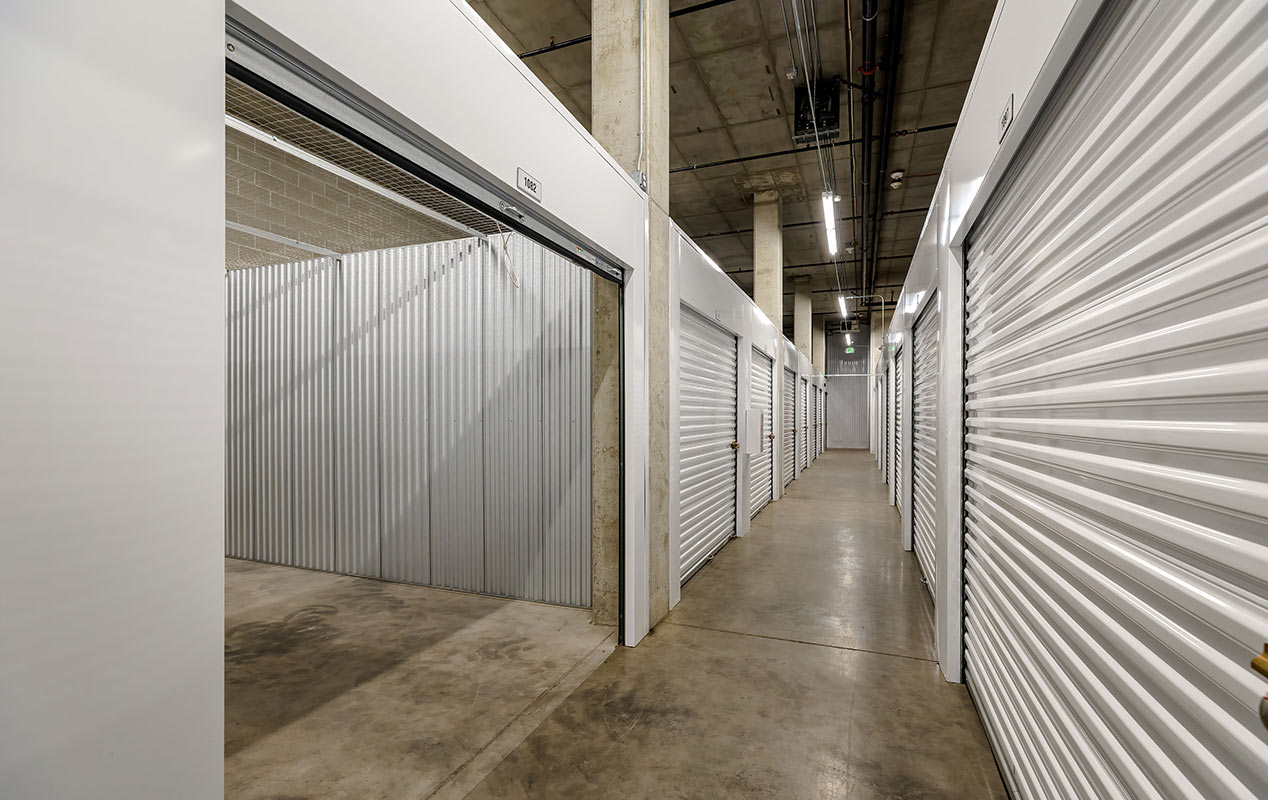
Moving beyond the location, the facility itself presents a distinct operational profile compared to traditional "drive-up" storage rows found in suburban zones. SecureSpace Greenwood is a modern, vertical, climate-controlled asset. This configuration has specific implications for the user experience.
Unlike a single-story facility where one can drive primarily to the unit door, 9309 Aurora relies on vertical conveyance.
Time Cost: Moving into an upper-floor unit introduces "staging time." The user must park, load a cart, wait for the elevator, travel to the floor, and unload. This process adds significant time to a move—potentially increasing the cost of professional movers who charge by the hour.
Cart Availability: In vertical facilities, the availability of flatbed carts is a critical bottleneck. During end-of-month weekends (the primary moving window), demand for carts often outstrips supply. Users are advised to bring their own dolly or hand truck to avoid waiting.
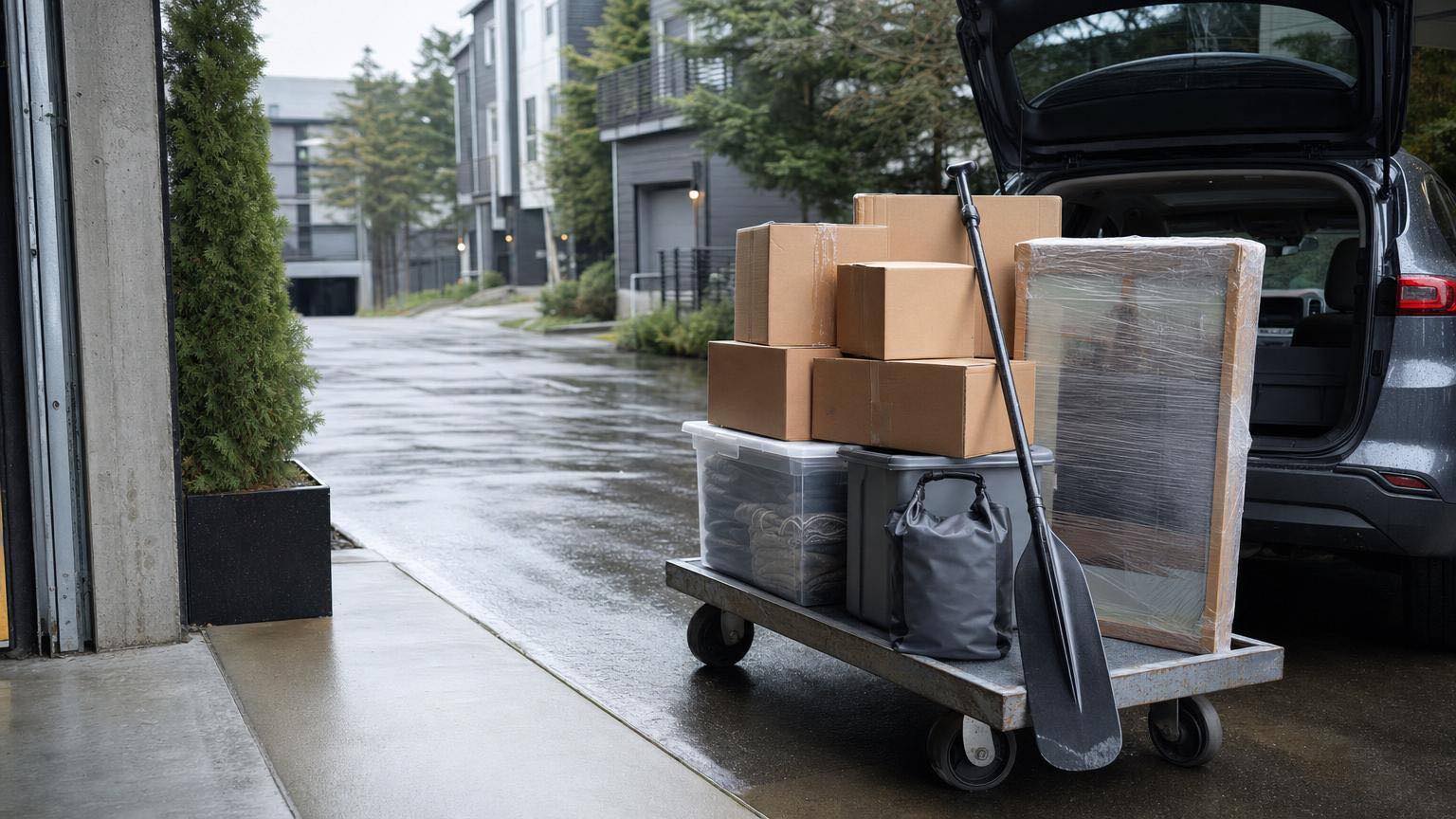
A distinguishing feature of the SecureSpace facility design is the enclosed or covered loading bay. In the context of Seattle's climate, this is not a luxury; it is a critical asset preservation feature.
The "Dry Chain": Seattle experiences rain on average 150 days per year. Breaking the "dry chain" (the exposure of goods to moisture between the truck and the unit) can be disastrous. A mattress or sofa that gets damp during a 10-minute unload in the rain can develop mold after it is locked in the unit, regardless of the unit's internal climate control.
Operational Advantage: The ability to back a van or truck into a covered area allows for a dry transfer of goods. This feature significantly reduces the risk of introducing surface moisture into the storage environment.
Seattle's average relative humidity (RH) hovers between 70% and 80% for much of the year, spiking higher during the prolonged "gray season" from October to May.
The Biological Reality: Mold spores can germinate on organic materials (wood, paper, cotton, leather) when RH exceeds 60% for typically 24-48 hours. A standard, non-climate-controlled unit (often termed "drive-up" or "unheated") essentially mirrors the ambient outdoor humidity. In November, this means the interior of a drive-up unit acts as a humid incubator.
The "Heated" Fallacy: It is crucial to distinguish between "Heated" storage and "Climate Controlled" storage. Merely heating air without dehumidifying it can increase its moisture-carrying capacity. True climate control systems, like those typically employed in modern multi-story facilities, regulate both temperature and humidity, actively removing moisture from the air.
Asset Categorization: Tier 1 (Must Have Climate Control): Electronics, photographs, legal documents, leather furniture, musical instruments, mattresses, clothing. Tier 2 (Standard/Drive-Up Acceptable): Sealed plastic bins, plastic patio furniture, metal tools (if oiled), ceramic tiles, construction materials.
SecureSpace markets a feature termed "Motion Guard." Understanding its mechanism is vital for setting expectations.
The Mechanism: This technology typically involves a motion sensor within the individual unit that is linked to the tenant's access code. If motion is detected inside the unit without the tenant's access code having been used at the main gate or keypad, the system interprets this as an intrusion.
The Benefit: It closes the "hallway gap." Standard security cameras monitor hallways but cannot see inside units. If a thief tailgates into the building and picks a lock, hallway cameras only show them entering. Motion Guard provides an immediate alert (via SMS or app) to the tenant if the interior is breached, significantly reducing the "dwell time" a thief has to rummage through belongings.
Limitations: It is a detection and notification system, not a physical barrier. It relies on cellular connectivity and the user's ability to receive and act on the alert. It does not physically prevent entry.
For the initial move-in, specifically when using a 15-foot or 26-foot truck, the approach vector is critical.
Route Planning: Do not rely on GPS to simply guide you to the address. GPS may route you northbound on Aurora, instructing a U-turn that is impossible for a large truck.
The North Approach: Plan the route to enter Aurora Avenue North from North 130th Street or North 145th Street. Travel southbound in the right lane. This allows for a wide, safe right-hand turn into the loading bay.
Departure: When leaving, turn right (South) onto Aurora. Do not attempt to cross multiple lanes of traffic to turn left (North) or make a U-turn immediately. Proceed south to a major intersection (like N 85th St) to redirect if necessary.
Given the cost of urban storage, maximizing the utility of the rented volume is essential.
Shelving Units: For 5x5 and 5x10 units, vertical space is the only "free" space. Installing freestanding metal shelving units allows a user to store significantly more volume and access individual bins without unstacking the entire unit. This is particularly valuable for the "Micro-Apartment" user who uses the unit as a closet extension.
Aisle Creation: For 10x10 units and larger, leave a narrow center aisle. A "packed cube" is inaccessible. If you are storing renovation supplies, you will inevitably need the box at the very back. An 18-inch aisle saves hours of frustration.
Storage contracts universally require the tenant to insure the stored goods.
The "Upsell" Risk: Facilities often default tenants into a "Store-Smart" or similar in-house insurance policy, which adds $10-$20 to the monthly rent for minimal coverage (often capped at $2,000-$3,000).
The "Rider" Strategy: Most homeowner's and renter's insurance policies include coverage for "off-premises personal property," typically at 10% of the primary dwelling's coverage limit. Users should verify this with their provider and bring a copy of the "Declarations Page" to the lease signing to waive the in-house insurance fee.
The self-storage industry utilizes dynamic pricing algorithms similar to airlines. The "web rate" observed today is a snapshot based on current occupancy and forecasted demand.
Volatility: Prices for specific unit sizes (e.g., 10x10) can fluctuate daily.
The "Teaser" Rate: Introductory rates (e.g., "50% off first 2 months") are common. However, the base rent is subject to increase.
The Rate Hike: Tenants should anticipate a rental rate increase typically between the 6th and 9th month of tenancy. This is a standard operational practice in the REIT-dominated storage sector.
When comparing 9309 Aurora to a facility in Ballard or Wallingford, the user must calculate the "Total Cost of Ownership," not just the monthly rent.
Ballard Facility: $200/month rent + 5-minute drive ($2 gas/time) = $202/month effective.
Aurora Facility: $160/month rent + 20-minute drive ($10 gas/time) = $170/month effective.
The Break-Even: If access is infrequent (once a month or less), the lower rent at Aurora yields savings. If access is weekly, the time cost and fuel cost of navigating Aurora traffic erodes the rental savings.
Project Timeline: If storing for a renovation, does the contractor have a firm end date? Add 3 months to this estimate to determine the true lease term.
Basement Items: Are the items coming from a damp basement? If so, ensure they are thoroughly dried before moving them into the unit to prevent bringing mold spores into the climate-controlled environment.
Elevator Check: Measure the length of recreational gear (kayaks, longboards). Ensure they fit diagonally in a standard elevator cab (typically 8-9 feet high). If not, a ground-floor unit is mandatory.
Frequency Audit: Be realistic about how often you will visit. If you plan to grab a paddleboard every Saturday at 8 AM, the traffic on Aurora is light. If you plan to visit at 5 PM on Tuesday, the traffic friction will be significant.
Cost-Benefit Analysis: Compare the "Web Rate" at 9309 Aurora against the "Street Rate" of facilities on 15th Ave NW in Ballard. The spread is often 20-30%.
Route Mapping: Test the drive during your likely visit times. The cross-town drive via N 85th St is the primary friction point.
Access Vector: Confirm the ability to approach southbound from N 105th St.
Security Layer: For business users storing inventory, verify the "Motion Guard" alert settings on your mobile device to ensure real-time notification capability.
SecureSpace Self Storage Seattle Greenwood represents a high-specification logistical asset within the North Seattle market. Its value proposition is defined by its ability to mitigate environmental risks (humidity, rain) through modern infrastructure (climate control, covered loading) and security risks through technology (Motion Guard).
However, its utility is inextricably linked to the user's ability to navigate the complex traffic patterns of Aurora Avenue North. For the "Mixed" market of North Seattle—ranging from the space-constrained renter in Green Lake to the construction-displaced homeowner in Crown Hill—the facility serves as a vital "third space." The optimal use of this facility requires a shift in mindset: viewing it not as a static garage, but as a dynamically accessed extension of the home, managed with the same logistical foresight as any other component of urban living. By adopting a "North Approach" driving strategy and a rigorous "Dry Chain" protocol for loading, tenants can leverage this facility to effectively solve the spatial equations of modern Seattle life.
Everything you need to store your belongings securely, on your schedule.
Visit us online