Living in Clearwater, Florida, offers access to beaches, waterways, and recreational opportunities throughout Pinellas County. For many residents, owning a boat, recreational vehicle, trailer, or extra car is part of the Gulf Coast lifestyle. You might spend weekends exploring the Intracoastal Waterway or taking road trips across the state.
However, owning larger recreational equipment or an extra vehicle can create a storage challenge. Space is limited across Pinellas County, and local parking rules, HOA requirements, lease terms, and coastal weather can all affect where you keep a vehicle when it is not in use.
This guide provides practical information for storing eligible vehicles or recreational equipment in Clearwater. We will cover local parking considerations, environmental factors that can affect stored vehicles, and general preparation steps for longer outdoor storage.
Finding a place to park a larger vehicle in Clearwater can involve city ordinances, county rules, HOA covenants, condo rules, and lease requirements. Before storing any vehicle at home, review the rules that apply to your specific property.
HOA and community rules can be complex. Some neighborhoods, condo associations, and deed-restricted communities may limit trailers, recreational vehicles, commercial vehicles, or long-term parking. State and local rules may also affect what can be parked on residential property.
Because regulations vary by address, vehicle size, and property type, owners should confirm current requirements with their HOA, landlord, city, or county before assuming driveway or street parking is allowed.
The restrictions can extend beyond private HOA neighborhoods. The City of Clearwater heavily regulates the parking of commercial vehicles, trailers, and RVs on public streets and residential properties.
In busy coastal areas, parking availability may be limited, and oversized vehicles or trailers may face additional restrictions. Off-site vehicle storage can help owners plan around parking challenges, but it should not be treated as a guarantee of legal or HOA compliance. Always review applicable rules before making storage decisions.
Beyond parking restrictions, the Clearwater environment can be hard on vehicles over time. Sun, rain, humidity, and salt air may contribute to wear, especially for vehicles or recreational equipment left outdoors for long periods.
The Gulf Coast air can carry salt, and Florida humidity can keep moisture on vehicle surfaces. Over time, these conditions may contribute to oxidation, corrosion, fading, rubber wear, and general exterior deterioration.
The Florida sun can also affect paint, gel coats, window trims, tires, seals, and plastic components. Moving a vehicle away from immediate coastal exposure and keeping it in an organized storage environment may help reduce exposure compared with some at-home parking situations.
From June through November, the Atlantic hurricane season can affect vehicles stored near the water. Local emergency management agencies and marine experts, including BoatUS, advise boat owners to plan carefully before storms and avoid last-minute decisions.
A storage facility can be part of a broader storm-preparation plan, especially for organizing vehicles, trailers, or loose outdoor items. However, storage should not be treated as a guarantee against flooding, wind, storm surge, or hurricane damage. Follow local emergency guidance, review facility access rules during severe weather, and confirm what can be stored before making plans.
When you place a vehicle in outdoor storage, preparation can help reduce avoidable wear. Follow your vehicle or equipment manufacturer's guidance for maintenance, fluids, batteries, tires, covers, and long-term storage.
Start by washing and drying the exterior to remove salt, pollen, road grime, and bird droppings. Depending on the vehicle type, applying an appropriate wax or protective product may help reduce exposure to sun and moisture.
Inside the vehicle, vacuum carpets and wipe down surfaces. Remove food, trash, scented items, and perishables that could attract pests. Make sure the interior is dry before storage.
According to automotive storage experts at Meemic Insurance, maintaining proper fluid levels can be an important part of preparing a vehicle for longer storage. Depending on your vehicle and storage timeline, your owner's manual may recommend oil service, fuel stabilizer, or other steps before storage.
Vehicle batteries may lose charge while sitting. Follow manufacturer guidance for battery maintenance, and do not assume electrical access is available in a storage space. If battery charging or maintenance is important, confirm options with the facility before making plans.
Tires can develop issues if a vehicle sits in one position for an extended period. Follow manufacturer guidance for tire pressure, periodic movement, and storage duration.
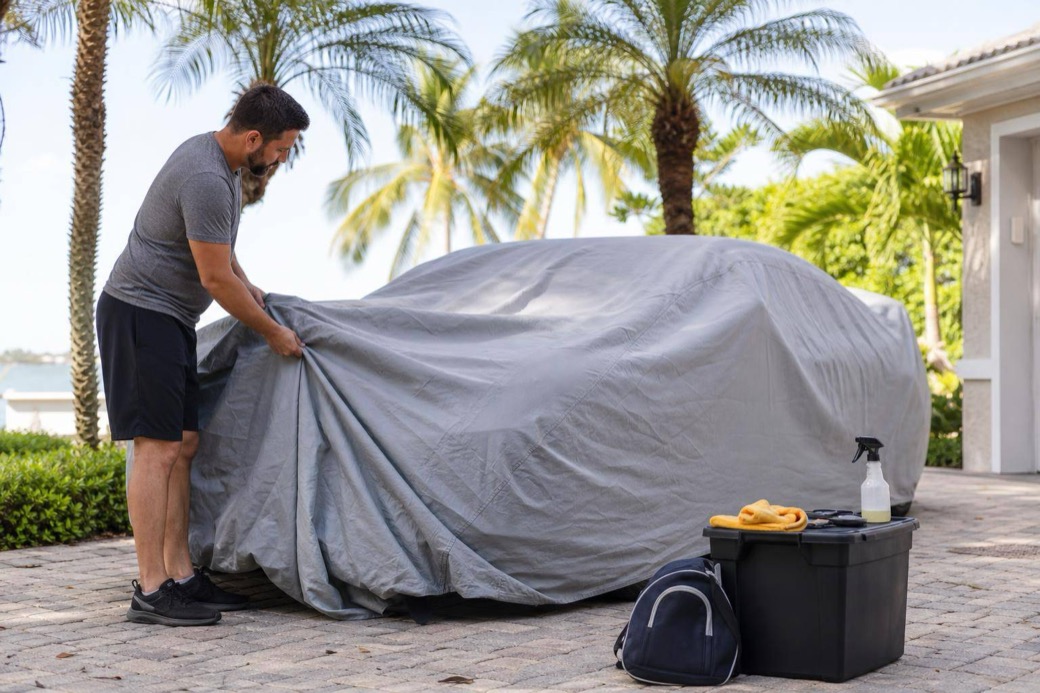
For outdoor storage, consider a breathable, vehicle-appropriate cover. Avoid covers or tarps that trap moisture against the vehicle. A proper cover may help reduce exposure to dust, debris, and UV rays while allowing moisture to escape.
One of the biggest concerns people have when booking vehicle storage is figuring out whether their vehicle will fit. You need enough room for the full length, width, and height of the vehicle or trailer, including mirrors, hitches, antennas, racks, outboard motors, trailer tongues, and accessories.
SecureSpace Self Storage Clearwater offers outdoor parking, parking units, drive-up units, and vehicle storage options in drive-up units. Vehicle storage depends on size, fit, availability, access requirements, and facility rules, so contact the facility directly before reserving.
A 10x20 unit or space may work for some eligible vehicles or equipment, depending on total dimensions, unit type, and access requirements. It can also be useful for household storage, business materials, or recreational gear.
A 10x25 option may provide additional room for larger household storage, equipment, or eligible vehicles that fit available rented spaces. Measure carefully and confirm all requirements before reserving.
A 10x30 unit provides about 300 square feet of space and may be useful for larger household storage, business overflow, or eligible vehicles and recreational equipment that fit within the available rented space. Fit depends on total dimensions, clearance, unit type, and facility rules.
Vehicles and recreational equipment can sit unattended for extended periods, so security and access features matter. Industry experts emphasize the importance of multi-layered security when choosing vehicle storage.
Look for facilities that clearly explain their access-control and monitoring features. SecureSpace Self Storage Clearwater offers digital video recording, an access gate, logged access, overnight surveillance, and touchless computer-controlled access. These features can support a more secure storage experience while helping manage access to the property.
It is also important to review gate access hours, facility rules, stored-property coverage options, and any vehicle-specific requirements before reserving.
Parking rules near Clearwater Beach and other coastal areas can be restrictive, especially for larger vehicles, trailers, or recreational vehicles. Rules may vary by location, vehicle type, and duration. Check current City of Clearwater parking rules and any HOA, condo, lease, or neighborhood restrictions before parking a vehicle.
HOA and condo rules can vary widely. Some communities may restrict boats, trailers, RVs, commercial vehicles, or vehicles visible from the street. Review your community documents and current local rules before deciding where to park.
Boat owners should follow local emergency and marine safety guidance before storms. The Florida Fish and Wildlife Conservation Commission offers hurricane preparation guidance for boaters, including planning ahead and securing vessels appropriately. A storage facility may be one part of a broader storm-preparation plan, but it is not a guarantee against storm damage.
Sizing depends on the full length, width, and height of the vehicle or equipment, including trailer tongue, motor, mirrors, hitches, and accessories. Measure everything carefully and contact the facility to confirm current parking or vehicle storage options before reserving.
SecureSpace Self Storage Clearwater offers outdoor parking, parking units, drive-up units, and vehicle storage options in drive-up units. Availability and fit can vary, so confirm dimensions, requirements, and current options before making plans.
When you are ready to reclaim driveway space and organize eligible vehicles or recreational equipment, SecureSpace Self Storage Clearwater offers storage options on the US-19 corridor.
Available features include outdoor parking, parking units, drive-up units, vehicle storage options in drive-up units, digital video recording, gated access, logged access, overnight surveillance, touchless computer-controlled access, month-to-month leases, online payments, ACH and credit card payment plans, and daily gate access from 6:00 AM to 10:00 PM.
Ready to find a storage option for your vehicle? Check current availability and book your secure outdoor parking space online today at SecureSpace Clearwater.
Everything you need to store your belongings securely, on your schedule.
Visit us online