Last updated Aug 12, 2026
Bicycles, helmets, pumps, repair stands, riding apparel, and seasonal accessories can take up substantial room at home. Apartment residents may have limited indoor space, while garages and shared bicycle rooms may not provide the access or organization every rider prefers.
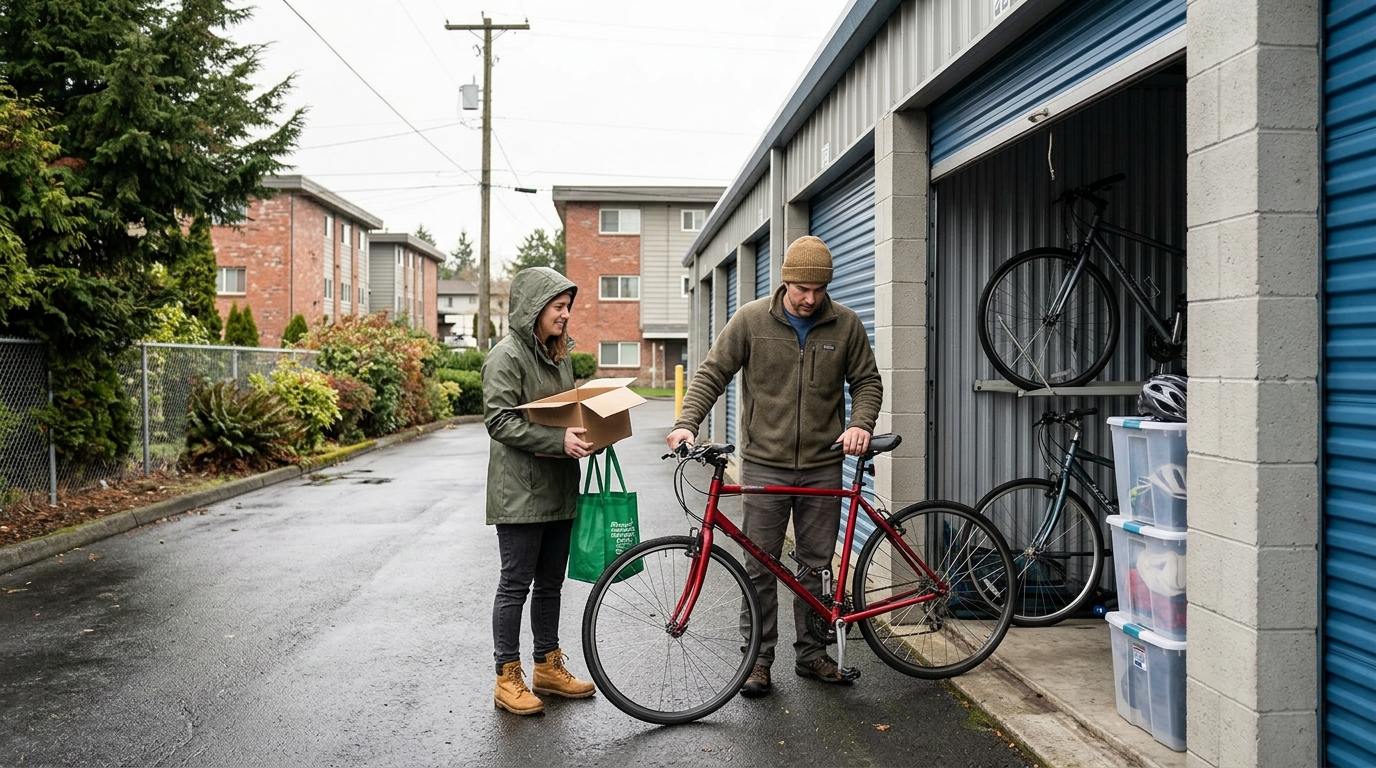
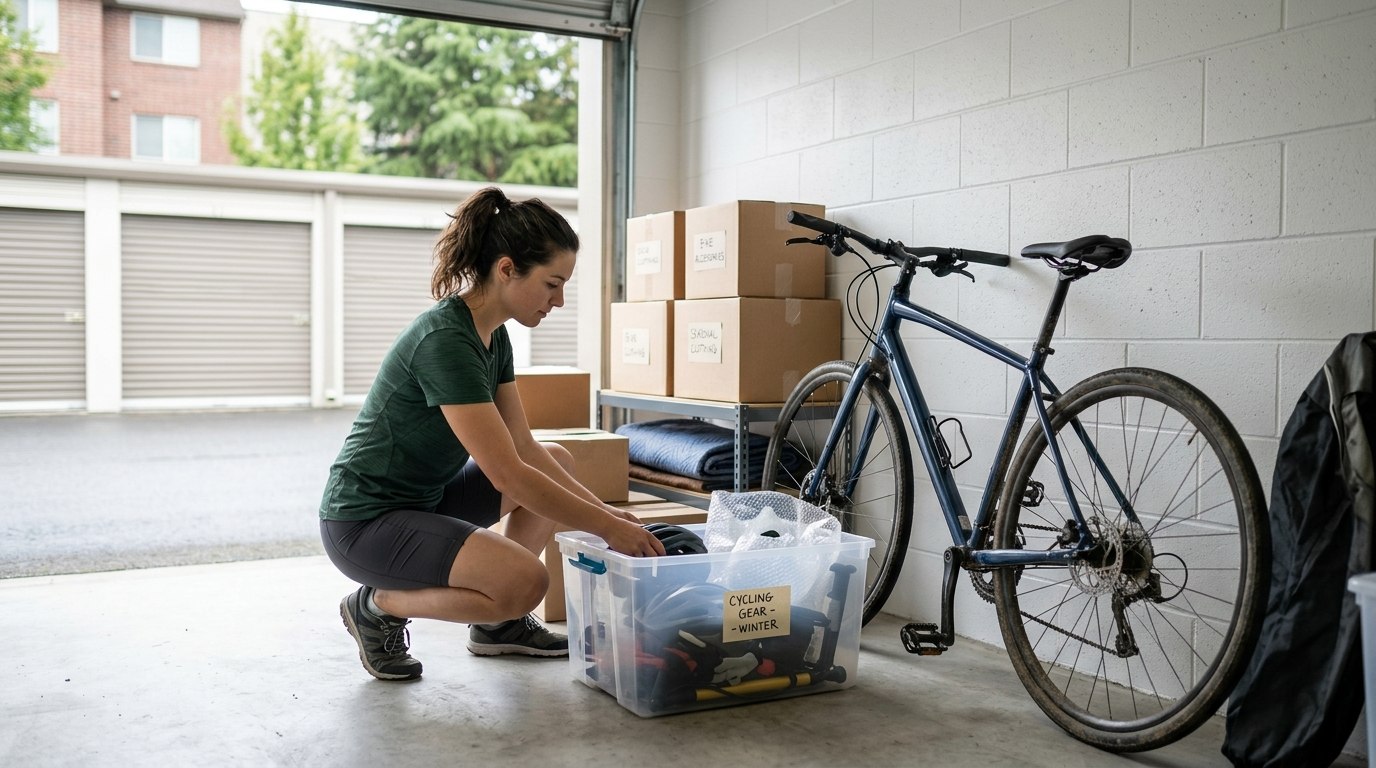
A self-storage unit can provide a dedicated place for bicycles and related gear between rides or during the off-season. The appropriate space depends on the bicycle's dimensions, the number of accessories being stored, and how frequently you plan to visit.
Everett riders also have access to local routes such as the Interurban Trail, which connects communities throughout Snohomish County. Keeping bicycles and gear organized can make it easier to prepare for commuting, exercise, or weekend rides.
Bicycle storage needs vary by household. Some riders need additional room during winter, while others want to keep bikes out of an apartment hallway or make space in a crowded garage.
Common reasons for using self storage include:
Limited apartment or condominium space
Several bicycles within the household
Seasonal cycling
Temporary moves or renovations
A need to organize repair tools and accessories
Keeping riding gear together between trips
Separating muddy equipment from living areas
A storage unit should support the rider's routine without being treated as a repair shop or active workspace.
Bicycle theft can occur in residential, commercial, and public settings. The Bike Index Annual Bike Theft Report emphasizes practices such as using suitable locks, recording serial numbers, and registering bicycles.
Local cycling resources, including the B.I.K.E.S. Club of Snohomish County, can also help riders find community information, cycling organizations, and safety resources.
When placing a bicycle in storage:
Record the make, model, and serial number
Photograph the bicycle and accessories
Keep receipts or ownership records
Use a suitable lock on the storage unit
Protect account and access credentials
Maintain an inventory of stored equipment
Review applicable property-coverage requirements
Facility security features can support access and monitoring procedures, but they cannot guarantee protection against theft, loss, or damage.
Careful preparation can help keep a bicycle organized and ready for future use.
Remove mud, road residue, salt, and other debris from the frame, wheels, drivetrain, and accessories.
Use products appropriate for the bicycle's materials and follow the manufacturer's cleaning instructions.
Do not place a wet bicycle into a storage unit.
Allow the frame, chain, brakes, tires, saddle, bags, and other components to dry thoroughly before move-in. Moisture already present on the bicycle can create problems regardless of the unit type.
Check whether the chain, cables, suspension, brakes, or other components need maintenance before storage.
Use manufacturer-approved lubricants and procedures. Riders who are uncertain should consult a qualified bicycle technician.
Lights, computers, bottles, repair kits, and removable bags can be stored separately in labeled containers.
Keeping small accessories together makes them easier to find when the bicycle returns to regular use.
Use suitable padding where bicycles or equipment may touch.
Avoid placing heavy containers against frames, wheels, brake rotors, or other components that could bend or become damaged.
Electric bicycles require additional planning because batteries and electrical components may have specific storage instructions.
Follow the bicycle and battery manufacturers' guidance regarding:
Charging level
Temperature exposure
Battery removal
Inspection frequency
Approved chargers
Long-term storage
Transportation and handling
Do not assume that a removable battery is permitted inside a storage unit. Facility rules may restrict certain battery types or charging activities.
Never charge an electric bicycle or battery inside the unit unless the facility has expressly authorized it. Self-storage units should not be used as charging stations, repair spaces, or workshops.
SecureSpace Everett offers climate-controlled and heated storage options.
These features may help reduce exposure to temperature swings and cold conditions compared with an unconditioned space. They should not be described as precise humidity-control systems or as guarantees against rust, corrosion, battery deterioration, or other damage.
Climate-controlled or heated storage may be worth considering for compatible bicycles and equipment containing:
Electronic components
Adhesives
Leather
Specialized fabrics
Sensitive accessories
Manufacturer-specified temperature requirements
The appropriate unit depends on the bicycle, preparation, expected storage period, and manufacturer guidance.
Start by measuring the bicycle and any rack or stand you plan to use.
The final fit depends on handlebar width, frame length, wheel position, accessories, door clearance, and the arrangement of other belongings.
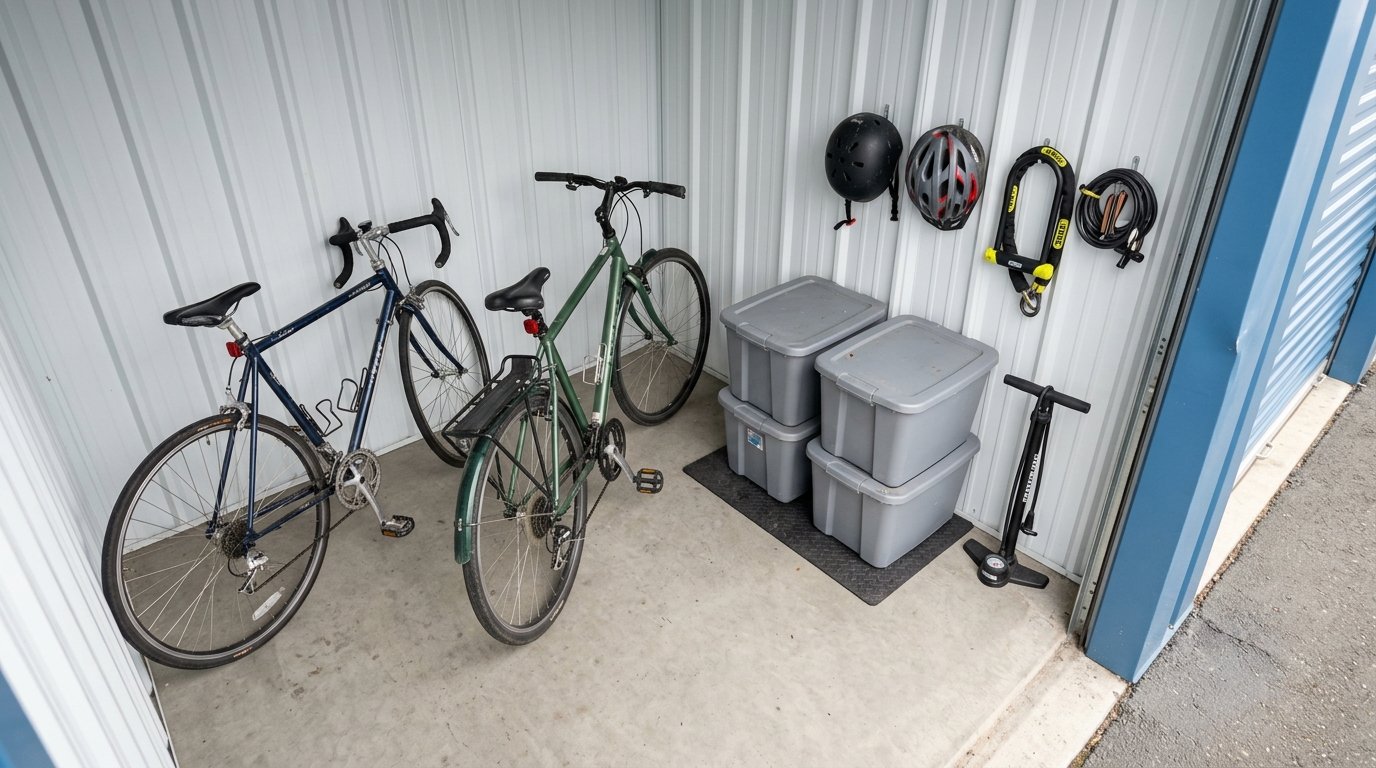
A compact unit may work for a bicycle, helmet, pump, apparel, and a small collection of accessories.
The bicycle may need to be positioned diagonally or placed on a freestanding rack, depending on its dimensions.
A medium unit may provide room for several bicycles, repair equipment, seasonal clothing, and labeled containers.
This option may also allow a clearer access path between the entrance and the stored bikes.
A larger unit may suit a family bicycle collection or bicycles stored alongside camping equipment, sports gear, or household belongings.
Choose based on measurements rather than assuming a particular unit category will fit every bicycle collection.
A deliberate layout can make visits easier and reduce contact between bicycles.
Freestanding bicycle racks can help organize bikes without modifying the unit.
Do not drill into walls, ceilings, or floors or install permanent hardware without written approval.
Keep enough room to retrieve a bicycle without moving every container or piece of equipment.
Place frequently used bicycles near the entrance and seasonal bikes farther back.
Use padding or stable supports where needed.
Do not lean heavy objects against wheels, frames, forks, handlebars, or braking components.
Keep helmets, shoes, pumps, locks, tools, and riding apparel in labeled containers or on permitted freestanding shelving.
Avoid unstable stacks or placing heavy equipment above fragile accessories.
Record which bicycles, tools, and accessories are in the unit.
Update the inventory whenever equipment is added or removed.
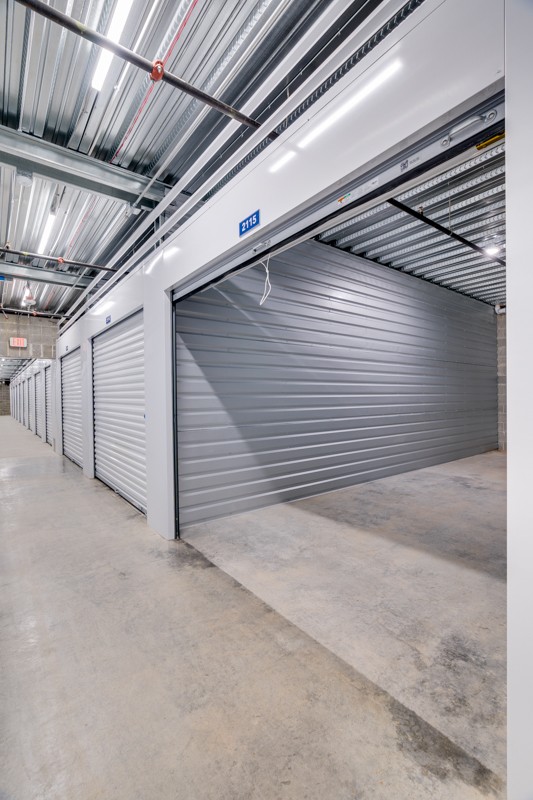
Indoor units are reached through the building and may require elevator use.
Drive-up units allow customers to park closer to the storage door, which may simplify moving bicycles and bulky equipment. Vehicles cannot be stored inside drive-up units at SecureSpace Everett.
Elevator access is available for indoor units located away from the ground level.
Carts and dollies are also available to help transport bicycles, containers, repair stands, and other gear through the building.
SecureSpace Everett provides daily gate access from early morning into the evening.
Review the current schedule before planning rides, commutes, or equipment retrieval. Manager hours are separate from unit-access hours.
The Everett facility includes an access gate, digital video recording, logged access, overnight surveillance, touchless computer-controlled access, and Turing-enabled monitoring.
These features support access and monitoring procedures but do not guarantee protection against theft, loss, or damage.
Month-to-month leases, online rental, online payments, electronic payment plans, and touchless move-in are available.
Review billing dates, notice requirements, rate terms, identification steps, and move-out procedures before completing the rental.
Basic moving supplies are available through the leasing office.
Customers needing a particular lock, cover, container, or packing product should confirm current inventory before relying on on-site availability.
Permitted bicycles may be stored when they fit within the unit and comply with the rental agreement.
Measure the bicycle, prepare it properly, and confirm that related batteries, tools, fluids, and accessories are allowed.
Not every bicycle requires it.
The decision depends on the frame materials, electrical components, manufacturer guidance, preparation, and expected storage period. Climate-controlled and heated units may help reduce exposure to temperature swings and cold conditions but do not guarantee protection from deterioration.
An electric bicycle may be suitable, but battery and charging restrictions must be reviewed first.
Follow manufacturer guidance and confirm the facility's rules for removable batteries and electrical equipment.
A storage unit should not be used as an active repair shop or workspace.
Maintenance, charging, cleaning with chemicals, and equipment operation should take place in an appropriate location outside the unit.
Do not attach hardware or modify the unit without written permission.
A stable freestanding rack is a more appropriate option.
Measure the bicycles, racks, repair stands, and containers you plan to store.
Account for door clearance and enough room to retrieve each bike without moving the entire contents of the unit.
No storage arrangement can guarantee protection against theft, loss, corrosion, shifting, or other damage.
Cleaning, drying, maintenance, appropriate packing, inventory records, and a suitable lock can help reduce avoidable problems.
Bicycle storage can provide dedicated space for bikes and riding equipment while helping keep garages, apartments, and shared living areas organized.
Start by measuring each bicycle, reviewing battery and manufacturer instructions, and confirming that all accessories are permitted. Then choose a unit based on the actual equipment and desired access arrangement.
Explore current options for bicycle storage in Everett, WA.
Everything you need to store your belongings securely, on your schedule.
Visit us online