Last updated Aug 12, 2026
Running a business in Seattle means making every square foot count. Commercial space can be expensive, and market reports from Commercial Seattle, 2025 point to a complicated office market where vacancy and asking rents do not always move in the same direction.
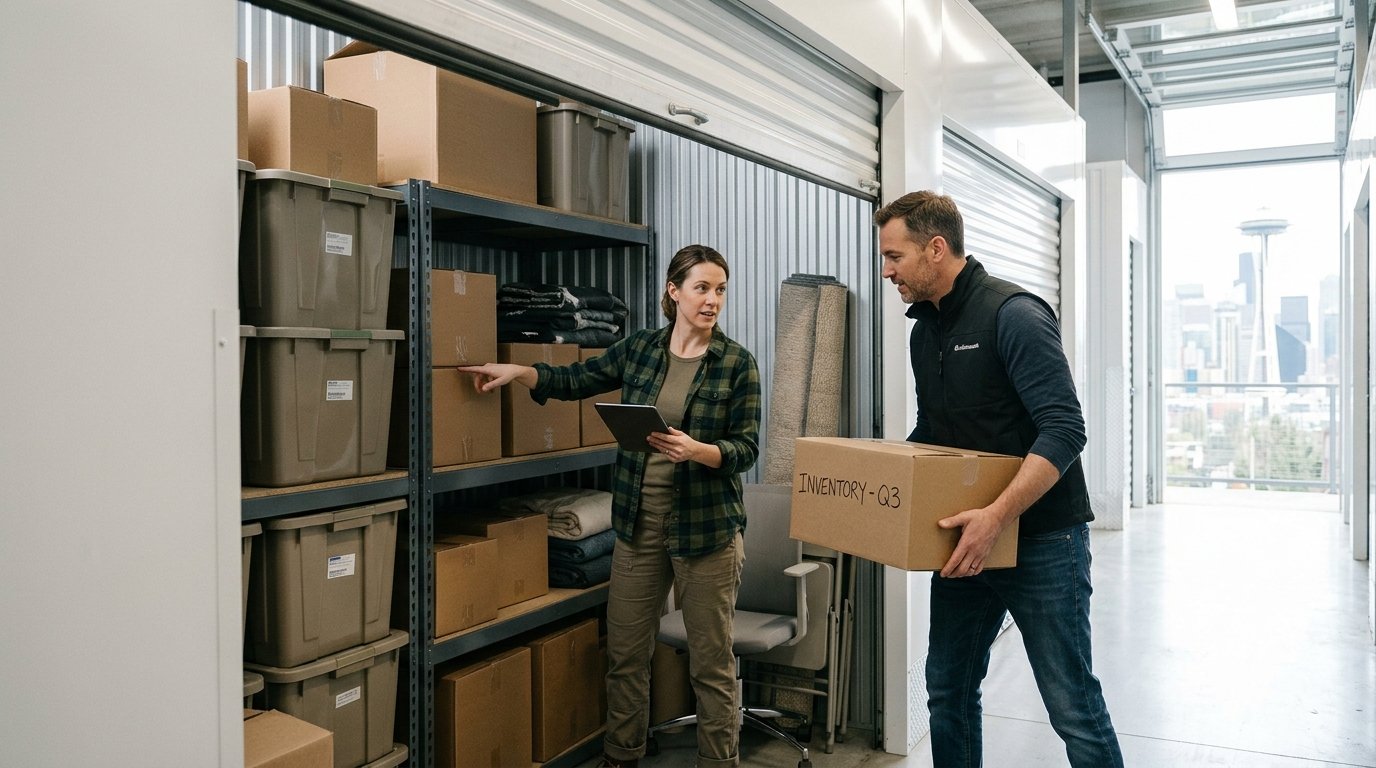
For small businesses, paying premium prices just to store boxes, tools, records, or extra inventory may not make sense.
That's where business storage can help. Whether you run a boutique, a contracting crew, a professional office, or a growing e-commerce brand, a storage unit can give you room for business items without turning your workspace, garage, or home into a stockroom.
This guide breaks down who uses business storage, why Seattle's weather and logistics make planning important, what features to review, and how to choose a unit that fits your business needs.
Almost every industry can benefit from off-site storage, but a few types of Seattle businesses rely on it most.
Retailers can use storage for seasonal inventory, extra displays, packaging, signage, and backstock that does not need to sit on the sales floor.
Online sellers often need a place for boxed inventory, shipping supplies, promotional materials, and seasonal stock. A storage unit can help keep business items separate from home space.
Contractors, cleaners, landscapers, and tradespeople may need storage for tools, materials, spare parts, safety gear, and project supplies between jobs. The unit should be used for storage and retrieval, not as an active workshop.
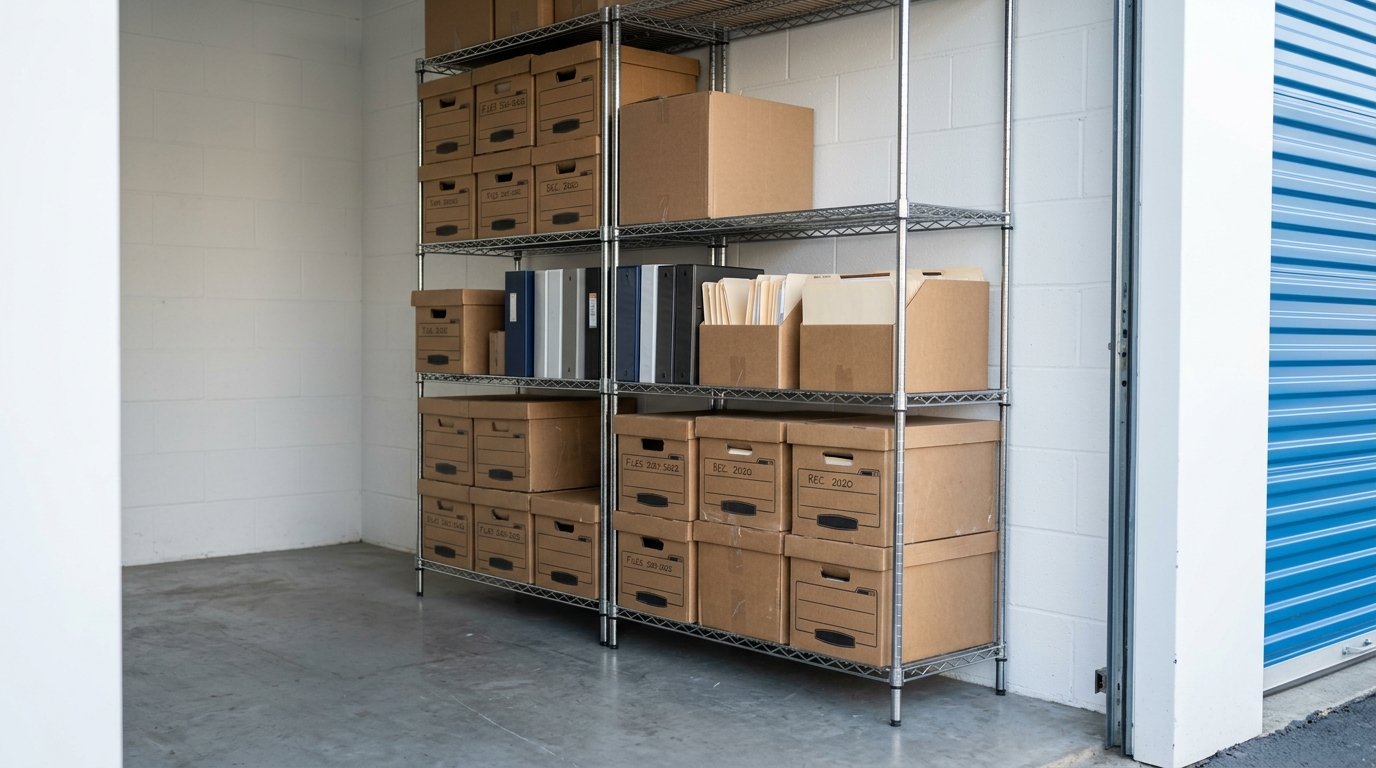
Law firms, accounting practices, consultants, and other professional services may use storage for archived records, extra furniture, trade show materials, and office supplies. Any regulated documents should be stored according to applicable business and privacy requirements.
Signs, staging materials, open-house supplies, printed materials, and seasonal marketing items can add up quickly. Storage keeps them in one place and out of the way when they are not being used.
If your workspace is overflowing-or your home garage has quietly turned into a warehouse-business storage can be a practical fix.
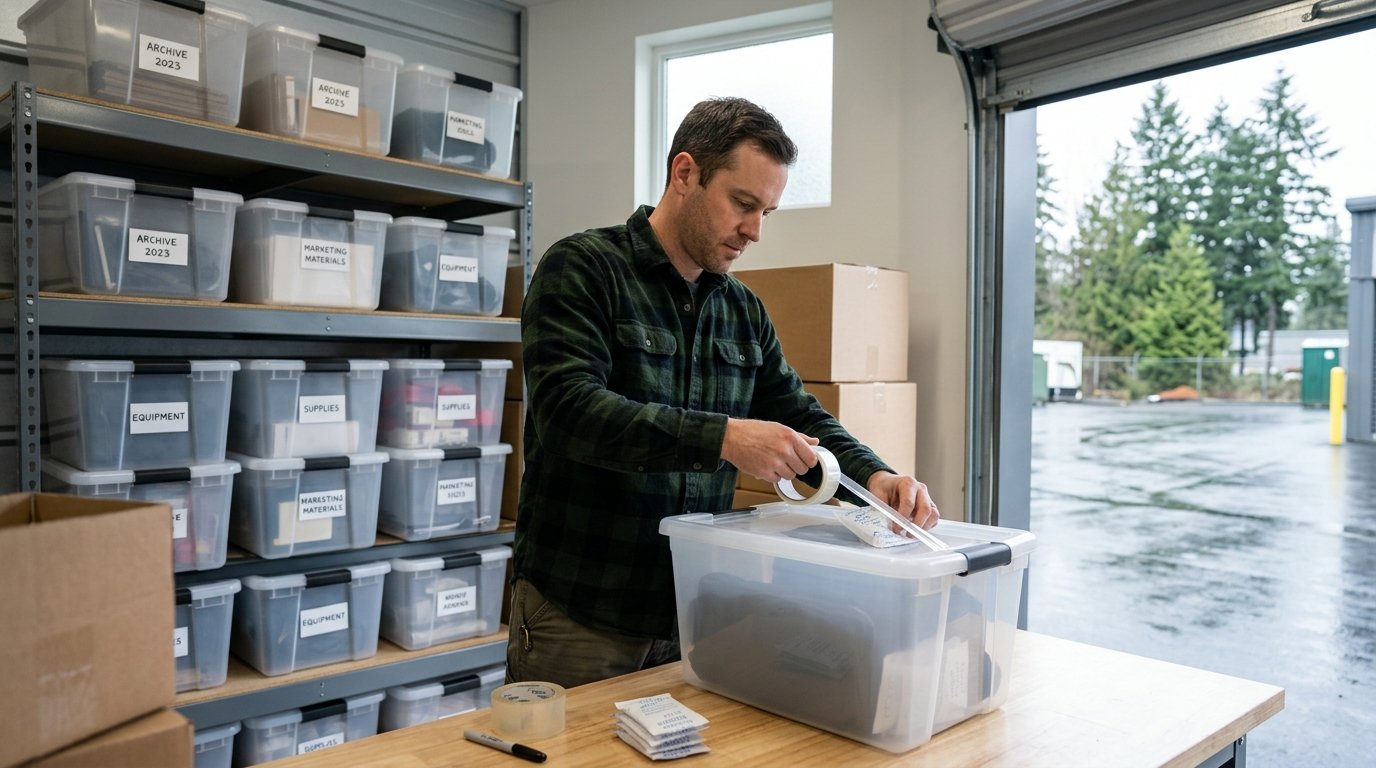
The Pacific Northwest is known for wet weather, and Seattle averages around 37.5 inches of rain a year, according to Seattle Weather Blog. For business owners, the practical takeaway is simple: items should be clean, dry, boxed properly, and stored in a space that fits what you are keeping there.
That matters for several common business items:
Paper records: Paper can react to changing storage conditions. Domtar notes that paper handling and storage conditions can affect how paper performs over time.
Stored materials: Preservation guidance from NEDCC explains that environmental factors such as temperature and relative humidity can affect stored materials.
Textiles and packaging: Promotional fabrics, packaging, and printed materials should be fully dry before storage and kept in sturdy containers where appropriate.
Tools and equipment: Metal tools and equipment should be cleaned, dried, and organized before being stored.
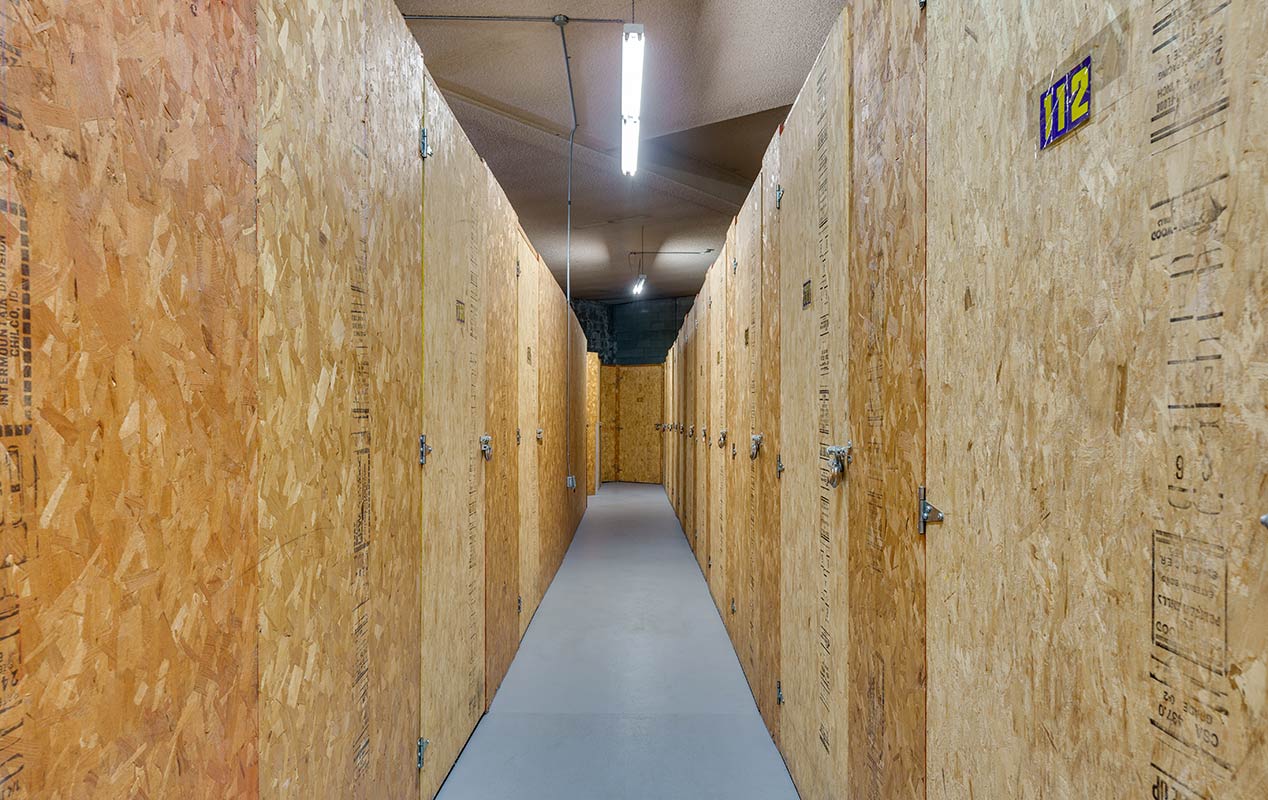
Heated indoor storage may be useful for Seattle businesses, especially during colder months. It can keep business items inside a building and may reduce exposure to colder conditions compared with non-heated spaces. Still, the basics matter most: pack carefully, avoid storing damp items, and confirm the unit type is appropriate for what your business plans to store.
Anyone who has tried to receive supplies, inventory, or equipment downtown knows that the last part of a delivery can be difficult. Research from the University of Washington has described downtown delivery challenges, including limited private loading access in parts of the urban core. UW News summarized findings on failed deliveries and truck parking time, while the Urban Freight Lab has studied competition for curb space in downtown Seattle.
A storage unit can help by giving your business a separate place to keep items that do not need to be delivered directly to a storefront, office, or home. Before planning around shipments, confirm the facility's rules for deliveries, pallets, freight, oversized items, and loading.
When comparing facilities, review practical details such as:
Access hours
Elevator availability
Carts and dollies
Loading instructions
Package or delivery policies
Unit sizes and current availability
Do not assume a facility accepts freight, pallets, pods, or unsupervised deliveries unless the location specifically allows it.
Not all storage is created equal. When you're storing items your business depends on, focus on the features that directly support your workflow.
Traditional commercial leases can come with longer commitments and additional obligations. Perkins Law discusses personal guarantees in commercial lease contexts, which is one reason many small businesses prefer lower-commitment options when they only need storage.
Month-to-month storage can be useful when inventory, records, or equipment needs change. Review the rental agreement, billing cycle, move-out notice, and any promotion terms before signing.
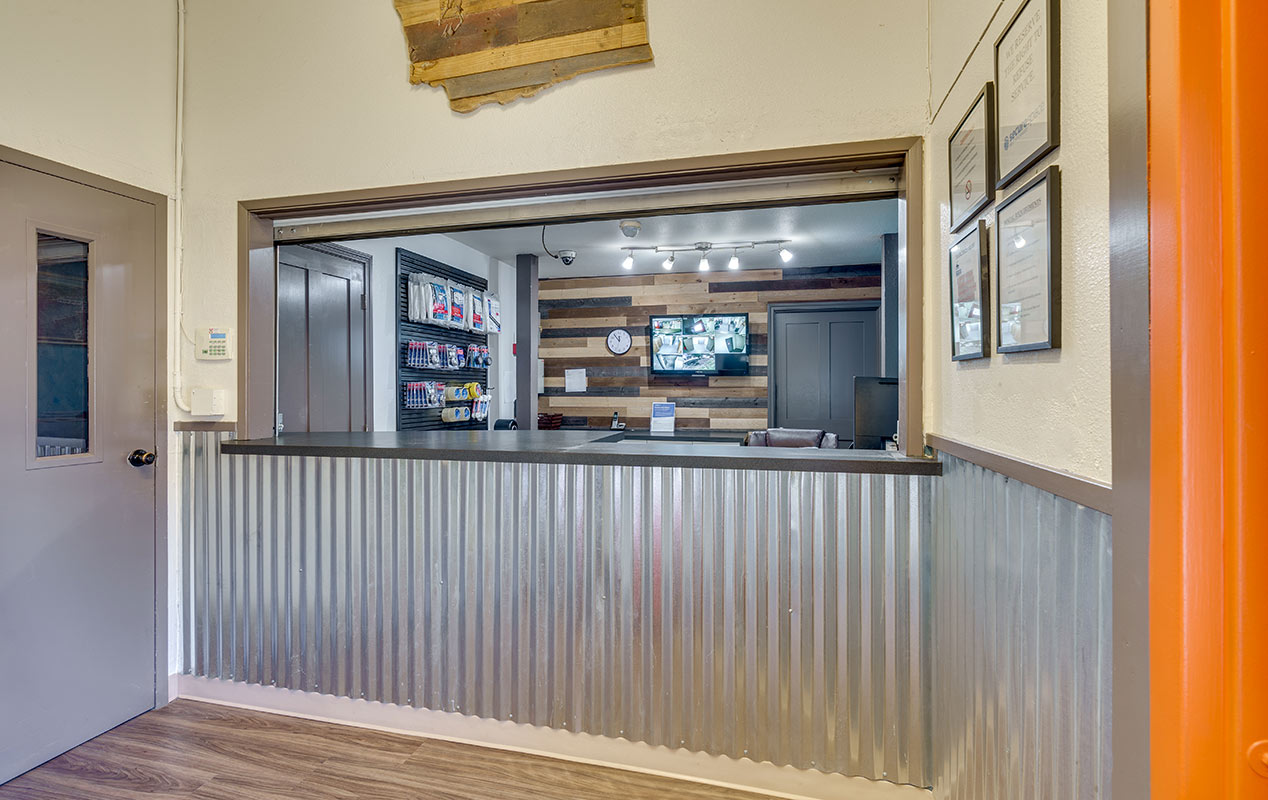
Look for specific listed features rather than broad claims. Depending on the facility, useful features may include digital video recording, logged access, posted access procedures, and staff availability.
You can also take your own precautions: use a quality lock, keep an inventory of stored items, photograph equipment or inventory, track serial numbers, and review insurance or coverage options for off-site business property.
Business storage only works if you can reach items when you need them. Review current access hours before renting, especially if you need supplies before opening, after closing, or between jobs.
You should not pay for more space than you need, but you also need enough room to organize inventory safely.
5x5 to 5x10: Good for documents, small supplies, promotional materials, and compact inventory.
10x10: Useful for e-commerce stock, office overflow, boxed records, or contractor tools.
10x25: Better for larger business inventory, bulkier equipment, or supplies that need more room, depending on availability and facility rules.
If you're unsure, estimate box count, measure shelving or equipment, and leave room near the front for items you access often.
Proximity matters when inventory runs, equipment pickups, or supply checks become part of your routine. The best location is not always the closest one on a map. It is the facility that fits your regular route, access needs, parking situation, and schedule.
When comparing Seattle storage options, consider:
Drive time from your primary workspace
Access hours
Loading setup
Elevator or cart availability
Unit sizes
Whether the facility rules fit your business items
If you need to visit often, choose a location that works with your day-to-day operations rather than one that only looks convenient by distance.
Seattle commercial space can be expensive, and business storage can help you use your primary workspace more efficiently. The key is to treat the unit as storage-not as a storefront, workshop, office, or staffed operation.
Before you commit, make a short checklist: confirm the unit size you need, review heated indoor storage options, check access hours, ask about loading and delivery rules, and verify that the location works for your routine.
Ready to make more room for inventory, tools, records, or supplies? Reserve your Seattle business storage unit online today.
No. A storage unit is meant for storing business property such as inventory, tools, documents, equipment, and supplies. It should not be used as a storefront, daily office, workshop, manufacturing space, or place to meet customers. Industry guidance from Extra Space also frames business storage around storing business items, not operating a business from the unit.
Storage may cost less than leasing commercial space when you only need room for stored items. Actual costs depend on unit size, location, features, availability, and current promotions. Commercial leases can also include terms and obligations that differ from self storage, so compare based on what your business actually needs.
It depends on what you're storing. Heated indoor storage can be useful for records, inventory, tools, textiles, packaging, and business supplies during colder months. Whatever unit type you choose, make sure items are clean, dry, boxed properly, and allowed by facility rules.
Policies vary by location. Some facilities may allow certain deliveries with advance coordination, while others may not accept freight, pallets, pods, or unsupervised packages. Contact the facility directly before planning any delivery.
Choose a facility close enough to your regular route that you will actually use it. Consider drive time, access hours, loading setup, unit size, and the types of business items you need to store.
Everything you need to store your belongings securely, on your schedule.
Visit us online