Last updated Aug 12, 2026
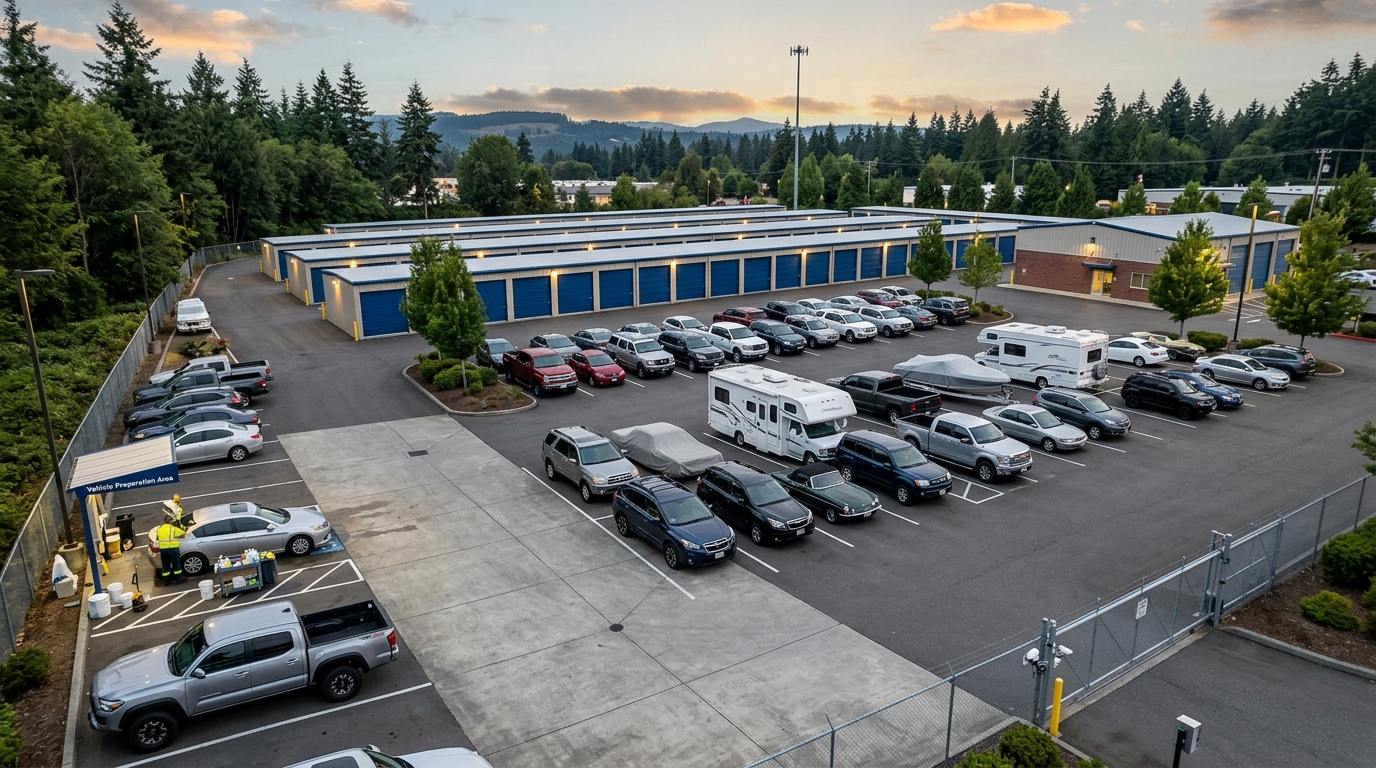
Finding space for an extra vehicle can be difficult when driveway room is limited, apartment parking is assigned, or neighborhood rules restrict long-term parking. Off-site car storage provides another option for eligible vehicles that cannot remain at home.
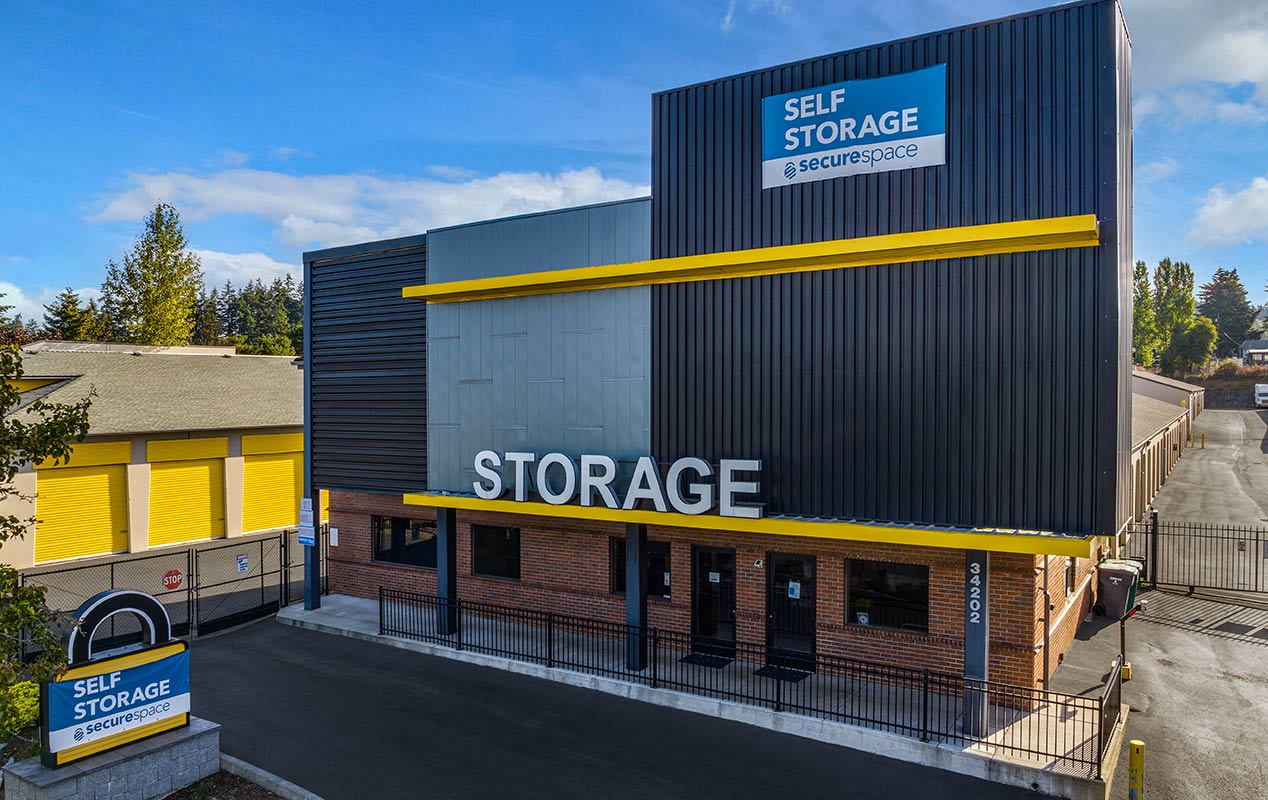
SecureSpace Self Storage Federal Way offers uncovered outdoor parking for eligible cars and other motor vehicles. Parking depends on vehicle dimensions, documentation, condition, facility rules, and current availability.
This guide explains what outdoor car storage involves, how to measure and prepare a vehicle, and which facility details to review before moving it into storage.
SecureSpace Federal Way provides uncovered outdoor vehicle parking. The location does not offer covered parking or indoor vehicle storage.
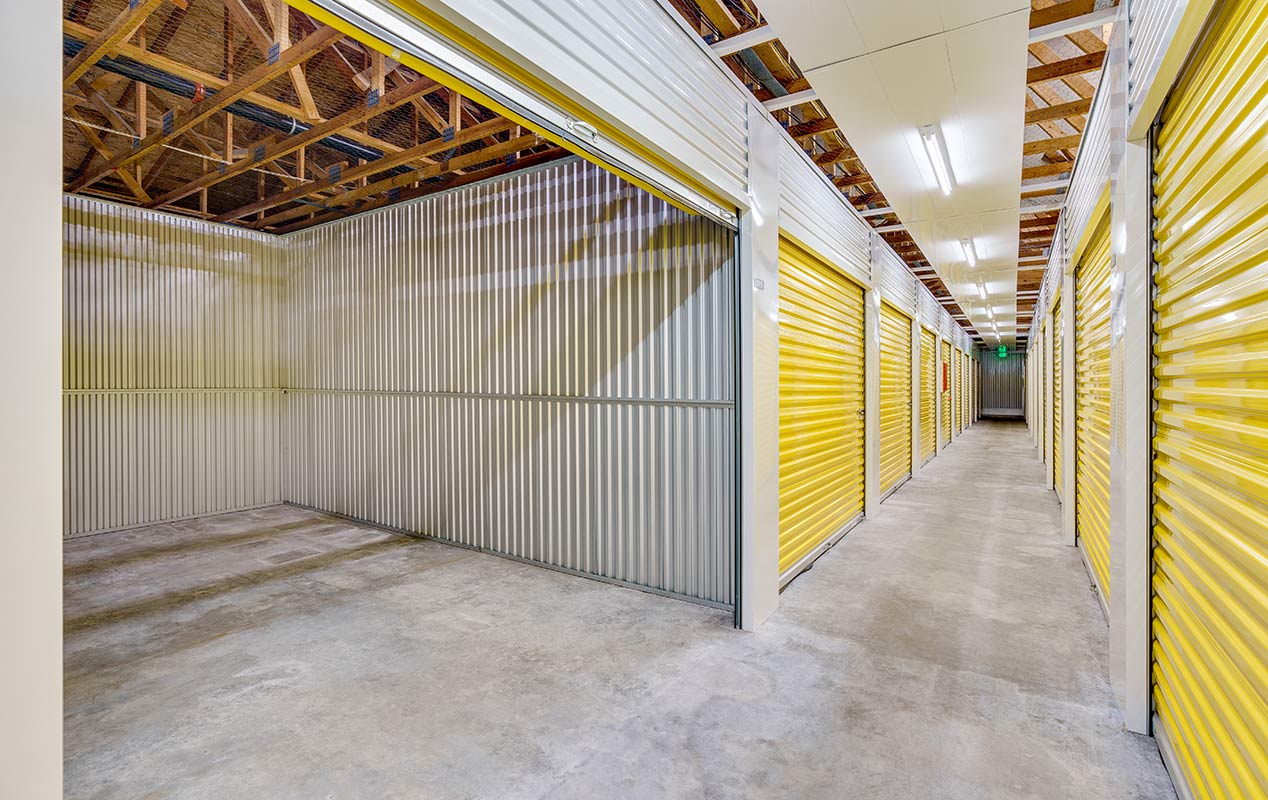
Vehicles cannot be stored inside drive-up storage units, including 10x20, 10x25, and 10x30 units.
Outdoor parking may be useful for:
An extra household vehicle
A car that is driven seasonally
Temporary parking during a move
A vehicle kept during a home renovation
A car awaiting an eligible owner or driver
Approved motor vehicles that do not fit at home
Each vehicle must meet current facility requirements. Confirm eligibility before arranging transportation.
An uncovered parking space does not protect a vehicle from rain, sunlight, wind, airborne debris, temperature changes, or other outdoor conditions.
Before choosing outdoor storage, consider:
The vehicle manufacturer's storage instructions
How long the car will remain parked
Whether the vehicle is operable
Battery-maintenance requirements
Tire-care recommendations
Insurance and registration requirements
Whether a vehicle cover is appropriate
How often the car should be inspected
No outdoor parking arrangement can guarantee prevention of corrosion, fading, moisture exposure, theft, vandalism, pest activity, or mechanical deterioration.
Parking-space eligibility depends partly on the vehicle's complete dimensions.
Measure from the outermost points, including:
Front and rear bumpers
Mirrors
Hitches
Spare tires
Bike or cargo racks
Running boards
Roof-mounted equipment
Aftermarket accessories
Record the overall length, width, and height.
Do not rely only on the manufacturer's model classification. Accessories and modifications may increase the space required.
Ask whether the available parking space accommodates the entire vehicle without extending beyond its assigned boundaries.
Before bringing a vehicle to SecureSpace Federal Way, confirm:
Do not assume that a disabled, leaking, unregistered, oversized, or commercially used vehicle will be accepted.
Trailer parking is not established and should be verified separately.
Vehicle-storage procedures vary by model, powertrain, battery type, manufacturer, and storage duration. Follow the owner's manual or consult a qualified mechanic rather than relying on a universal checklist.
Before storage:
Remove food, trash, and personal belongings.
Vacuum the interior.
Clean spills and residue.
Wash exterior dirt and road grime away.
Allow the vehicle to dry completely.
Remove valuables and important documents.
Cleaning the vehicle also makes it easier to document its condition before move-in.
Inspect the parking area beneath the vehicle and look for signs of:
Oil leaks
Coolant leaks
Fuel leaks
Brake-fluid leaks
Transmission-fluid leaks
Damaged tires
Loose body components
Address mechanical concerns before storage. Do not assume repairs or maintenance may be performed in the parking space.
Battery preparation depends on the vehicle and how long it will remain parked.
Review manufacturer instructions for:
Battery disconnection
Battery maintainers
Electric-vehicle charging levels
Hybrid systems
Alarm systems
Keyless-entry systems
Parasitic electrical loads
Do not assume electrical outlets or charging connections are available at the parking space.
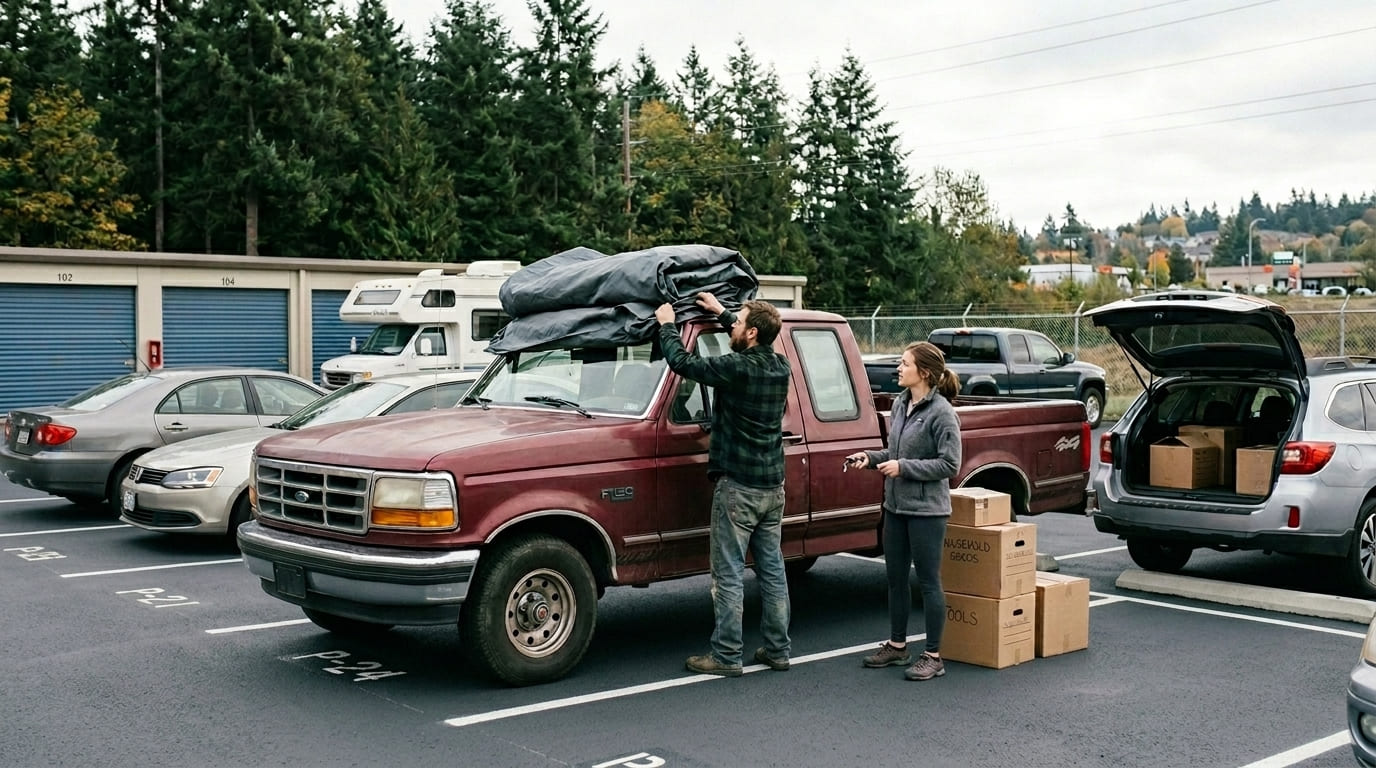
Check tire condition and inflation according to the vehicle and tire manufacturers.
Do not overinflate tires, place the vehicle on blocks, or use supports without appropriate guidance and facility approval.
The correct approach to fuel level, stabilizers, oil changes, coolant, and other fluids depends on the vehicle.
Consult the owner's manual or a qualified technician before adding products or changing normal maintenance procedures.
A fitted outdoor cover may reduce exposure to dirt and debris, but an unsuitable or poorly secured cover may trap moisture, rub against paint, or damage exterior components.
Before using one:
Check the manufacturer's recommendations.
Confirm that covers are allowed.
Choose the correct vehicle size.
Make sure the car is clean and dry.
Protect antennas and other projections.
Secure the cover as directed.
Inspect it periodically.
Avoid using a loose plastic tarp as a substitute for a properly fitted vehicle cover.
Federal Way experiences frequent rainy weather, so outdoor vehicles should be prepared for ongoing exposure.
The National Institute of Standards and Technology (NIST) conducts research related to materials and corrosion, while the U.S. Department of Transportation provides transportation and infrastructure resources. Neither source should be treated as proof that a particular vehicle will corrode at a specific rate in Federal Way.
Actual vehicle deterioration depends on factors such as:
Paint and coating condition
Existing corrosion
Road-salt exposure
Vehicle design
Drainage
Maintenance
Storage duration
Cover use
Frequency of inspection
Outdoor parking does not actively control humidity or temperature. Follow vehicle-specific maintenance guidance rather than relying on generalized humidity thresholds.
SecureSpace Self Storage Federal Way has:
An access gate
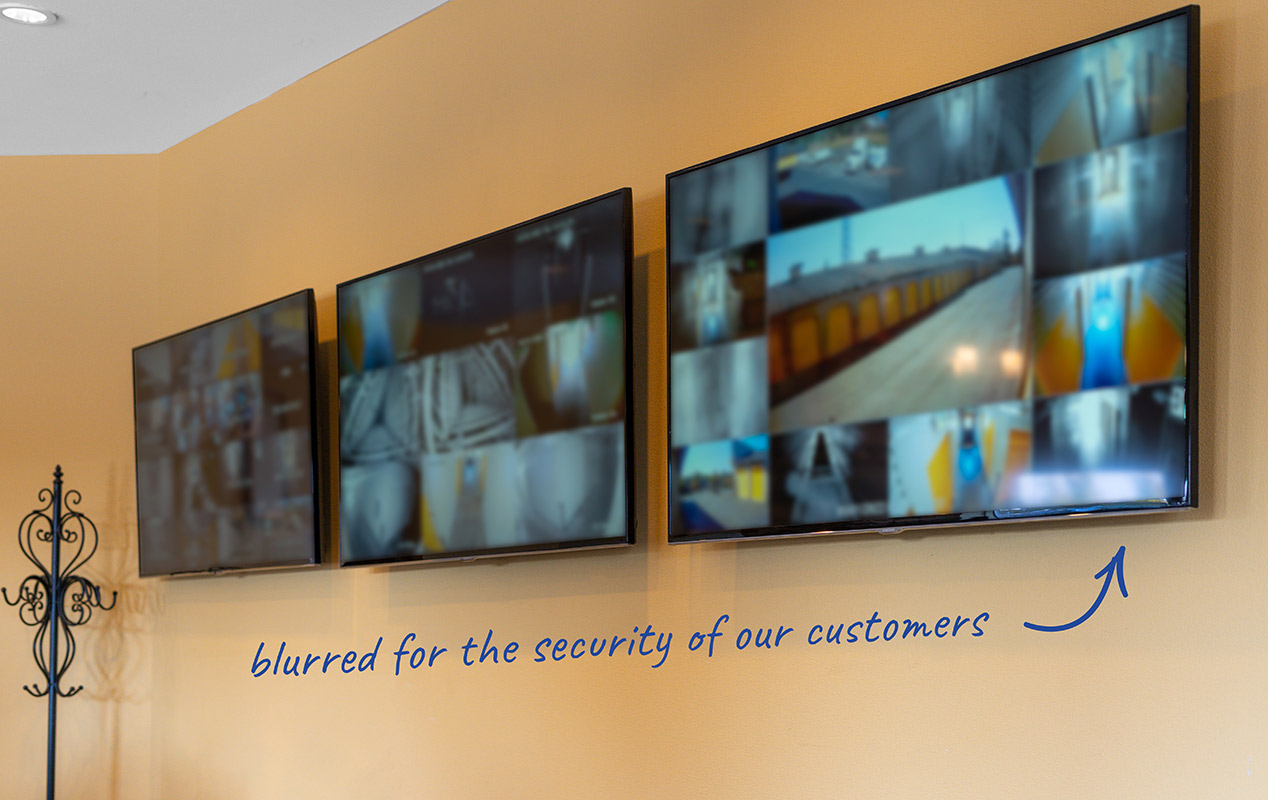
Digital video recording
Overnight surveillance
The facility does not advertise:
StorageDefender Motion Guard
Individual motion alerts
Instant text notifications
Logged customer access
Third-party security patrols
Continuous live camera monitoring
Individual vehicle alarms
A facility-wide intercom
Facility features cannot guarantee protection from theft, vandalism, weather, or damage.
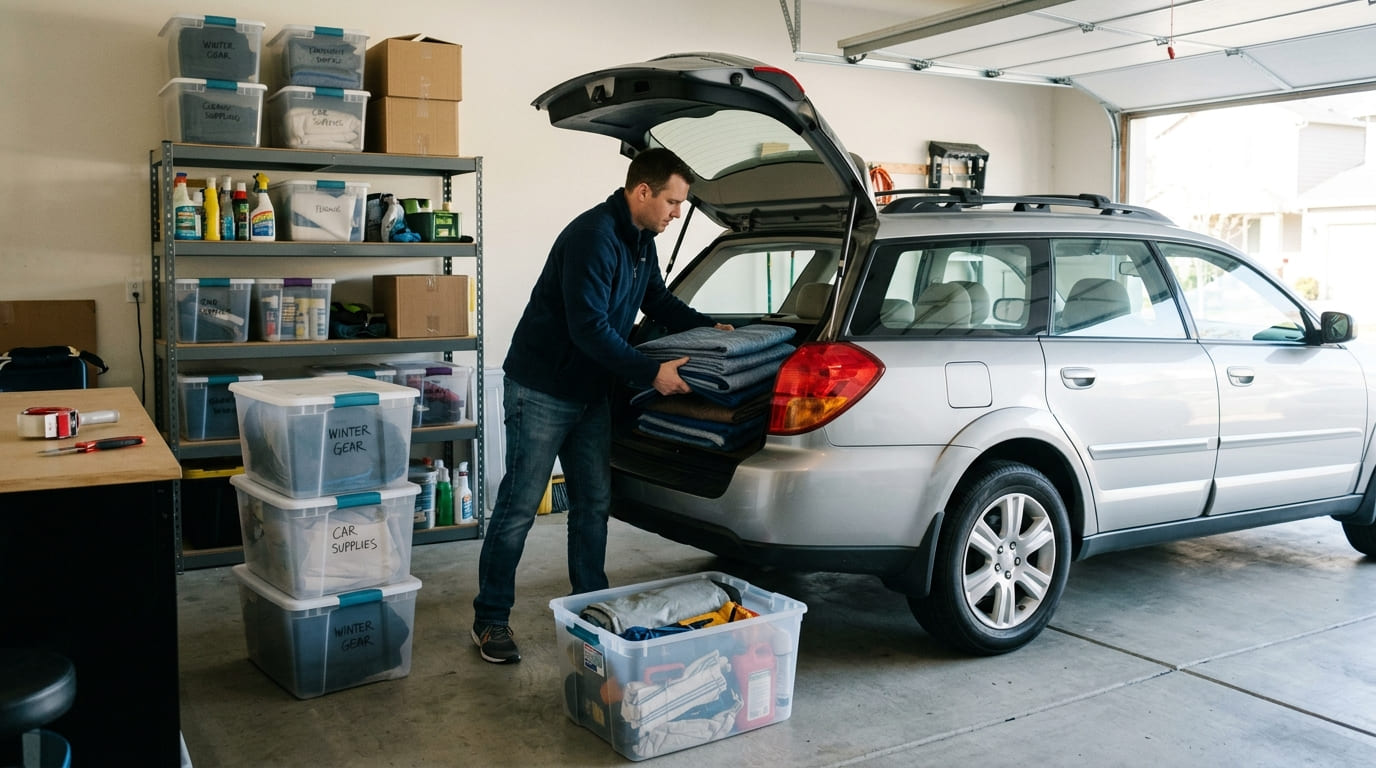
Vehicle owners should also:
Lock all doors and compartments.
Remove valuables.
Keep keys and access credentials private.
Photograph the vehicle before storage.
Record the vehicle identification number.
Maintain an inventory of property left inside.
Review applicable insurance coverage.
Inspect the vehicle periodically when practical.
In addition to eligible cars and motor vehicles, SecureSpace Federal Way may offer uncovered parking for eligible RVs and boats.
Acceptance depends on:
Vehicle or watercraft type
Overall dimensions
Documentation
Condition
Facility rules
Current availability
Covered parking is not available. Trailer parking should not be assumed.
Gate access is available daily from 6:00 a.m. to 9:00 p.m.
The location does not provide 24-hour vehicle access. Plan vehicle pickups and returns within the posted gate hours.
Leasing-office hours are:
Monday: 9:30 a.m.-6:00 p.m.
Tuesday: 9:30 a.m.-6:00 p.m.
Wednesday: Closed
Thursday: 9:30 a.m.-6:00 p.m.
Friday: 9:30 a.m.-6:00 p.m.
Saturday: 9:00 a.m.-5:30 p.m.
Sunday: Closed
Office and gate hours serve different purposes. Complete eligibility and documentation steps before arriving with the vehicle.
Month-to-month leases are available.
Review the rental agreement for:
Current monthly rent
Billing dates
Rate adjustments
Required notice
Access rules
Vehicle documentation
Condition requirements
Insurance or coverage requirements
Prohibited activities
Move-out procedures
Parking-space assignment terms
Month-to-month leasing provides flexibility, but it does not eliminate payment, notice, or vehicle-condition requirements.
Online payments are available, along with ACH and credit card payment plans.
Online payment availability does not necessarily mean that the entire rental and move-in process can be completed without communicating with the facility.
Before arrival, ask:
What documents are required?
Must the vehicle be operable?
Are covers allowed?
Are maintenance activities prohibited?
How are access credentials issued?
When does access begin?
Is an office visit required?
Which space has been assigned?
Do not assume that outdoor parking may be used for:
Repairs
Oil or fluid changes
Washing or detailing
Fueling
Battery charging
Vehicle sales
Customer pickups
Commercial operations
Long-term loading or unloading
Living or sleeping in the vehicle
Review the rental agreement and current facility rules before performing any activity other than parking, retrieving, or inspecting the vehicle.
Before moving a car into storage:
Measure the complete vehicle.
Confirm the vehicle type is accepted.
Check current parking availability.
Gather required documentation.
Review manufacturer storage instructions.
Remove food, trash, valuables, and sensitive property.
Clean and fully dry the vehicle.
Check for leaks and mechanical concerns.
Follow battery recommendations.
Inspect tires.
Review fuel and fluid guidance.
Confirm whether a cover is allowed.
Photograph the vehicle's condition.
Review applicable insurance coverage.
Note the gate-access hours.
Plan periodic inspections when practical.
No. Vehicles cannot be stored inside the facility's storage units, including drive-up units.
Eligible cars and motor vehicles may qualify for uncovered outdoor parking, subject to dimensions, documentation, condition, facility rules, and current availability.
No. Vehicle parking is uncovered.
No. A 10×20 storage unit may be discussed in general industry size guides, but SecureSpace Federal Way does not permit vehicles inside storage units.
Eligible motor vehicles may qualify for outdoor parking. Confirm the vehicle's complete dimensions and current facility requirements before arrival.
Trailer parking should not be assumed. Verify the specific trailer type and dimensions directly with the facility.
No. StorageDefender Motion Guard and individual text alerts are not offered at this location.
The facility has an access gate, digital video recording, and overnight surveillance. These features cannot guarantee protection from theft or damage.
Documentation and coverage requirements should be reviewed directly with the facility and the vehicle owner's insurer before move-in.
Vehicle-condition requirements apply. Confirm the current rules before arranging transportation for a disabled or non-running vehicle.
Do not assume electricity or charger use is available. Follow the rental agreement and confirm current facility rules.
Repairs, maintenance, washing, charging, fueling, and other activities should not be assumed to be permitted.
Gate access is available daily from 6:00 a.m. to 9:00 p.m.
No. The facility does not provide 24-hour gate access.
Yes. Review the rental agreement for billing dates, rate adjustments, documentation, notice requirements, and move-out procedures.
Yes. Online payments and ACH or credit card payment plans are available.
Outdoor car storage works best when the vehicle is measured, prepared according to manufacturer guidance, and approved for the available parking space before arrival.
Everything you need to store your belongings securely, on your schedule.
Visit us online