Last updated Aug 12, 2026
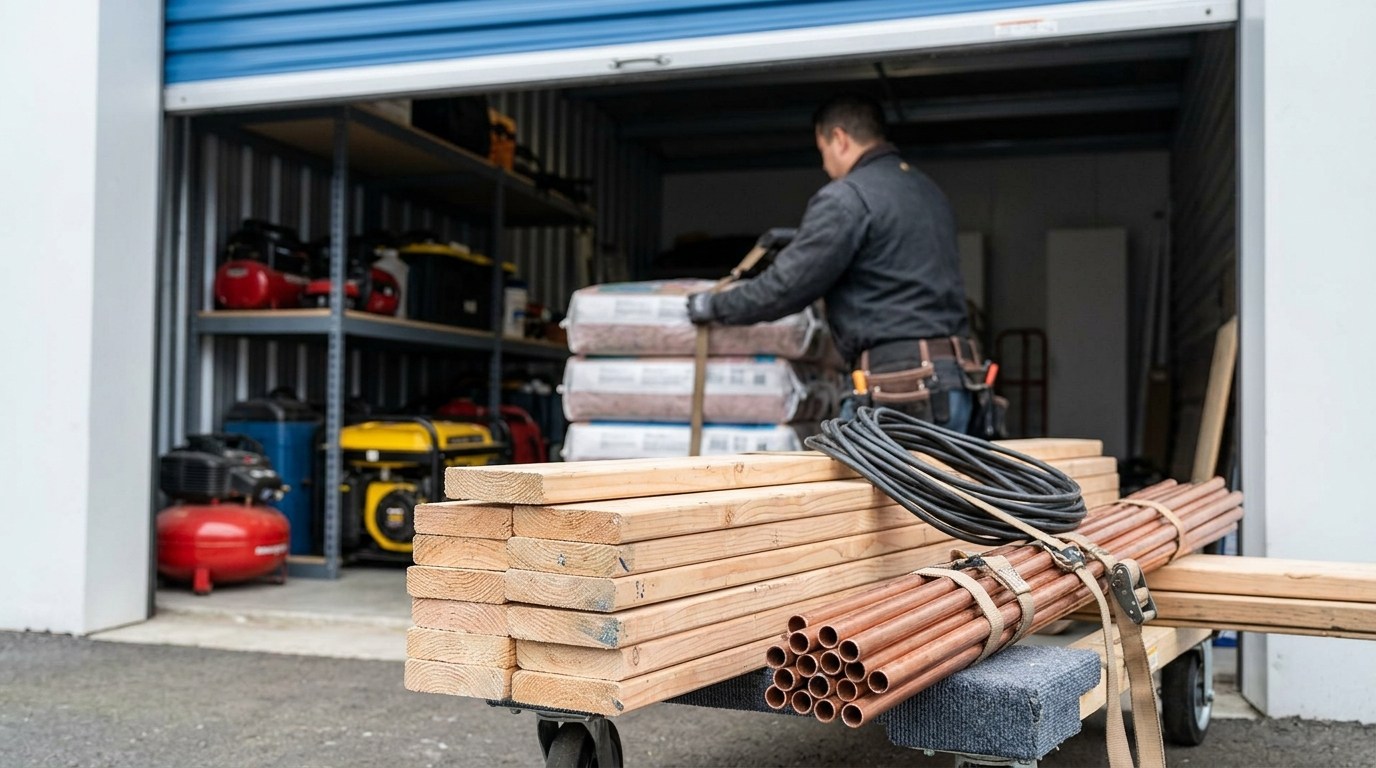
Contractors working across Federal Way often need a practical place to organize tools, equipment, and approved building materials between jobs. Work vehicles fill up quickly, home garages have limited room, and a commercial warehouse may involve more space and commitment than a small business needs.
A self-storage unit can provide a flexible home base for gear without requiring a long-term commercial lease. This guide covers what contractors can store, what to leave out, how to select an appropriate unit size, and which facility features can make day-to-day access easier.
More projects often mean more equipment, materials, and moving parts spread across multiple job sites. A dedicated storage unit can help contractors keep those items organized in one place.
Moving tools and supply bins out of a truck, van, or garage can make frequently used equipment easier to locate. It can also leave more room in work vehicles for the materials needed on a specific job.
Leaving tools at an unattended job site can create unnecessary exposure to loss or damage. Moving approved equipment into a rented unit between projects gives contractors a separate place to organize inventory.
Month-to-month leases give businesses flexibility as equipment needs change. Unit transfers depend on current availability, so contractors should plan ahead before moving into a larger or smaller space.
Self storage may offer a more flexible option than leasing a commercial warehouse, particularly for small crews that only need room for tools, supplies, and equipment that fit inside a rented unit.
A contractor storage unit can accommodate many common tools and approved materials when everything is clean, dry, and organized.
Hand tools, power tools, toolboxes, ladders, compressors, and other approved equipment can be arranged on sturdy shelving or stored in manufacturer cases. Remove dirt and debris before storage, and check battery-powered equipment for any manufacturer-specific storage instructions.
Trade-specific examples may include:
Electricians: Reels of wire, conduit tools, meters, panel components, and labeled hardware bins.
Plumbers: Pipe cutters, threaders, hand tools, fittings, and approved nonhazardous supplies.
Roofers: Nail guns, compressors, safety harnesses, ladders, and approved fasteners.
HVAC technicians: Diagnostic tools, hand tools, approved components, and seasonal equipment.
Painters: Rollers, drop cloths, ladders, sprayers, and nonhazardous supplies permitted under the rental agreement.
Landscapers: Mowers, trimmers, blowers, hand tools, and clean seasonal equipment with fuel removed.
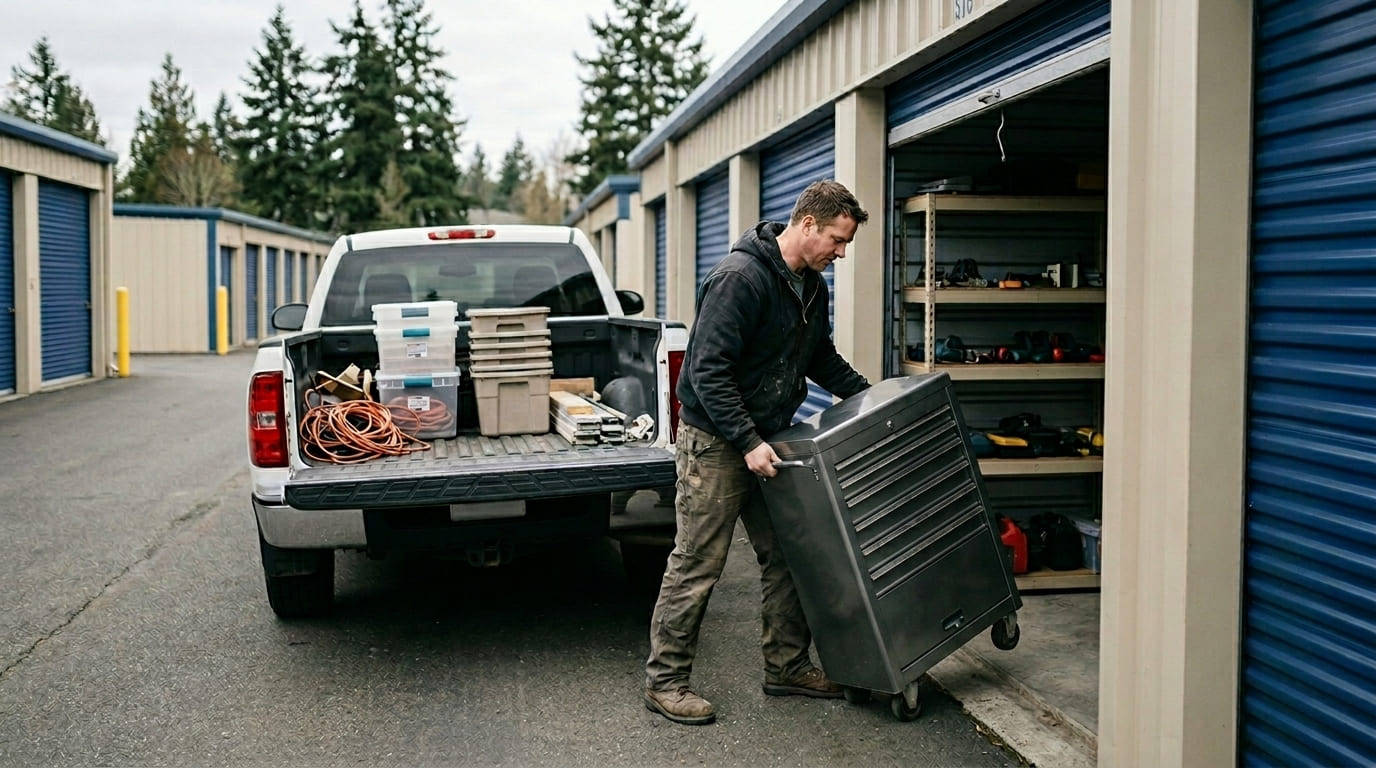
Approved lumber, flooring, fixtures, hardware, and packaged materials may fit in a storage unit when arranged carefully. Keep long materials supported, place heavier items low, and avoid stacking anything in a way that could shift or fall.
Drywall, wood products, and similar materials should be stored clean and dry. Contractors should also review the rental agreement before storing paints, adhesives, chemicals, or other products that may have restrictions.
The Federal Way facility offers outdoor parking for eligible motor vehicles, cars, RVs, and boats. Parking is not covered, and vehicles cannot be stored inside drive-up units.
Availability, vehicle dimensions, condition requirements, and facility rules should be confirmed before planning vehicle storage. Trailer parking is not established and should not be assumed.
Contracts, permits, plans, replacement parts, and packaged inventory can be organized in labeled containers or on shelving. Keep important paperwork in sealed bins, maintain a digital backup when appropriate, and avoid placing boxes directly against walls or underneath heavy equipment.
Storage facilities restrict hazardous, combustible, illegal, perishable, and otherwise prohibited materials. Contractors should review their rental agreement before moving trade supplies into storage.
Common restricted categories include:
Fuels: Gasoline, diesel, kerosene, and equipment containing prohibited fuel.
Compressed or flammable materials: Propane tanks and other restricted pressurized containers.
Explosives: Fireworks, explosive materials, and ammunition where prohibited.
Hazardous chemicals: Strong solvents, reactive chemicals, pesticides, and restricted trade products.
Perishable materials: Food, organic waste, and anything likely to attract pests.
Illegal or prohibited property: Any item restricted by law or the facility's rental agreement.
When a product's eligibility is unclear, check the rental agreement and ask the facility before bringing it onto the property.
Start with an inventory of the tools and materials you plan to store. Measure ladders, rolling equipment, shelving, and other bulky items, then leave enough aisle space to reach frequently used gear.
Available primary sizes at the Federal Way facility include 5x5, 5x15, 10x10, 10x15, 10x20, 10x25, and 10x30.
A 5x5 may work for hand tools, compact equipment, records, or a limited collection of supply bins. The longer 5x15 layout can provide additional depth for shelving, ladders, boxed materials, and equipment while maintaining a relatively narrow footprint.
These sizes may suit electricians, painters, repair technicians, and solo contractors with compact inventories.
Medium units provide room for shelving, tool chests, compressors, saws, ladders, and packaged materials. A 10x15 may be useful when a contractor needs separate zones for frequently used tools and supplies reserved for upcoming projects.
These sizes may suit general contractors, flooring teams, HVAC technicians, and small crews.
Larger units can accommodate substantial tool inventories, long ladders, rolling equipment, shelving runs, and approved bulk materials. They can also provide enough room to separate equipment by crew, project, or trade.
These units should not be presented as indoor vehicle or trailer storage. Measure the largest equipment and plan a clear aisle before selecting a size.
Contractors should focus on features that support realistic access, loading, and account management needs.
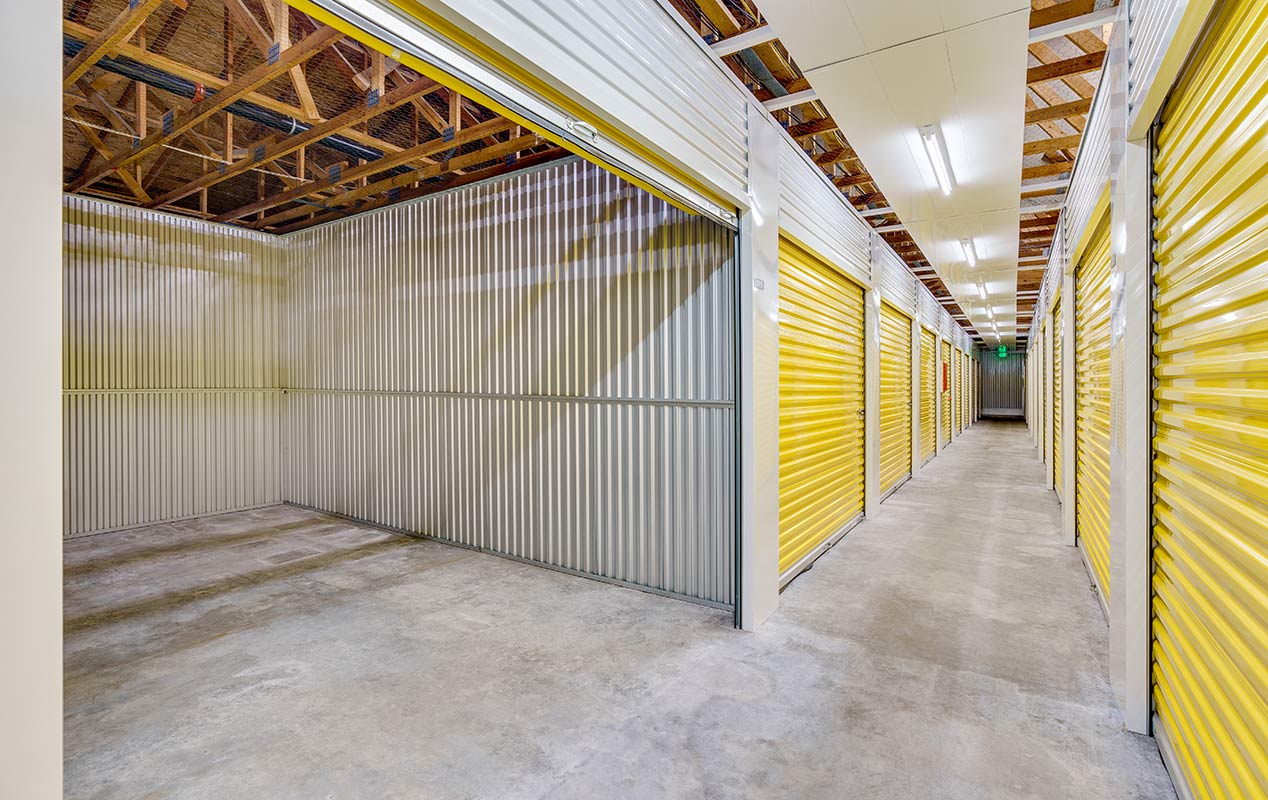
Drive-up units allow customers to bring a vehicle near the unit door for loading and unloading approved tools and materials. This can reduce the distance heavy equipment needs to be carried.
Drive-up access does not mean vehicles may be stored inside the unit. Contractors should also avoid assuming that wide commercial aisles, semi-truck access, or loading docks are available.
The Federal Way facility offers gate access daily from 6:00 a.m. to 9:00 p.m. Contractors can plan morning load-outs and evening returns within that access window.
Available features include an access gate, digital video recording, and overnight surveillance. Contractors should still use a suitable lock, maintain an inventory of stored equipment, and review applicable coverage requirements.
Online payments and ACH or credit card payment plans can make recurring account management easier. Month-to-month leases also allow businesses to rent without committing to a long-term commercial lease.
A clear layout can reduce the time spent searching for tools before each job.
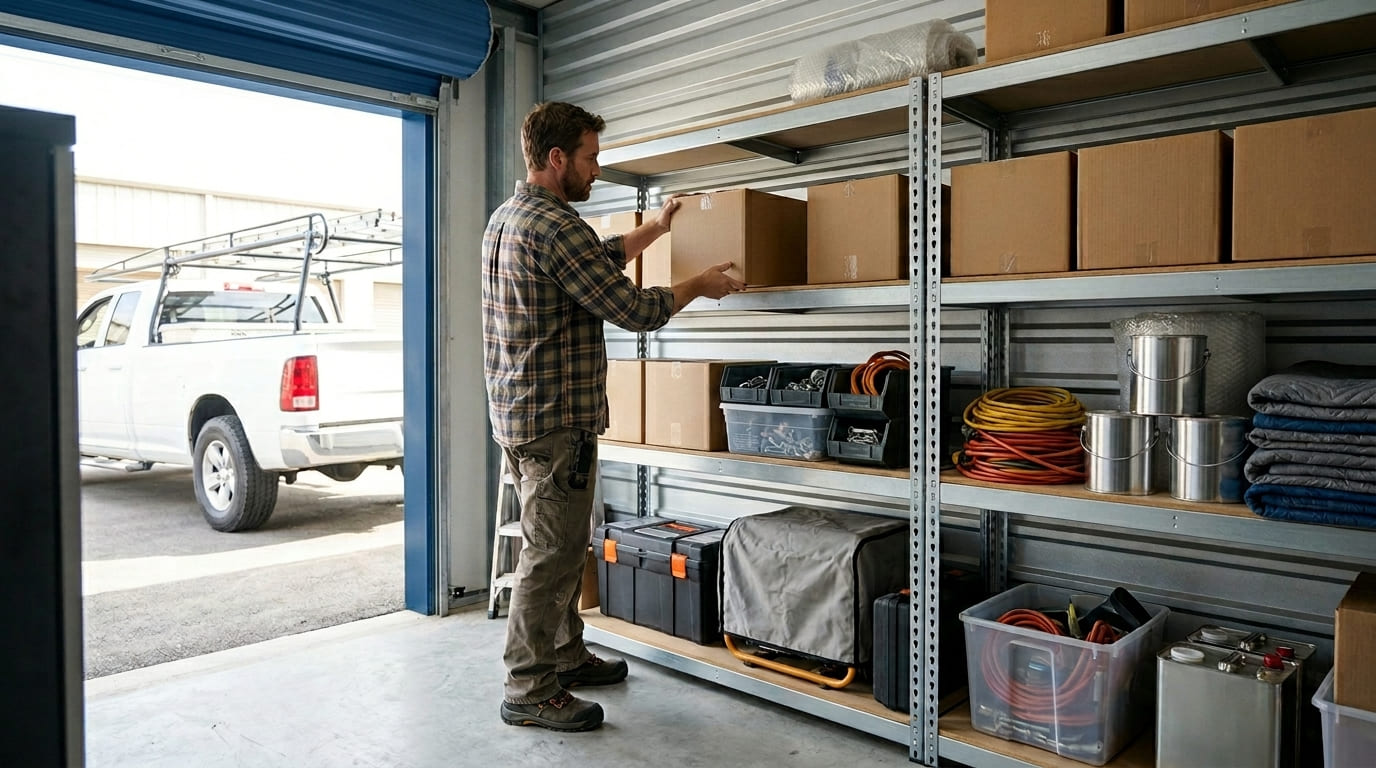
Perimeter shelving: Keep approved tools and supplies off the floor while preserving a central aisle.
Visible labels: Mark containers on multiple sides with contents, project names, or restock dates.
Project zones: Group tools and materials by crew, trade, or upcoming job.
Front-of-unit access: Keep daily-use equipment near the entrance and less frequently used items toward the back.
Tool records: Maintain a sign-out sheet or digital inventory for shared equipment.
Routine inventory checks: Photograph organized shelves periodically to identify missing or low-stock items.
Safe stacking: Place heavy items low and avoid unstable stacks that could shift during retrieval.
Do not assume electrical outlets or charging access are available inside a storage unit. Charge batteries and powered equipment only in approved locations.
A spring 2025 industry outlook projected that Washington's landscaping sector would reach $3.5 billion that year, illustrating the scale of trade and outdoor-service activity across the state.
For contractors, organized storage can support quicker load-outs, clearer inventory tracking, and more room in work vehicles. A compact unit may be enough for hand tools and supply bins, while larger units can hold ladders, equipment, shelving, and approved project materials.
The right size depends on the amount and dimensions of the equipment being stored. A 5x5 or 5x15 may suit a compact tool inventory, while 10x10 and 10x15 units provide more room for shelving and larger equipment. Contractors with substantial inventories may need a 10x20, 10x25, or 10x30.
No. Climate-controlled and heated storage are not offered at this facility. Store approved items clean and dry, use appropriate containers, and follow manufacturer guidance for temperature-sensitive tools or materials.
Outdoor parking is available for eligible motor vehicles, cars, RVs, and boats. Vehicle size, availability, and facility rules should be confirmed before renting. Covered parking, indoor vehicle storage, and trailer parking should not be assumed.
Yes. Fuels, propane, explosives, hazardous chemicals, perishable materials, illegal items, and other restricted property may not be stored. Review the rental agreement before storing trade products that could be flammable, pressurized, reactive, or otherwise regulated.
The facility has an access gate, digital video recording, and overnight surveillance. These features do not guarantee protection, so customers should use a suitable lock, maintain an equipment inventory, and review applicable coverage requirements.
Yes. Month-to-month leases are available, although unit transfers and specific sizes depend on current availability.
For tools, equipment, and project materials, explore contractor storage in Federal Way, WA.
Everything you need to store your belongings securely, on your schedule.
Visit us online