Last updated Aug 12, 2026
Paper has a way of piling up. Signed contracts, tax records, employee files, archived client documents-they accumulate quietly until that "extra" closet is overflowing and boxes start stacking up in hallways. For medical clinics, law firms, and corporate offices around Murray, Utah, this slow creep of paperwork creates a real problem: it eats up expensive office space, raises security concerns, and makes record organization harder than it needs to be.
Murray sits at the heart of a busy healthcare and professional corridor, anchored by the Intermountain Medical Center and surrounded by clinics, legal practices, and corporate offices. These businesses generate large volumes of documents that may need to be retained for years. Storing all of that on-site is rarely the smartest use of premium commercial real estate.
This guide walks you through what to consider when planning document storage in Murray, UT. You'll learn why off-site storage can make financial sense, what Utah and federal retention rules may require, how climate-controlled storage can help with long-term record storage, which facility features matter most, and how to move your archives off-site without disrupting daily operations.
Keeping records in your office sounds convenient until you do the math. Every filing cabinet and archive box occupies floor space you're already paying a premium to lease.
Office space in Murray can be expensive, especially for growing businesses that need every square foot for staff, clients, patients, or revenue-generating work. A storage closet full of old files may not seem costly at first, but the space still comes out of the same lease, rent, and operating budget.
The hidden costs add up, too. Staff may lose time searching through crowded cabinets, mislabeled boxes, or old file rooms. When documents are not indexed or organized, even a simple retrieval request can interrupt the workday.
Off-site document storage can help with both problems. You reclaim office square footage-turning a storage closet into a new exam room, office, or collaborative space-while keeping boxed records organized and accessible when you need them.
Before you box anything up, it helps to know how long you're legally required to keep your records. Retention rules vary by document type, industry, and organization, and businesses should confirm requirements with legal, tax, or compliance advisors when needed.
The IRS advises small businesses to keep employment tax records for at least four years, and other supporting tax documents for three to seven years depending on the situation. Healthcare providers may also have privacy and security obligations for patient information, so physical records should be handled as part of a broader records-management and access-control process.
The Utah Division of Archives and Records Service publishes detailed retention schedules that spell out how long different records must be kept. For broader employer obligations, Utah Business recommends keeping personnel documents for the year they were created plus at least one additional year as a baseline safeguard.
Larger institutions follow formal policies, too. The University of Utah adopted a dedicated financial records retention rule to standardize how documents are stored and eventually disposed of-a useful model for any organization building its own schedule.
The takeaway is simple: retention windows often stretch across many years. That volume of paper has to live somewhere organized, and an off-site storage unit can be part of a practical record storage plan.
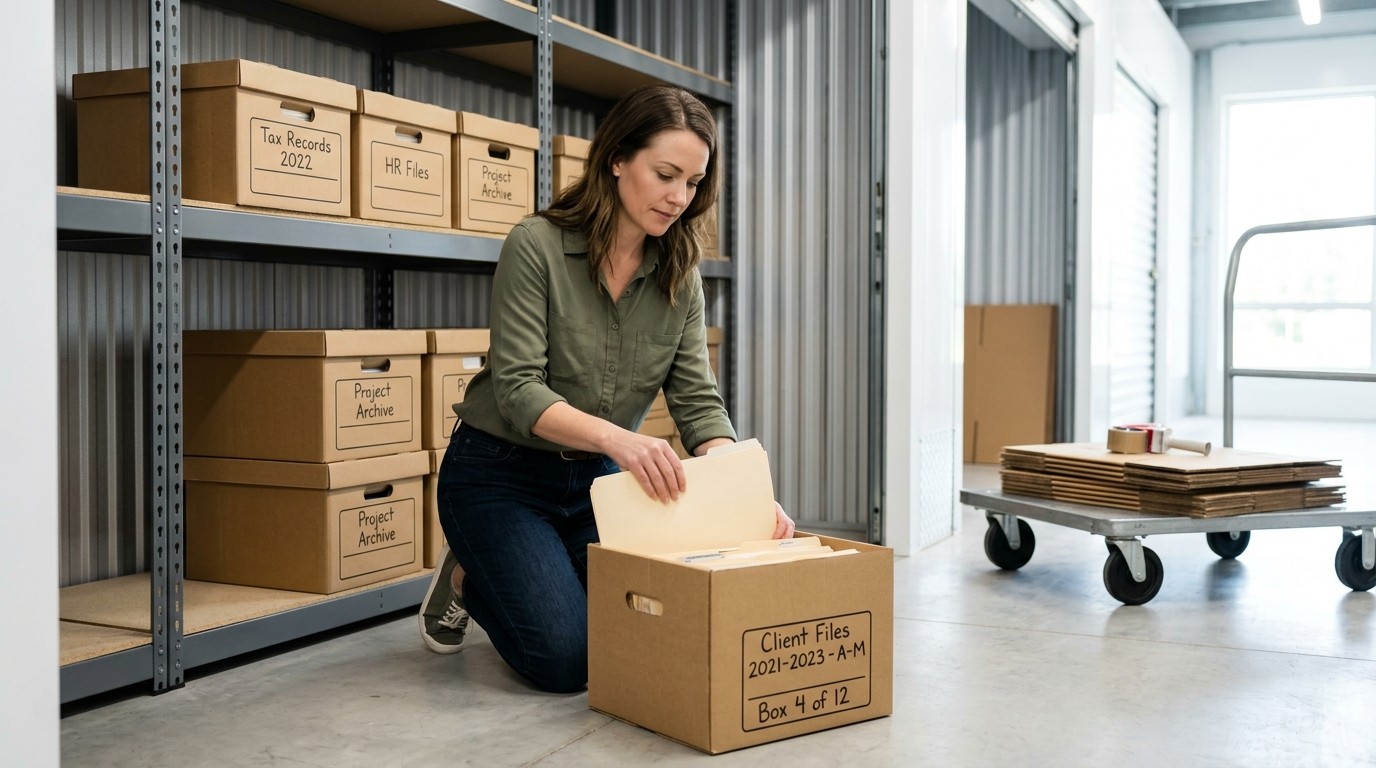
Paper is more fragile than it looks. Over a multi-year retention period, documents can be affected by temperature swings, poor packing, dust, pests, and disorganized handling.
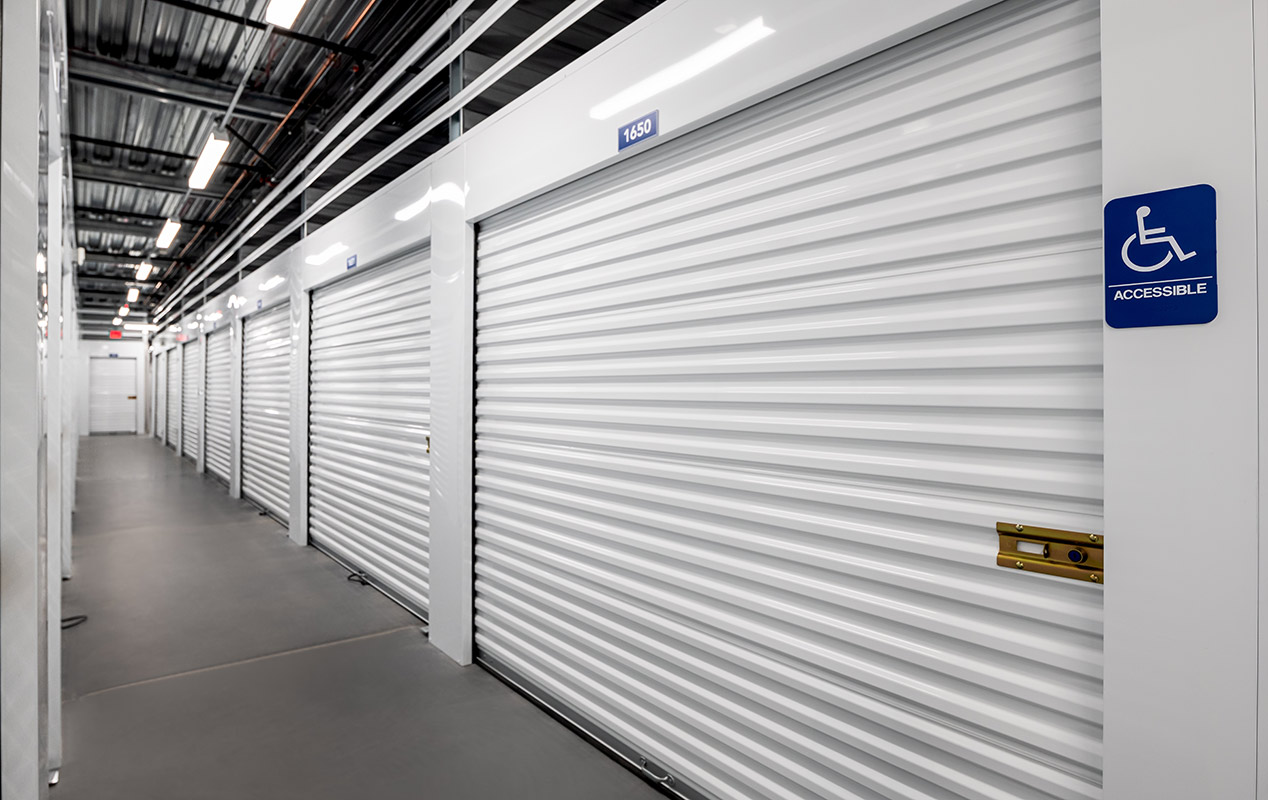
Climate-controlled storage can help reduce exposure to temperature swings compared with non-climate-controlled spaces. For businesses storing boxed records over a longer period, that added consistency can be useful, especially when the files need to remain readable and organized for future retrieval.
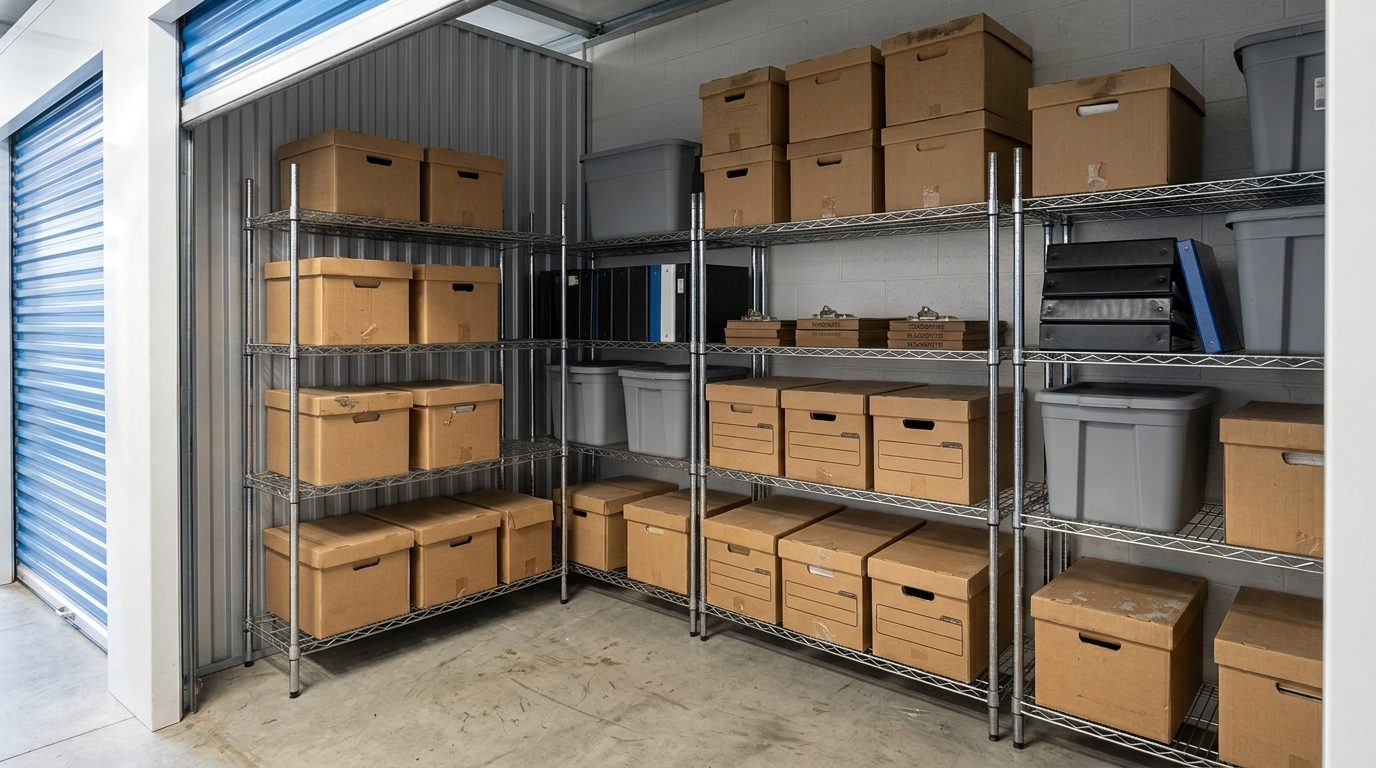
Climate control is not a substitute for proper document handling. Use sturdy file boxes, avoid overpacking, label each box clearly, and keep a simple index so your team can locate records without digging through every container. For sensitive or regulated records, businesses should also follow their own privacy, retention, and access procedures.
Choose climate-controlled storage if you're keeping legal documents, business records, photographs, or other paper files for the long term. A basic unit may work for short-term overflow, but records that need to stay organized for years usually deserve a more thoughtful storage setup.
Moving business records off-site works best when the facility offers practical access and monitoring features. For confidential or regulated documents, the business should still control who can access the unit, how boxes are labeled, and how records are checked in and out.
Useful facility features to look for include:
Digital video recording: Supports monitoring across the property.
Access gate: Helps control entry for authorized customers.
Logged access: Adds a record of facility access activity.
Overnight surveillance: Supports monitoring during nighttime hours.
Turing Enabled monitoring: Adds advanced video monitoring capabilities.
Pest control: Helps support a cleaner storage environment for boxed records.
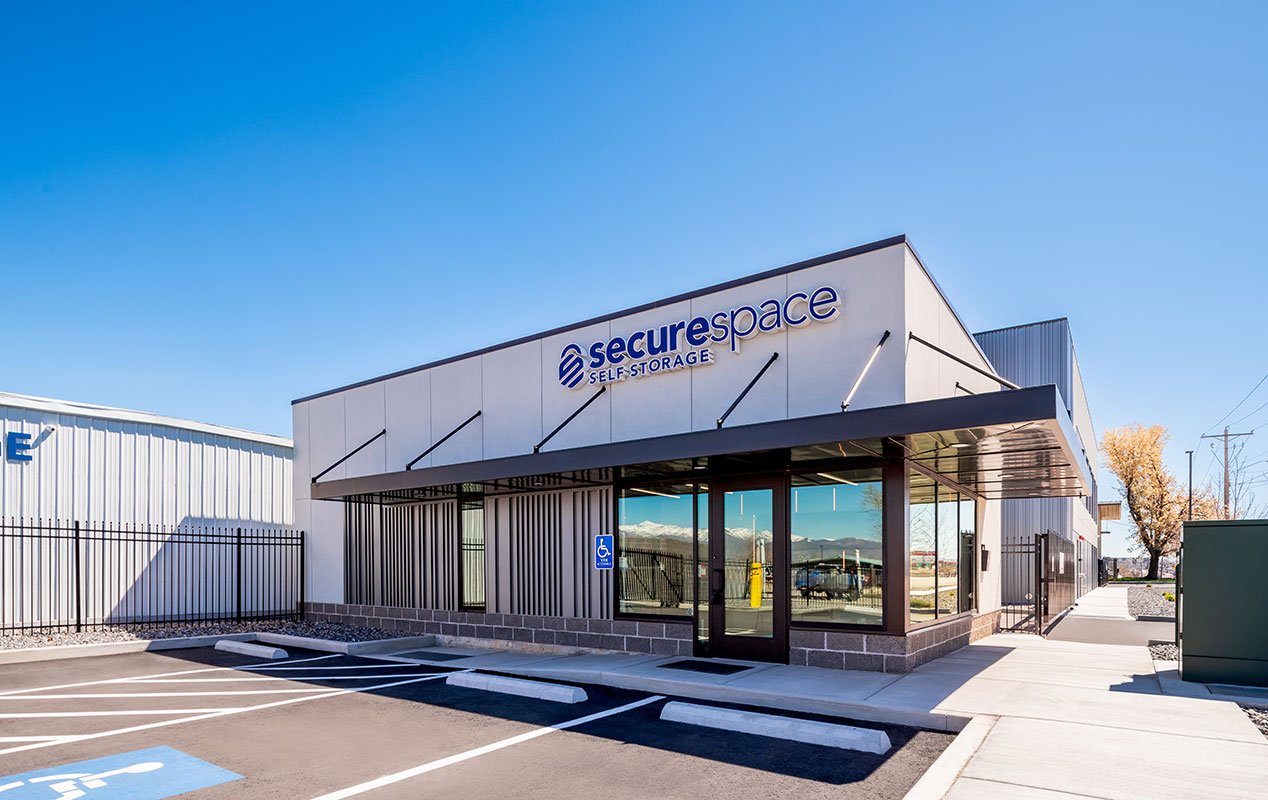
SecureSpace Self Storage Murray offers features such as an access gate, digital video recording, logged access, overnight surveillance, Turing Enabled monitoring, pest control, and climate-controlled storage. For businesses storing sensitive records, those features can support an organized off-site storage plan when paired with internal privacy and access procedures.
Cost is usually the deciding factor, and the comparison is clearer once you look at how office space is being used.
A self-storage unit is priced based on unit size, availability, features, and current promotions. A small business archive may fit in a 5x5 unit, while a larger office may need a 5x10, 10x10, or larger unit depending on the number of boxes, shelving needs, and retrieval frequency.
Compare that to in-office storage. Beyond the leased square footage, you're paying for filing cabinets, shelving, and the staff time spent managing files in a crowded office. When you add it all up, off-site storage can be a practical way to reduce clutter while keeping records accessible.
Many facilities also run promotions for new customers, so it's worth checking current availability and pricing when you reserve a unit.
Transitioning your archives off-site is straightforward when you break it into clear steps.
Go through what you have and sort documents by type, department, and date. This helps you avoid paying to store duplicate, outdated, or unnecessary files.
Use Utah and federal guidelines to decide what to keep, for how long, and what can be securely destroyed. For regulated documents, confirm requirements with the appropriate advisor or internal compliance lead.
Use standard file boxes, label everything clearly, and keep an index so you can find files quickly later. Group records by department, retention period, or retrieval frequency.
Pick a storage option with climate-controlled units, access features, and a location that works for your team. A nearby facility can make it easier to retrieve records during access hours.
Decide who on your team is authorized to retrieve files and how often you'll need access. Keep a simple checkout log so records do not disappear into someone's office without documentation.
A little organization up front pays off every time you need to pull a document down the road.
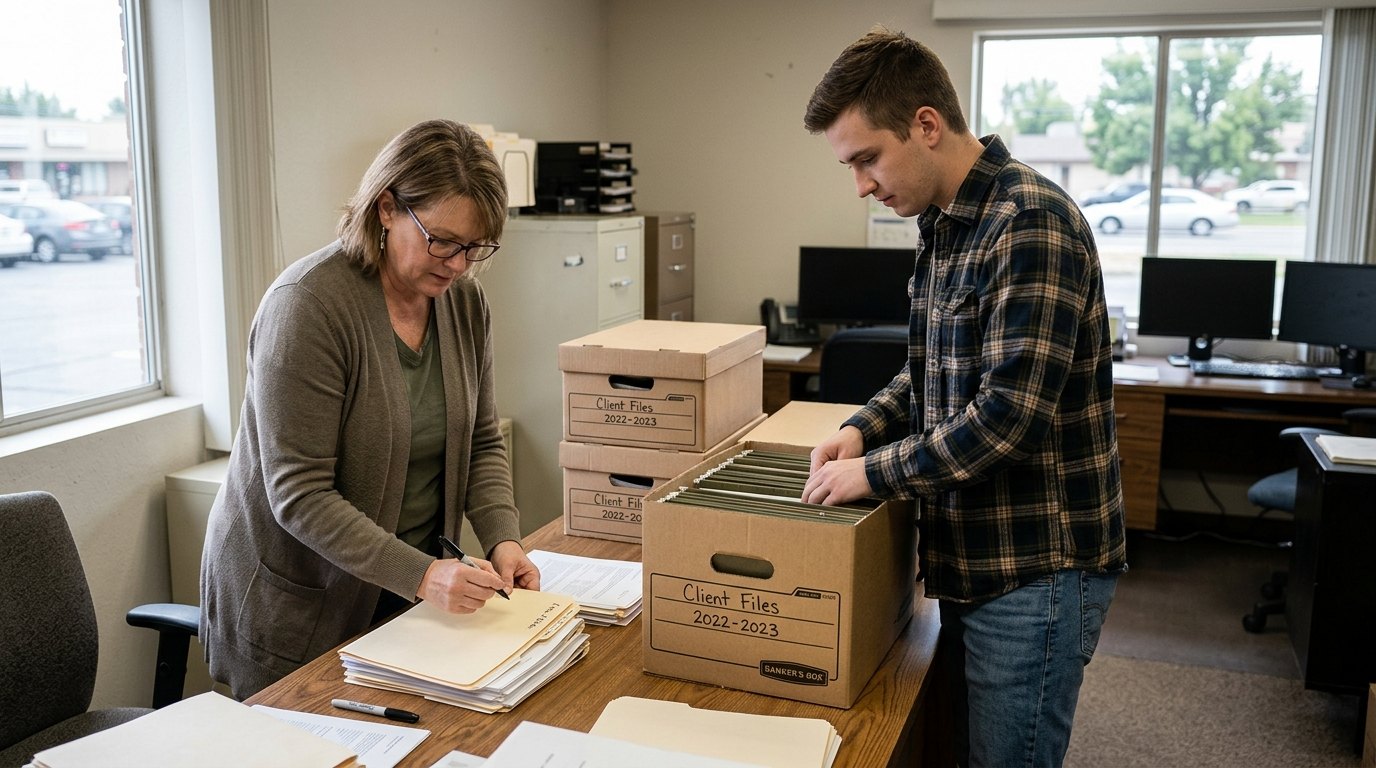
Document storage doesn't have to be a headache. By moving archives to a climate-controlled storage unit, businesses can free up valuable office space, organize long-term records, and keep files accessible when they are needed.
If you manage a clinic, law firm, or office in the Murray area, the next step is simple: audit your records, set your retention schedule, and choose a local storage option that fits your space and access needs.
Self-storage pricing depends on unit size, availability, features, and current promotions. A small archive may fit in a 5x5 unit, while larger offices may need a 5x10, 10x10, or bigger space depending on the number of boxes and how often records need to be retrieved.
With a local self-storage unit, you can drive over and pull a file yourself during the facility's access hours. SecureSpace Self Storage Murray offers 7-day access, with access and move-in hours from 7am to 9pm daily.
A standard, non-climate-controlled unit may expose paper records to more temperature variation than a climate-controlled space. For records you need to keep organized over many years, consider climate-controlled storage, sturdy boxes, clear labels, and a basic retrieval index.
You can digitize records through document scanning, use a full-service records management company, or keep files in-house. Scanning works well for documents you access often, while off-site physical storage can be a practical fit for large archives you rarely need but must retain.
Medical clinics, law firms, accounting practices, and corporate offices often benefit from off-site document storage-especially businesses that generate high volumes of records, face retention requirements, and pay a premium for office space.
Ready to free up your office and organize your records? Reserve a climate-controlled unit with SecureSpace Self Storage today.
For a nearby place to organize archived business records, review options for document storage in Murray, UT.
Everything you need to store your belongings securely, on your schedule.
Visit us online