Last updated Aug 12, 2026
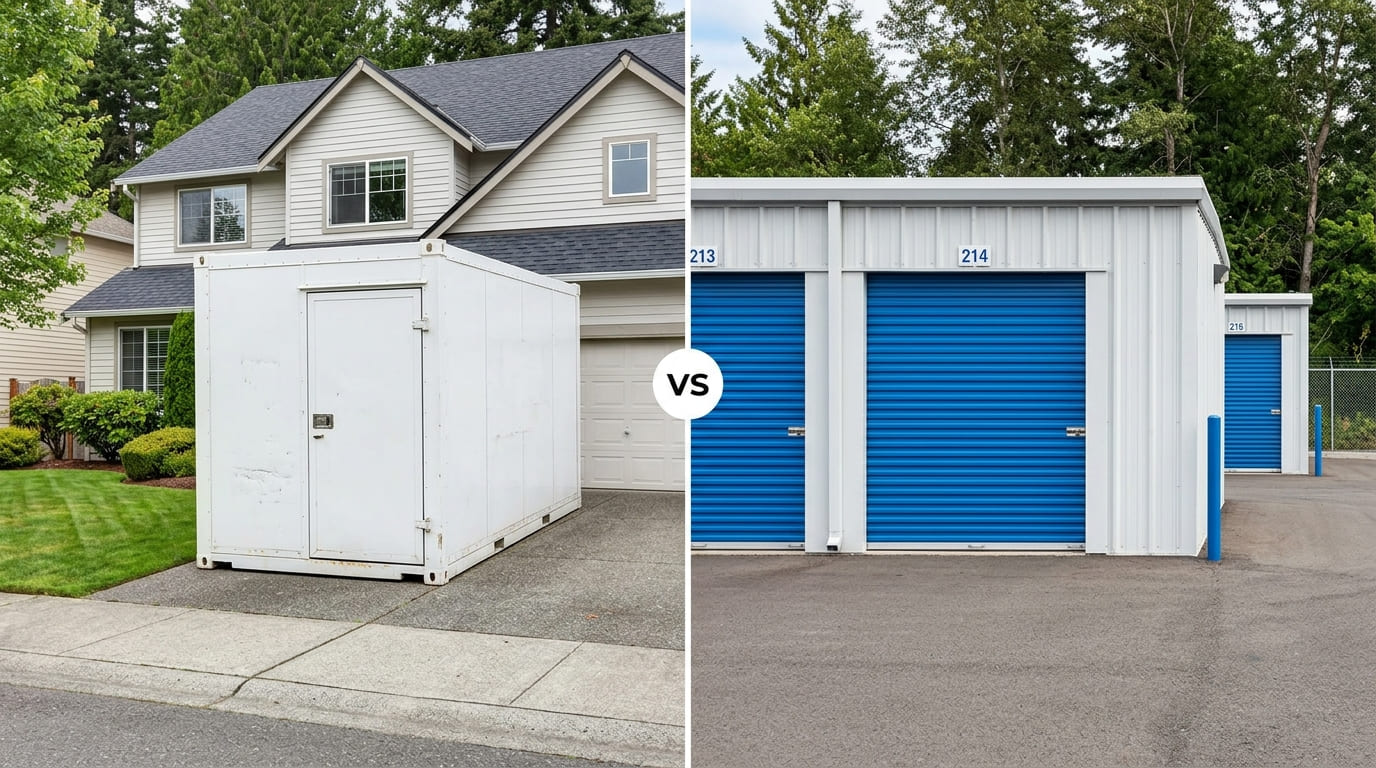
Portable storage containers and traditional self storage solve different problems. A container can be delivered to a home for loading and later transported elsewhere, while a storage unit gives you a separate space that you can visit during the facility's access hours.
For Federal Way residents, the decision may also depend on driveway space, property rules, local placement restrictions, transportation needs, and how often stored belongings need to be retrieved.
This guide explains how both options work, where each may be useful, and what to consider before choosing between a portable container and self storage.
PODS and similar portable-storage services deliver a container to an eligible property. You load the container, then arrange for the provider to pick it up and transport it to another address or an off-site storage location.
Portable containers can be useful when you want to load belongings gradually without repeatedly driving to a storage facility.
Portable containers are often used for:
Long-distance moves: The provider transports the loaded container to another city or state.
Home renovations: Belongings can be moved out of active work areas while remaining near the property.
Staged moves: A household can load over several days instead of completing the process in one trip.
Temporary transitions: A container may bridge the period between move-out and move-in dates.
Container sizes, delivery requirements, rental periods, and transportation services vary by provider. Confirm the available dimensions and service terms before making moving plans.
A self-storage unit is rented at a facility, and the customer transports belongings to and from the property. Access is available during the facility's designated gate hours.
Self storage can work well for moves, renovations, downsizing, seasonal belongings, business supplies, and other situations where you need recurring access to stored property.
At SecureSpace Self Storage Federal Way, primary unit sizes include:
5x5: A compact option for boxes, seasonal belongings, and smaller household items.
5x15: A longer layout that may accommodate furniture, shelving, and packed containers.
10x10: Useful for furniture, boxes, appliances, and belongings from a smaller household.
10x15: Provides additional room for larger furniture, equipment, and household contents.
10x20: May suit a substantial move, renovation storage, or permitted business property.
10x25: Offers more room for larger household or business-storage needs.
10x30: The largest primary size for extensive storage projects.
Actual fit depends on the dimensions of your belongings, how they are arranged, and whether you need an aisle for retrieval.
Portable storage pricing often includes several separate charges. Depending on the provider and move, these may include:
Container rental: The recurring cost of using the container.
Delivery: Transportation from the provider to the loading address.
Pickup: Removal of the container after loading or storage.
Relocation: Transportation to a new home or storage center.
Extended rental: Additional charges when the container remains in use longer than planned.
Permit or placement costs: Possible expenses when private-property placement is unavailable.
Self-storage pricing is usually based on unit size, unit type, location, availability, and current promotions. Additional costs may include a lock, administrative charges, insurance or coverage, and moving supplies.
Neither option is always less expensive. Request a complete portable-container quote and review the full self-storage rental terms before deciding.
Before ordering a container, ask:
Does the quote include delivery and pickup?
Is transportation to another address included?
How long is the quoted rental period?
What happens if the move is delayed?
Are there charges for rescheduling?
Does the price change based on travel distance?
Are there restrictions on where the container may be placed?
Before renting a unit, review:
The regular monthly rate
The duration of any introductory promotion
Administrative or setup charges
Insurance or coverage requirements
Lock and moving-supply costs
Rate-change provisions
Move-out notice requirements
Local placement rules can affect whether a portable container is practical for a particular property.
According to Federal Way Revised Code (FWRC) 19.275.090, portable moving containers may generally remain on a property for no longer than 60 days within a 180-day period unless a longer period is approved by the city's director.
The code also limits placement in required yards and critical-area setbacks, although exceptions may be considered under certain circumstances. Containers cannot interfere with safe sight distance or traffic circulation on nearby streets and sidewalks.
Before ordering a container, determine:
Driveway space: The delivery vehicle needs enough room to place and retrieve the container.
Surface condition: Confirm that the driveway or approved placement area can support the container.
Property boundaries: Make sure the container will remain within the permitted area.
Traffic visibility: The container should not interfere with drivers, pedestrians, or sidewalks.
Rental duration: Plan around the city's general 60-day limit.
Public right-of-way: Placement on a street or other public area may require separate city review or authorization.
Property-specific conditions and city-approved exceptions may affect the rules. Confirm current requirements with the City of Federal Way before arranging delivery.
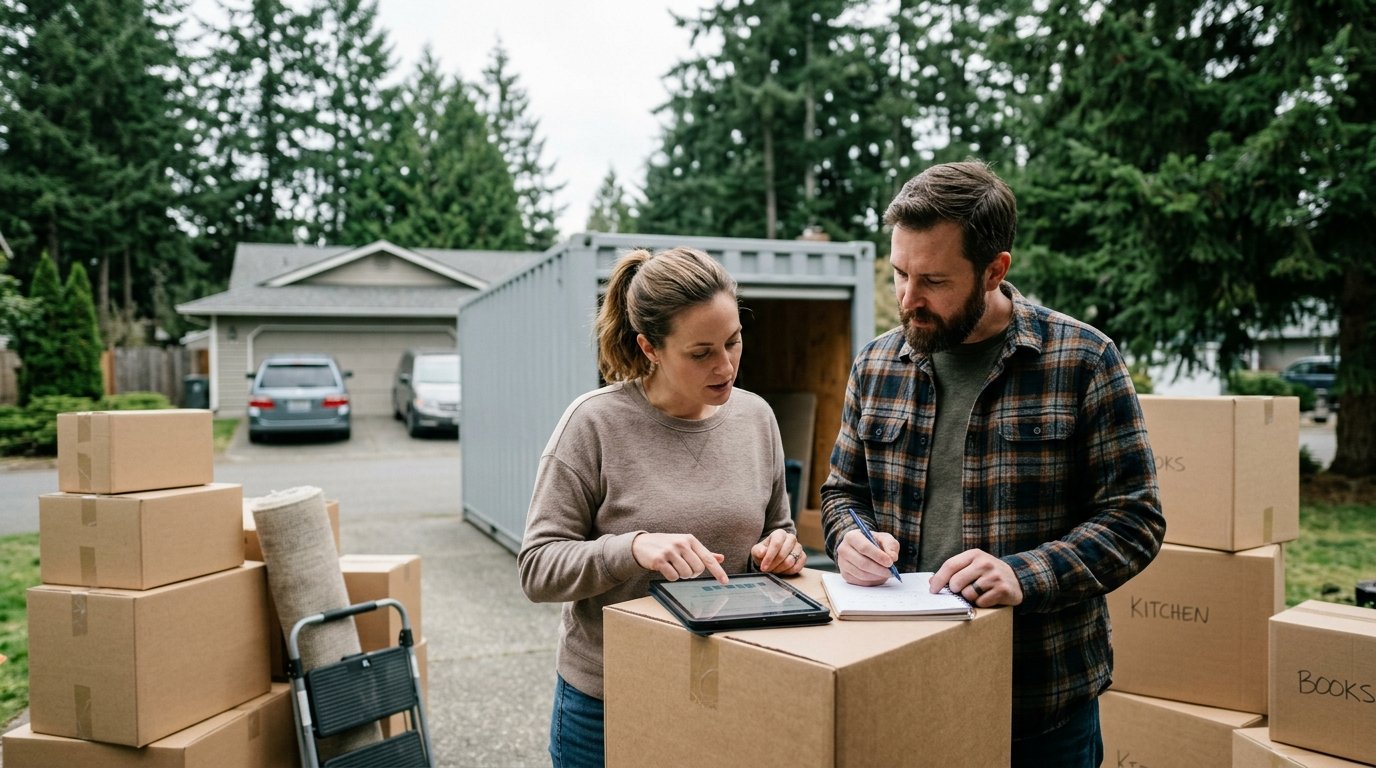
City rules are not the only consideration. An HOA, landlord, apartment manager, condominium association, or commercial-property owner may have separate restrictions.
A property may limit:
Container dimensions
Placement locations
Delivery hours
Time on the property
Use of shared parking spaces
Access by commercial delivery vehicles
Temporary structures or equipment
Obstruction of sidewalks or common areas
Apartment and condominium residents should not assume that a container can be placed in a shared parking lot. Ask property management for written approval before booking delivery.
Self storage keeps belongings off-site and does not require placing a container on a residential property, driveway, or shared parking area.
Portable containers are designed for outdoor use, but their construction and weather resistance vary by provider. Federal Way's rainy season makes careful packing and container placement especially important.
Rainfall alone does not mean belongings will be damaged. Problems are more likely when items enter the container damp, containers are poorly sealed, or boxes are placed directly against surfaces where air movement is limited.
Use these practical steps:
Store items clean and dry: Do not load wet furniture, clothing, boxes, or equipment.
Use sturdy containers: Choose boxes or bins appropriate for the belongings inside.
Elevate susceptible items: Use stable supports where appropriate rather than placing everything directly on the container floor.
Protect furniture: Use breathable moving blankets instead of sealing damp items in plastic.
Leave limited airflow: Avoid packing every item tightly against the container walls.
Inspect the container: Report visible damage, gaps, or water intrusion before loading.
Follow provider rules: Confirm restrictions involving liquids, fuel, chemicals, batteries, and other regulated items.
SecureSpace Self Storage Federal Way does not offer heated or climate-controlled units. Customers using standard storage should follow similar clean-and-dry packing practices.
A portable container may be practical when:
You're moving a long distance: The provider can transport the loaded container to another city or state.
Your property has suitable space: A private driveway or permitted placement area can accommodate delivery.
You want to load gradually: You prefer to pack over several days rather than complete one large move.
The container will remain short term: Your schedule fits local duration limits.
Your property rules allow it: The landlord, HOA, or property manager has approved the placement.
You do not need frequent access: The belongings can remain packed while the container is transported or stored.
Confirm delivery access and pickup arrangements before scheduling movers or loading help.
Self storage may work better when:
You need recurring access: You expect to retrieve or add belongings throughout the rental.
You lack driveway space: Your apartment, condo, townhome, or property cannot accommodate a container.
Property rules restrict containers: An HOA, landlord, or manager does not allow temporary storage structures.
You need flexible rental time: The storage need may continue beyond the city's portable-container placement limit.
You want multiple unit sizes: You prefer to select a space based on the volume of your belongings.
You do not need container transport: Your move is local, or you already have transportation arrangements.
SecureSpace Self Storage Federal Way provides daily gate access from 6:00 a.m. to 9:00 p.m., allowing customers to plan loading and retrieval within that window.
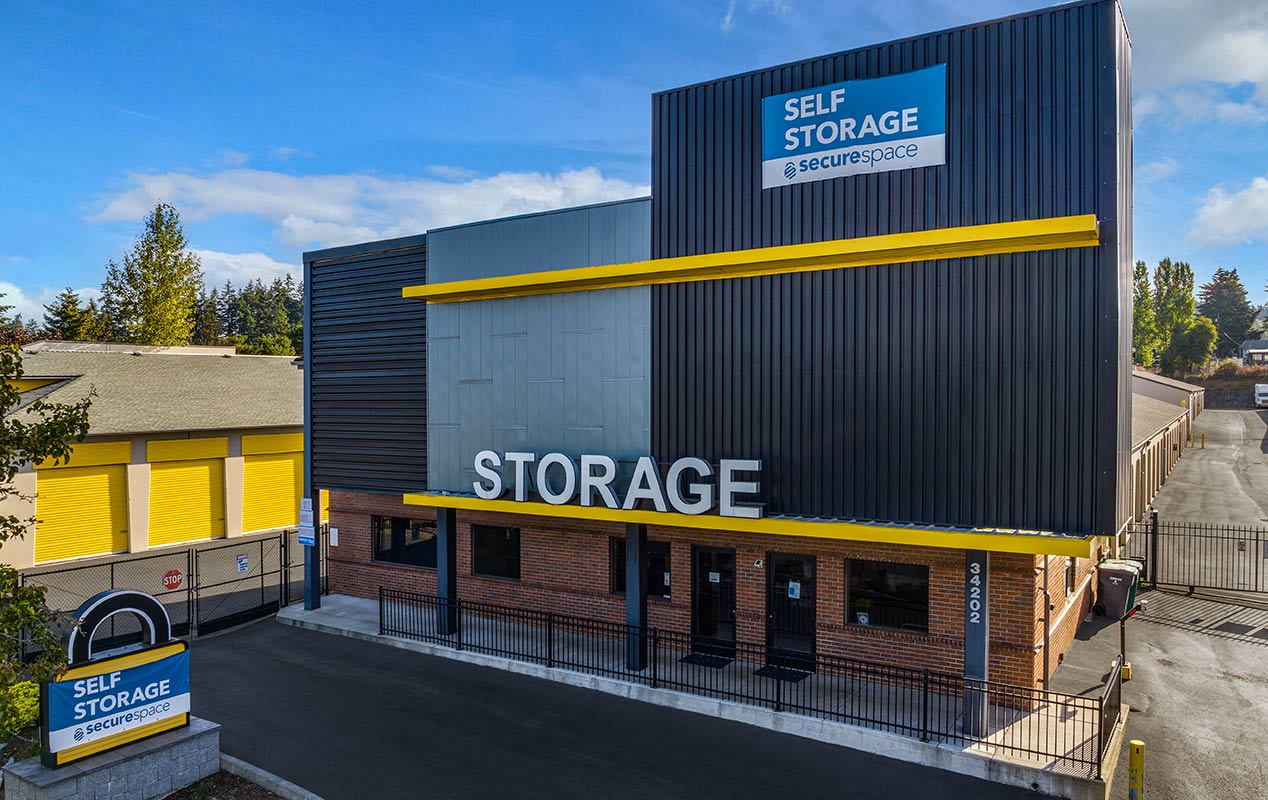
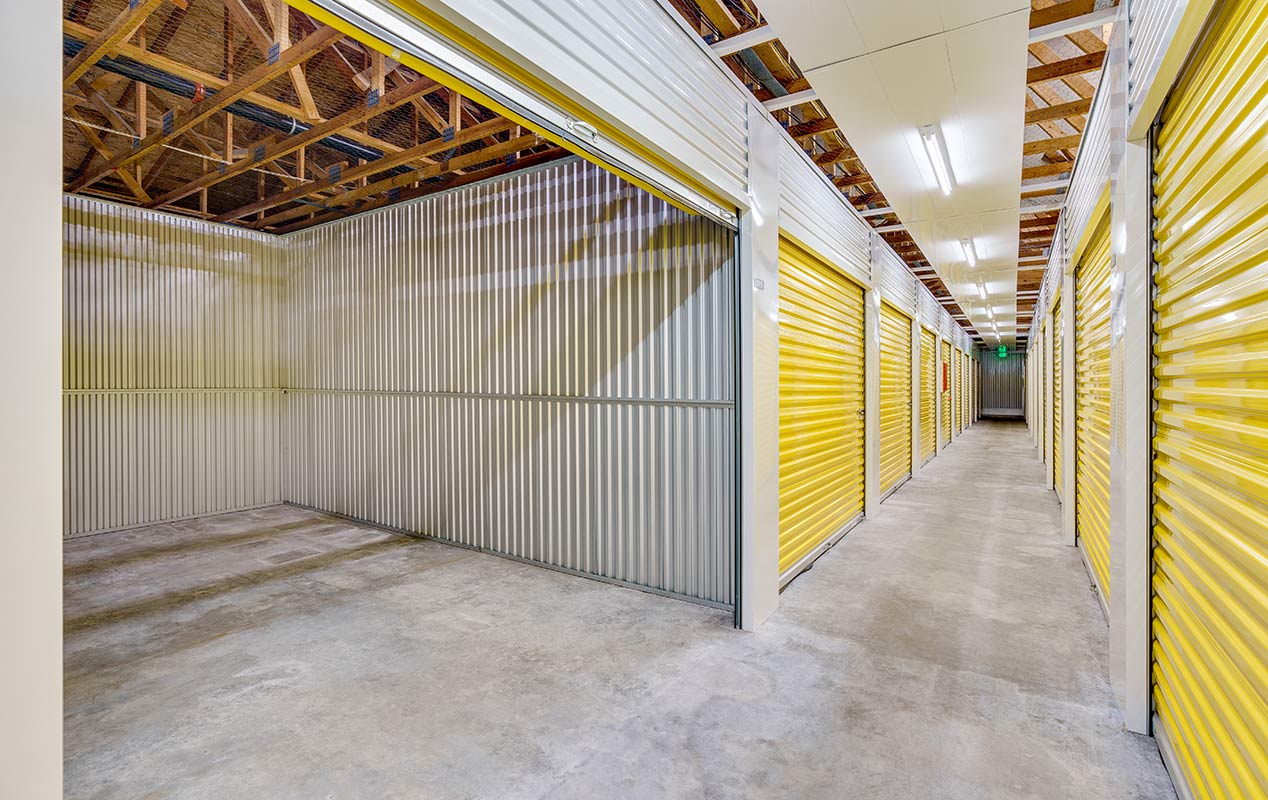
SecureSpace Self Storage Federal Way offers standard self-storage units, drive-up access for selected units, month-to-month leases, online payments, and ACH or credit card payment plans.
Drive-up units allow customers to bring a vehicle near the unit entrance while loading and unloading. They are not available for indoor vehicle storage.
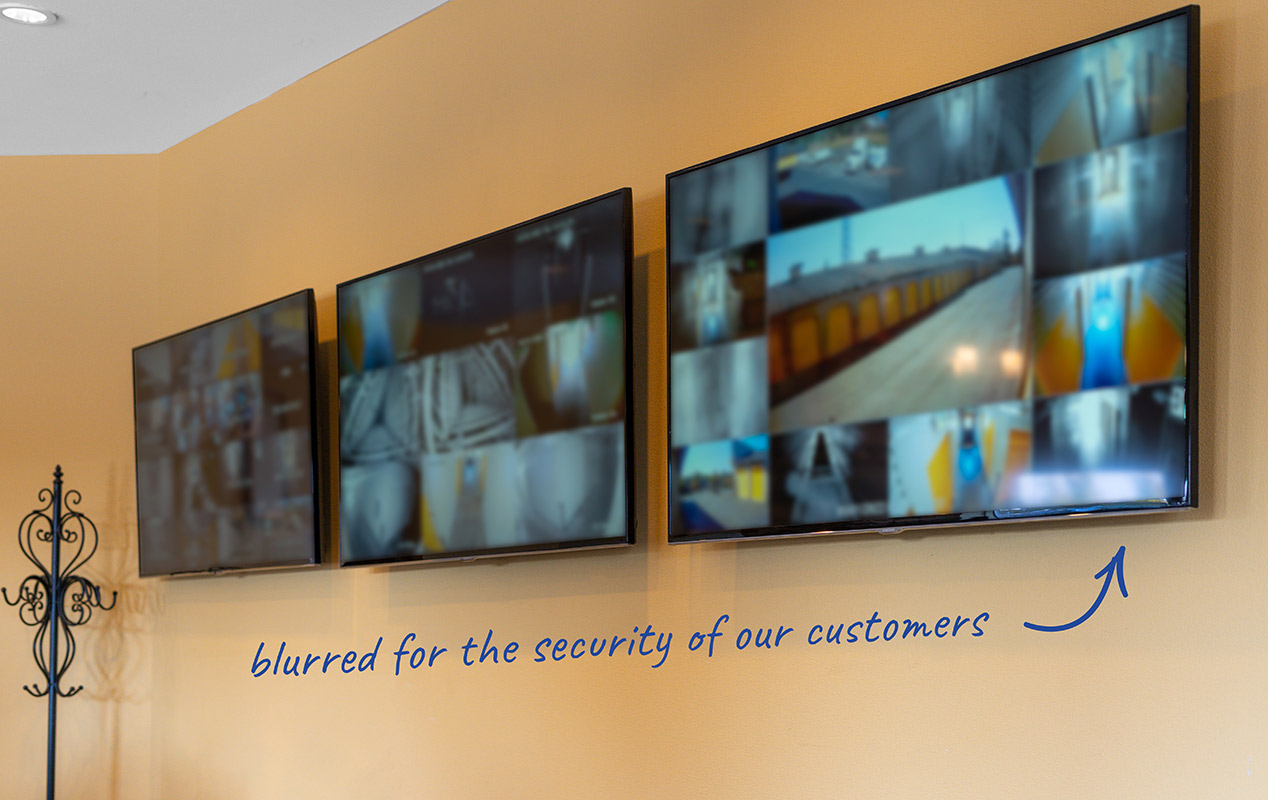
Security features include:
Access gate: Controls vehicle entry to the property.
Digital video recording: Records activity in designated areas.
Overnight surveillance: Provides monitoring during overnight periods.
Customers should still use a suitable lock, maintain an inventory of stored belongings, and review applicable insurance or coverage requirements.
Moving pods are not allowed at this facility. A portable container should not be delivered to or staged on the SecureSpace property.
Federal Way code generally limits portable moving containers to 60 days on a property within any 180-day period unless the city's director approves an exception.
Placement restrictions also apply, so confirm the requirements for your specific property before arranging delivery.
Public right-of-way placement may require separate authorization or review. Contact the City of Federal Way before scheduling a container when private driveway placement is not available.
Do not assume the container can be placed on a street, sidewalk, shoulder, or other public area.
No. The final cost depends on the container size, rental duration, delivery distance, transportation charges, storage-unit size, promotions, and other fees.
Compare complete written quotes rather than only the advertised monthly rental price.
Possibly, but shared properties often have limited placement space and additional management rules. Obtain written permission and confirm where the container and delivery vehicle may be located.
When placement is not practical, self storage may be a more workable option.
No. The facility offers standard, non-climate-controlled storage only. Store belongings clean and dry, use suitable containers, and follow manufacturer guidance for sensitive items.
No. Moving pods are not allowed at this facility. Customers should transport belongings using a vehicle or moving service that complies with facility access rules.
Primary sizes include 5x5, 5x15, 10x10, 10x15, 10x20, 10x25, and 10x30. Current availability may vary.
Gate access is available daily from 6:00 a.m. to 9:00 p.m.
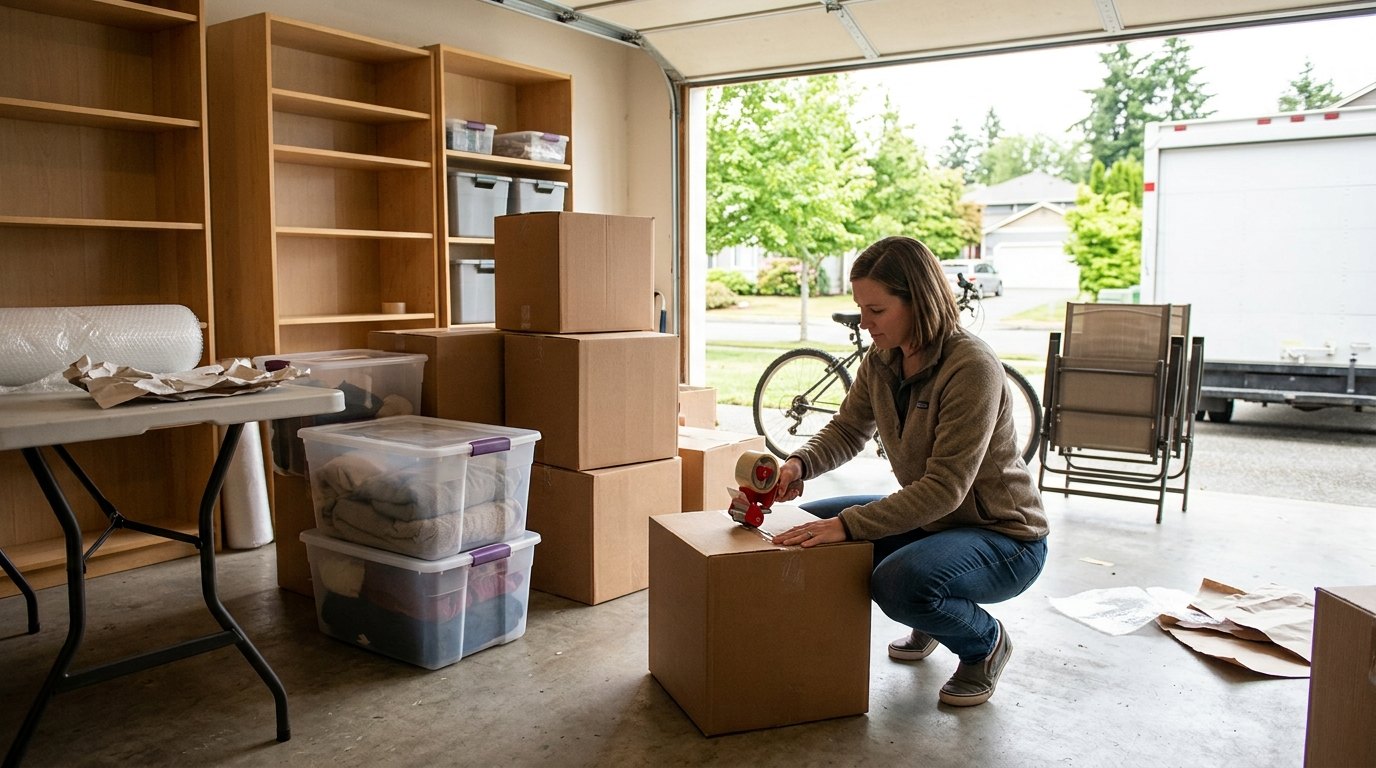
A portable container may be useful when you need gradual loading or long-distance transportation and have an eligible place to keep it. Self storage may be more practical when you need recurring access, flexible rental time, or an option that does not occupy residential property.
Review the full cost, placement rules, timeline, and transportation requirements before committing to either option.
If you're ready to find the right unit size and check current availability, visit SecureSpace Self Storage Federal Way.
Everything you need to store your belongings securely, on your schedule.
Visit us online