Last updated Aug 12, 2026
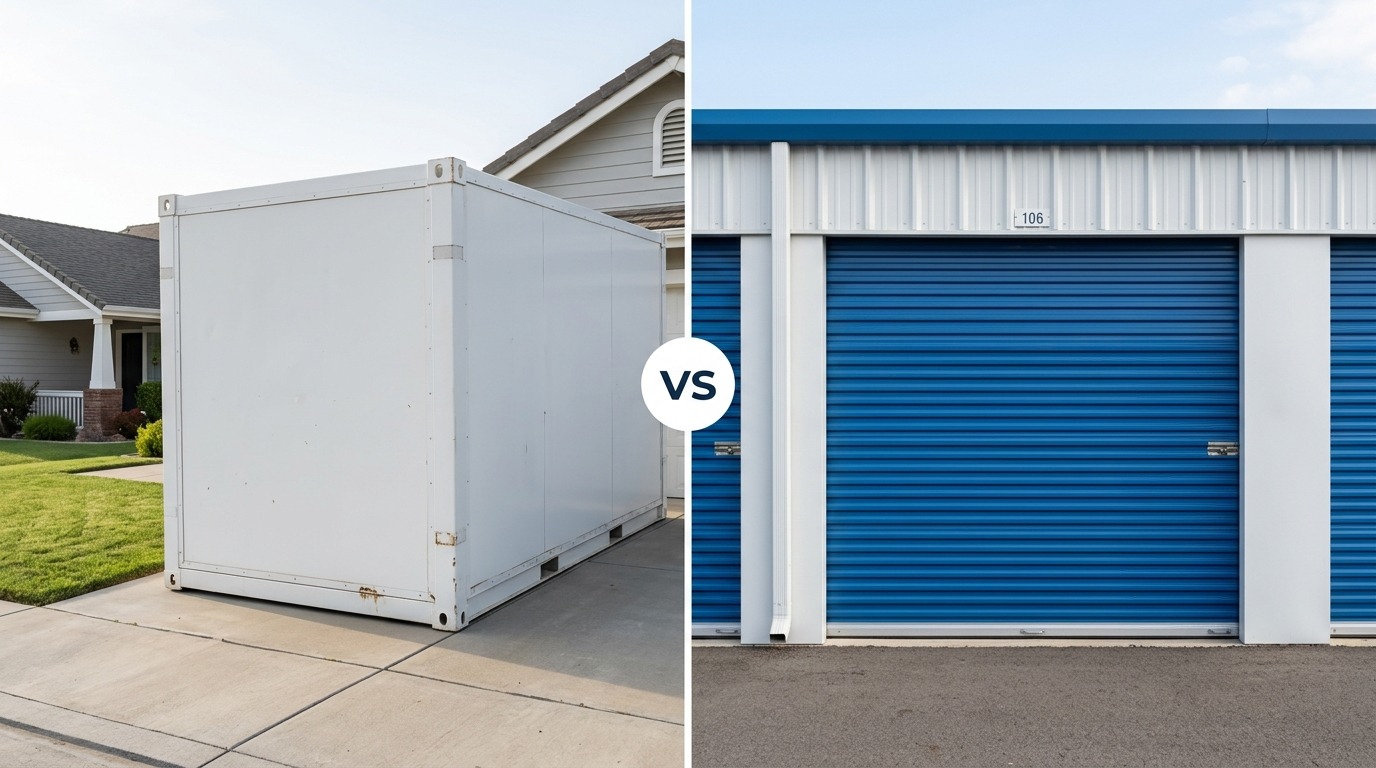
Portable storage containers can be useful when belongings need to remain at a residence during a renovation or travel directly to another destination. A traditional self-storage unit works differently: belongings are transported to a facility and stored there until they are needed.
Neither option is automatically cheaper or easier. The better choice depends on where the container can be placed, how long storage is needed, whether transportation is available, and how often the belongings must be accessed.
In San Diego, limited curb space, residential parking rules, HOA requirements, delivery access, and neighborhood density can make portable-container placement more complicated than expected. This guide compares those considerations with facility-based self storage.
The two options solve similar storage problems but involve different moving processes.
With self storage, the renter transports belongings to a commercial facility. A personal vehicle, rented truck, or moving company may be used for the trip.
Potential advantages include:
Multiple unit sizes
Month-to-month leases
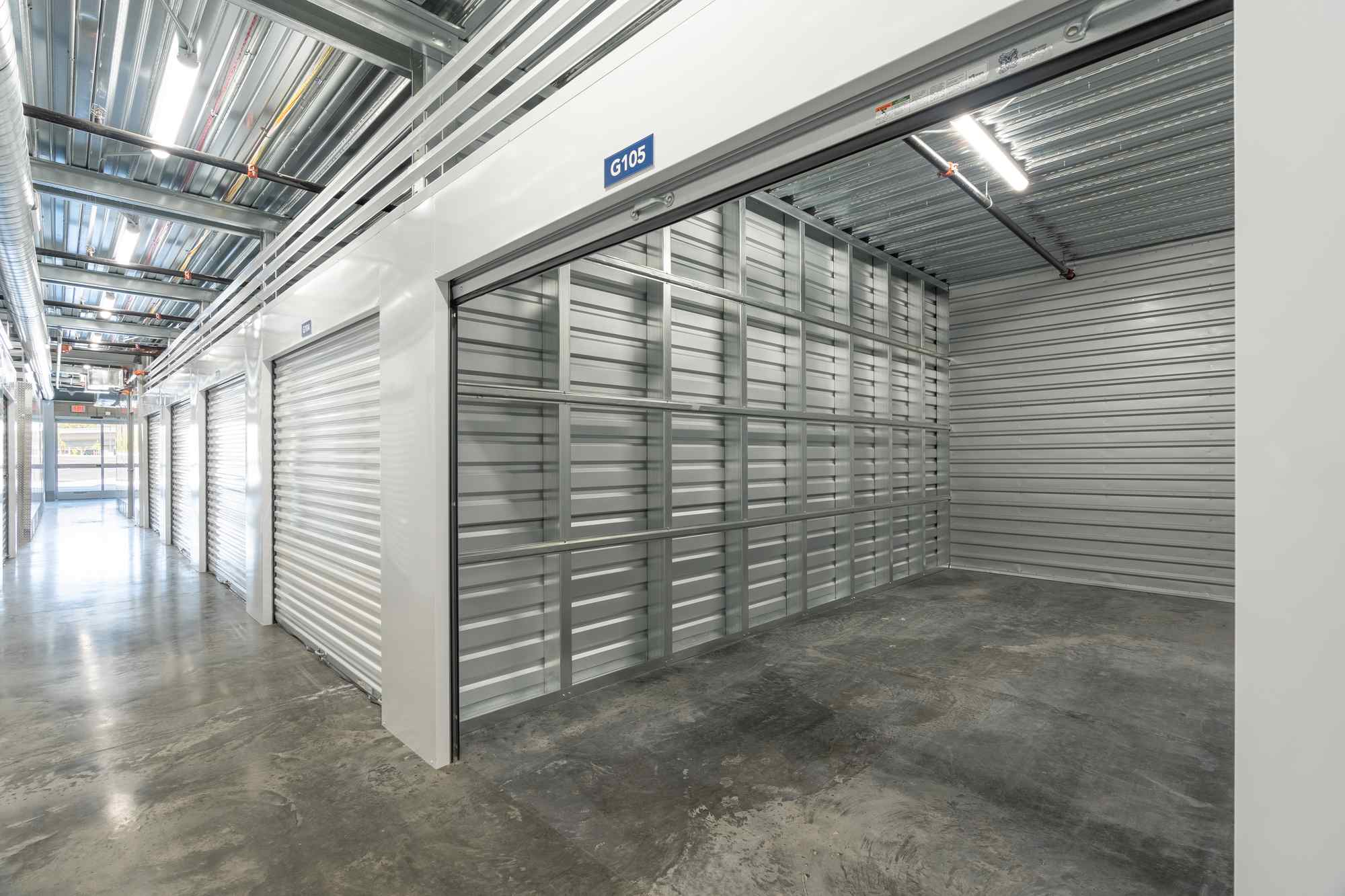
Indoor and drive-up options
Access during the facility's posted hours
No need to keep a container at the residence
Climate-controlled options at select facilities
The renter remains responsible for transportation, loading, unloading, packing, and complying with the rental agreement.
A portable-storage company delivers a container to the residence or another approved location. The customer loads it, and the provider may leave it temporarily, transport it to a storage site, or move it to a new address.
This can reduce the need to unload belongings twice during a direct move. It also introduces additional considerations involving delivery scheduling, container placement, pickup, transportation charges, and access while the container is stored elsewhere.
"PODS" is a brand name, although the term is often used informally for portable storage containers from several providers.
A portable container requires a suitable delivery area. The location generally needs enough clearance for the container, delivery equipment, and safe pickup.
In dense areas such as Little Italy, many residents live in apartments or multifamily buildings without a private driveway or yard suitable for a portable container.
A container placed at the curb may occupy public parking, interfere with building access, or require additional approval. Apartment residents should also confirm whether the property manager permits a container on private premises.
North Park shares a similar profile, combining apartments, older homes, businesses, and busy residential streets.
Some properties have driveways, but their dimensions, slope, overhead clearance, and shared-access arrangements may prevent container delivery. Curb availability should not be assumed, even when street parking is normally permitted for passenger vehicles.
Condominium associations and planned communities may restrict portable containers in driveways, common areas, guest parking, or private streets.
Approval may be required before scheduling delivery. Review the community's current rules rather than relying on the container provider to determine whether placement is permitted.
A permit may be required when a portable container occupies a public street, sidewalk area, parking lane, or another part of the public right-of-way.
Requirements may depend on:
The proposed location
Container dimensions
Placement duration
Traffic and pedestrian access
Nearby driveways
Parking restrictions
Metered spaces
Special curb zones
Local construction or moving rules
City procedures, fees, processing times, and required plans can change. Confirm the current requirements with the appropriate San Diego department before arranging delivery.
A permit for public placement does not replace approval from a landlord, HOA, condominium association, or private-property owner.

A driveway or yard may avoid public right-of-way requirements, but the property still needs to accommodate the delivery.
Portable containers generally require a stable placement area. A steep, narrow, damaged, or uneven driveway may not be suitable for delivery equipment or a loaded container.
The provider should evaluate placement requirements before delivery day.
Trees, rooflines, power lines, carports, gates, walls, and parked vehicles may interfere with delivery.
Ask how much vertical, horizontal, and turning clearance the delivery system needs.
The weight of a loaded container and its delivery equipment may affect pavers, asphalt, landscaping, or older concrete.
Discuss surface requirements, protective measures, and responsibility for damage before scheduling delivery.
Tenants should obtain approval before placing a container on rental property. Homeowners in managed communities should review current HOA rules.
Do not assume that private property can be used without restrictions.
A meaningful comparison should include more than the advertised monthly rate.
Potential charges may include:
Container rental
Initial delivery
Pickup
Transportation to a storage facility
Redelivery to a new address
Long-distance transportation
Permit or processing fees
Meter or parking-space charges
Additional rental time caused by scheduling delays
Coverage or protection-plan charges
Access fees while the container is stored off-site
The final amount depends heavily on the move distance, container size, storage duration, and delivery location.
Potential expenses may include:
Monthly unit rent
Truck rental
Fuel or mileage
Moving labor
Administrative charges
Coverage requirements
Locks and packing materials
Travel between the home and facility
Future rate changes
Self storage may require more handling because belongings are unloaded at the facility and moved again later. That additional labor should be included in the comparison.
Ask portable-container providers for a quote that includes delivery, pickup, storage, transportation, redelivery, and expected access charges.
For self storage, review the ongoing monthly rate, introductory terms, additional charges, access hours, unit features, and move-out requirements.
An introductory price should not be treated as the long-term cost unless the agreement says so.
A portable container may suit a move when:
The residence has an approved placement area.
The container can remain on private property.
The customer wants to load gradually.
Belongings will travel directly to another destination.
Avoiding an intermediate unload is a priority.
Delivery and pickup schedules fit the move.
The total transportation quote works within the budget.
Portable containers may be particularly useful for certain long-distance moves because the same container can be transported without transferring the contents to a storage unit.
A facility-based storage unit may make sense when:
There is no suitable container-placement area.
Curb placement would require permits or parking arrangements.
An HOA or landlord restricts portable containers.
The renter needs access to individual belongings during storage.
Storage will continue after the move.
Different unit sizes may be needed over time.
Indoor or climate-controlled storage is preferred.
Transportation to the facility is readily available.
Self storage avoids leaving a container at the residence, but renters must still account for transportation, facility access hours, and the work involved in loading and unloading.
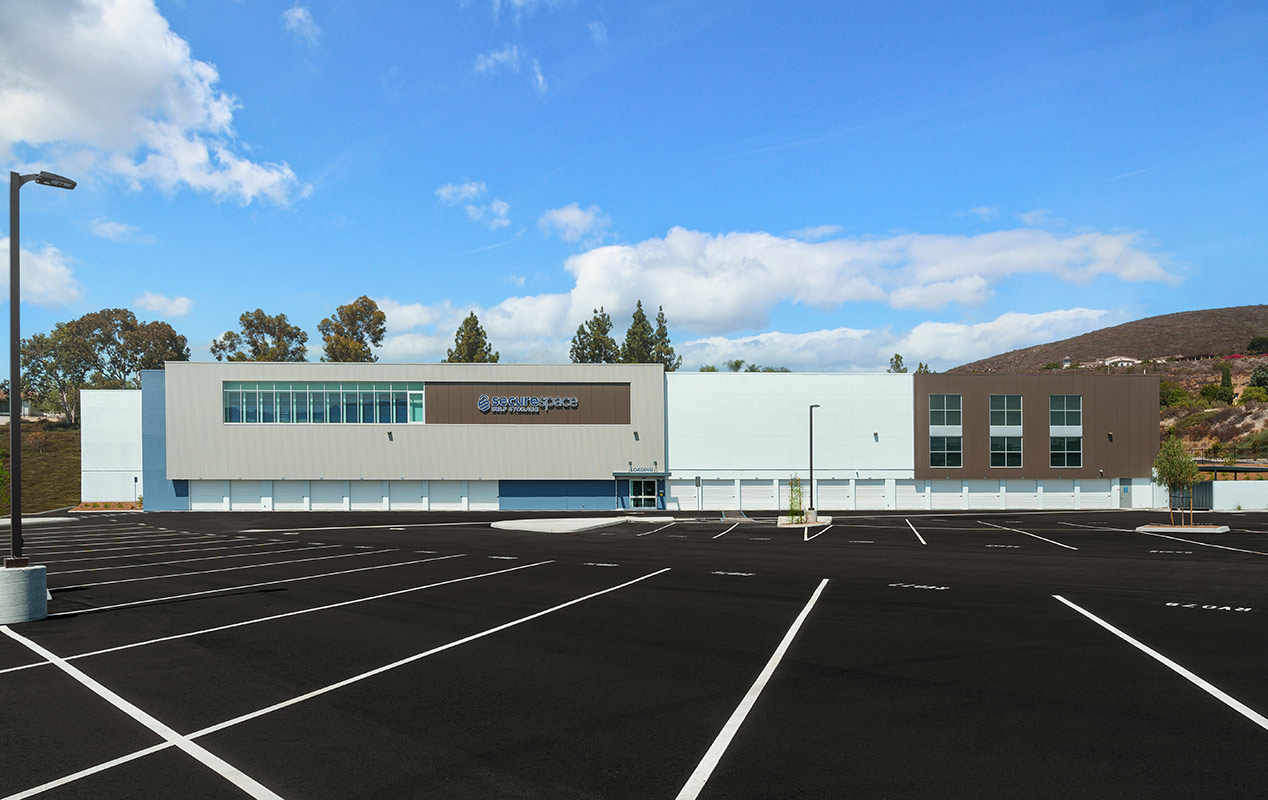
SecureSpace Self Storage Rancho Penasquitos is located at 10389 Azuaga Street near the I-15 and Route 56 corridors.
The facility offers indoor and drive-up units in sizes ranging from 5x5 through 10x30.
Climate-controlled storage is available for eligible units at Rancho Penasquitos.
These units can help reduce exposure to significant temperature swings compared with standard storage. They do not provide confirmed humidity regulation or guarantee against moisture, mold, rust, pests, fading, or other damage.
Confirm that climate control is included with the specific unit before renting.
Rancho Penasquitos offers elevator access, extra-large elevators, carts, and dollies for suitable loads.
Drive-up units may reduce the distance between a moving vehicle and the storage entrance. Unit availability and access configuration vary.
The facility is accessible to semi-trucks, and moving pods are allowed. Customers should review procedures before arranging a large moving truck or portable container.
Rancho Penasquitos provides daily gate access from 6:00 AM to 10:00 PM.
The office is open from 9:30 AM to 6:00 PM Monday through Friday and from 10:00 AM to 4:00 PM on Saturday. The office is closed on Sunday.
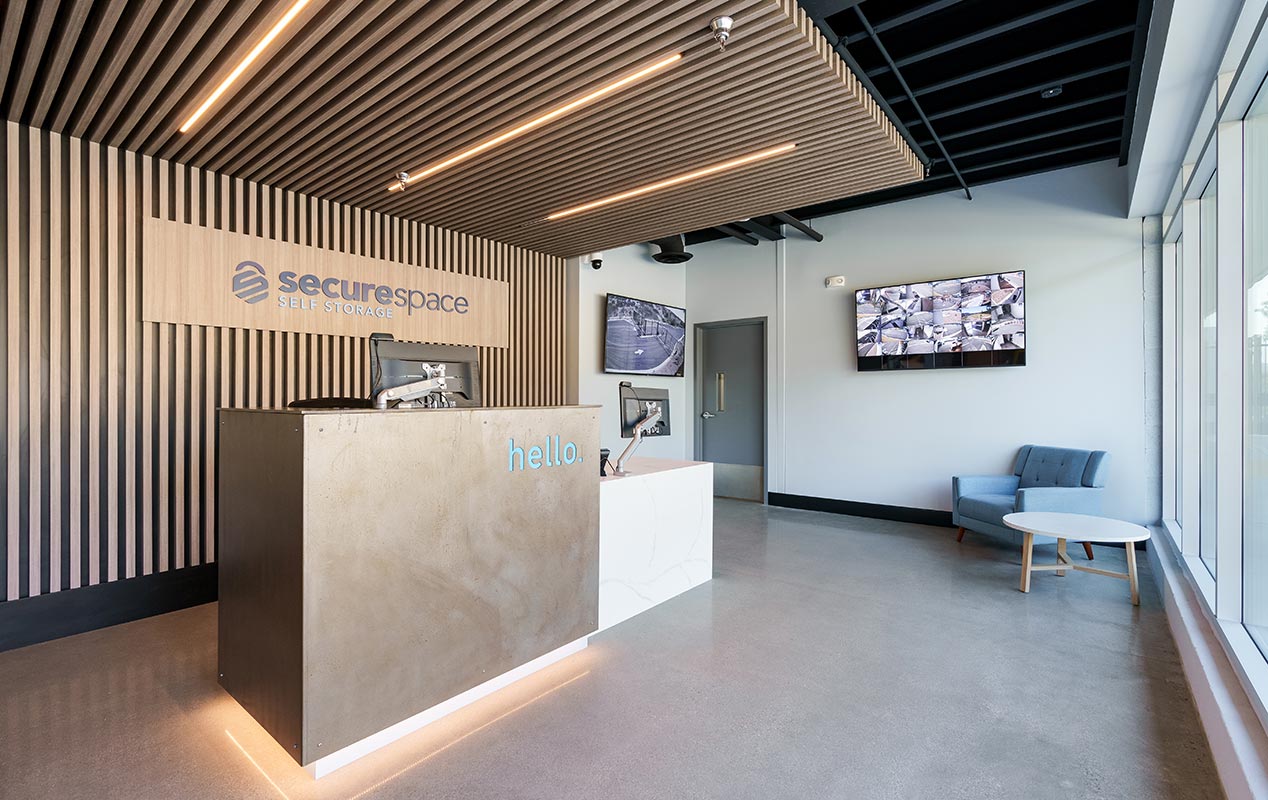
Security features include an access gate, digital video recording, logged access, overnight surveillance, and Turing-enabled monitoring.
These features support access management and facility monitoring but do not guarantee against theft, loss, fire, water, pests, or damage.
Online payments, ACH and credit card payment plans, touchless computer-controlled access, touchless move-in, and month-to-month leases are available.
SecureSpace Self Storage San Diego Encanto is located at 5950 Federal Boulevard, San Diego, CA 92114.
The facility offers indoor and drive-up units in sizes ranging from 5x5 through 10x30.
San Diego Encanto does not offer climate-controlled storage.
Belongings should be clean, dry, properly packed, and suitable for standard storage conditions.
Elevators, carts, and dollies are available for suitable belongings.
Drive-up units may make loading more convenient, but San Diego Encanto does not provide semi-truck accessibility, moving-pod access, a loading dock, or covered loading.
Customers using large moving vehicles should confirm that the property can accommodate their transportation plans.
San Diego Encanto provides access from 9:30 AM to 6:00 PM Monday through Friday and from 9:30 AM to 5:00 PM on Saturday and Sunday.
These hours differ from Rancho Penasquitos and should be considered when coordinating a moving truck or professional movers.
San Diego Encanto includes an access gate, digital video recording, logged access, and overnight surveillance.
The facility offers online payments, ACH and credit card payment plans, and month-to-month leases. It is cash-free.
Touchless move-in, touchless computer-controlled access, and Turing-enabled monitoring are not offered.
How often the belongings will be needed can influence the decision.
A storage-unit renter can visit during the facility's posted access hours.
Boxes can be arranged to keep frequently used items near the entrance. A clear aisle and an updated inventory can make individual items easier to retrieve.
A container kept at the residence may provide convenient access while it remains on-site.
Once it is moved to the provider's storage facility, access may require an appointment, transportation charge, handling fee, or advance notice. Policies vary by provider.
Confirm access procedures before choosing a portable container for belongings that may be needed during storage.
Portable containers and self storage may both work during a PCS move, deployment, or temporary housing transition.
Military households should consider:
The expected destination
Whether the delivery address is finalized
Storage duration
Access needs while away
Transportation reimbursement rules
Changes to orders
Account-management requirements
Authorized access by another person
Move-out or delivery scheduling
Month-to-month leases are available at both SecureSpace San Diego locations. Online payment options may also help renters manage an account while away.
Neither option should be presented as universally better for military moves. The appropriate choice depends on the orders, timeline, approved expenses, and household needs.
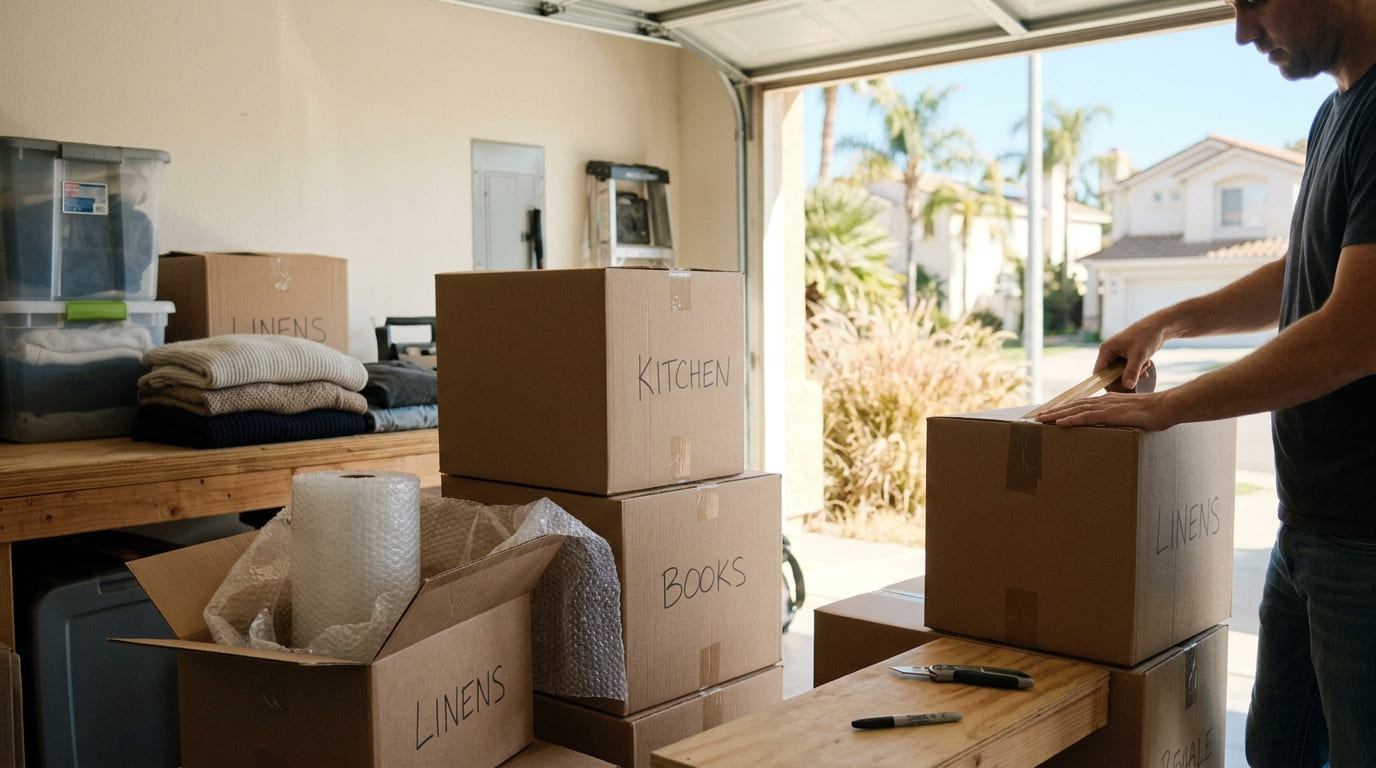
Careful packing matters whether belongings are placed in a portable container or storage unit.
Choose containers that can support their contents and remain stable when stacked.
Place heavier boxes at the bottom and avoid overloading them.
Remove legs, shelves, and detachable components when practical.
Keep hardware in labeled bags attached to the corresponding furniture.
A portable container may be transported after loading, so belongings should be secured against shifting.
In a storage unit, stable stacking remains important to prevent boxes or furniture from falling.
Do not pack damp furniture, clothing, mattresses, boxes, or outdoor equipment.
Allow appliances and other cleaned items to dry fully before storage.
Label boxes and record major items.
Photographs and a basic location map can make retrieval and unpacking easier.
A permit may be required when a container occupies a street, parking lane, sidewalk area, or another portion of the public right-of-way.
Confirm current placement, permit, notice, fee, and traffic-control requirements with the City of San Diego before scheduling delivery.
It depends on the move distance, storage duration, delivery charges, transportation, permits, unit size, and labor.
Request complete quotes for both options rather than comparing only the advertised monthly prices.
Suitability depends on the driveway's slope, surface, dimensions, overhead clearance, and the provider's delivery equipment.
Ask the provider to evaluate the placement area before delivery.
Landlord, HOA, condominium, zoning, or private-property rules may apply.
Obtain all required approvals before scheduling delivery.
Rancho Penasquitos offers climate-controlled options, subject to unit availability and features.
San Diego Encanto does not offer climate-controlled storage.
Rancho Penasquitos provides daily gate access from 6:00 AM to 10:00 PM.
San Diego Encanto provides access from 9:30 AM to 6:00 PM on weekdays and from 9:30 AM to 5:00 PM on weekends.
Moving pods are allowed at Rancho Penasquitos, subject to facility procedures.
Moving pods are not allowed at San Diego Encanto.
Online rental options are available, but immediate access and same-day move-in should not be assumed.
Rancho Penasquitos offers touchless move-in. San Diego Encanto does not currently offer that feature.
Review the instructions for the exact location and unit before making transportation arrangements.
Both San Diego locations offer month-to-month leases.
Billing, rate, notice, access, and move-out terms still apply.
Portable containers may be useful when an approved placement area is available and belongings will travel directly to another destination. Self storage may be more practical when curb placement is difficult, access to individual items is important, or storage will continue beyond the move.
Consider the complete cost, placement requirements, transportation, handling, access schedule, and expected storage period before choosing.
For a facility-based alternative to portable containers, review current self storage in San Diego, CA at SecureSpace.
Everything you need to store your belongings securely, on your schedule.
Visit us online