Last updated Aug 12, 2026
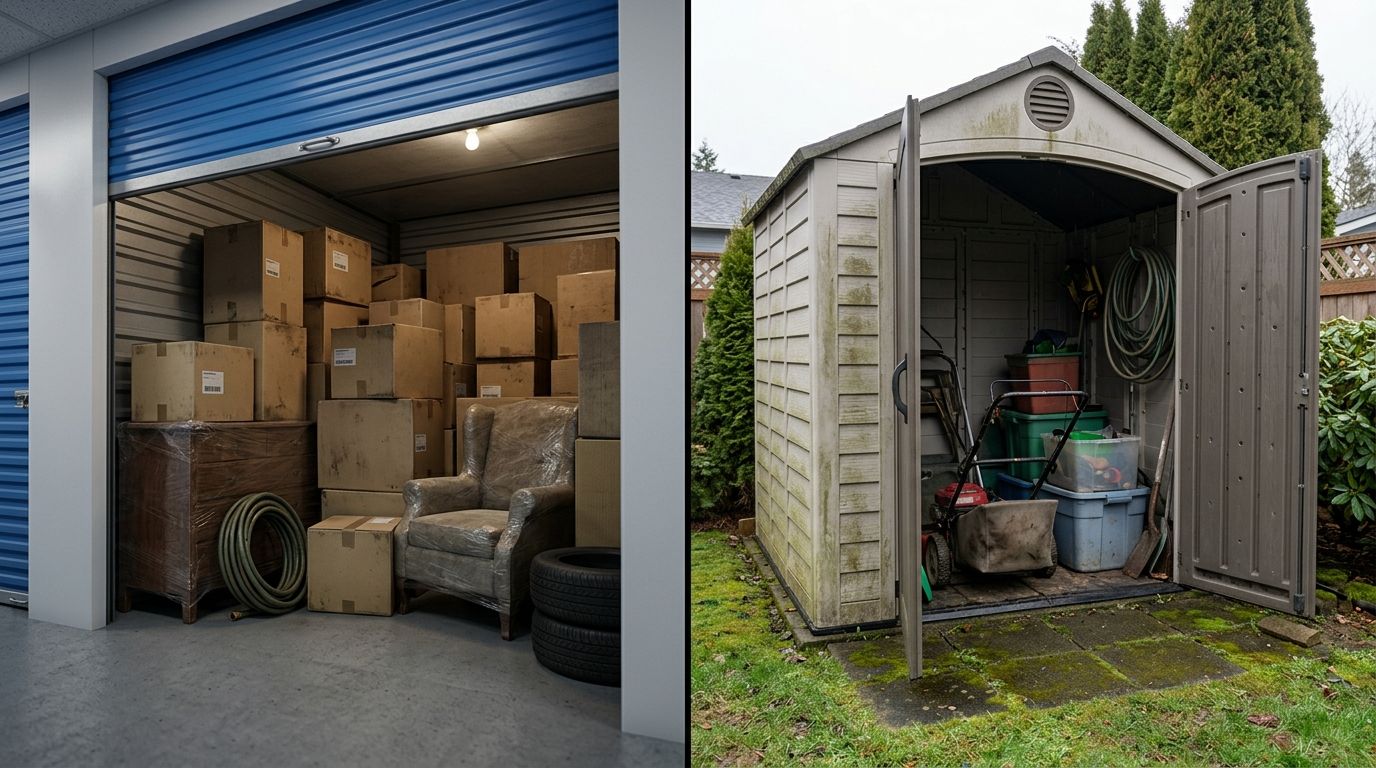
Running out of room at home can happen quickly. One day the garage works well; the next, boxes, seasonal gear, and furniture have taken over the space where a car used to fit.
For Everett homeowners, the choice often comes down to renting a storage unit or installing a backyard shed. Both create additional storage, but they differ in upfront cost, access, maintenance, flexibility, available features, and the types of belongings they can accommodate.
A storage unit may fit short-term or changing needs without requiring a construction project. A shed may appeal to homeowners who have suitable yard space and want permanent, on-site storage for outdoor equipment. The better choice depends on what you're storing, how long you expect to need the space, and whether your property can accommodate a shed.
Renting a storage unit does not require the construction and installation investment associated with a shed. Instead, customers pay rent based on the selected unit, current availability, location within the facility, and included features.
A SpareFoot page for Everett storage with 24-hour access listed an overall average of $123.25 per month and several size-specific rates in June 2026. Because that page is filtered by access type and may reflect limited inventory, its figures should be treated as a snapshot rather than a marketwide average for all Everett storage.
Rates can differ significantly between facilities and may change as units are rented or promotions expire. One national cost guide listed Washington as the fifth most expensive state for storage rentals, but city-level pricing still depends on local availability and the exact unit being offered.
The advertised monthly rate may not represent the complete move-in cost. Before renting, review possible charges for:
Administrative Fees: Some facilities charge a one-time account or setup fee.
Locks: Customers may need to purchase an approved lock.
Coverage Requirements: The lease may require applicable property coverage. National estimates vary widely, with some reported costs ranging from $6 to $240 per month depending on the provider and coverage amount.
Late Fees: Charges may apply when rent is not paid by the required date.
Moving Supplies: Boxes, tape, furniture covers, shelving, and other materials can add to the initial moving budget.
Actual requirements and charges should be reviewed directly with the facility rather than estimated from national averages.
To estimate a year of storage, multiply the current monthly rent by 12 and add any known fees or supplies. Remember that promotional pricing may apply only for a limited period, so use the regular rental rate when evaluating a longer stay.
This calculation provides a more useful comparison than relying on a single Everett average. It also allows you to compare units that fit your actual belongings rather than assuming a larger space is necessary.
A backyard shed involves a different cost structure. Instead of paying monthly rent, the homeowner pays for the building, delivery, installation, site preparation, and any applicable permits or utility work.
The Home Depot's shed installation cost guide can provide a starting point for understanding how shed style, size, materials, and installation affect pricing.
For broader context, Universal Storage Group cites a typical shed-construction range of $800 to $4,000. A basic kit may cost less than a fully installed structure, but the completed project can also involve:
Ground leveling or excavation
Gravel, concrete, or another suitable base
Delivery and assembly
Roofing and weatherproofing
Locks and lighting
Permit or inspection fees
Electrical work
Long-term maintenance
The final price depends heavily on the site and the type of shed selected.
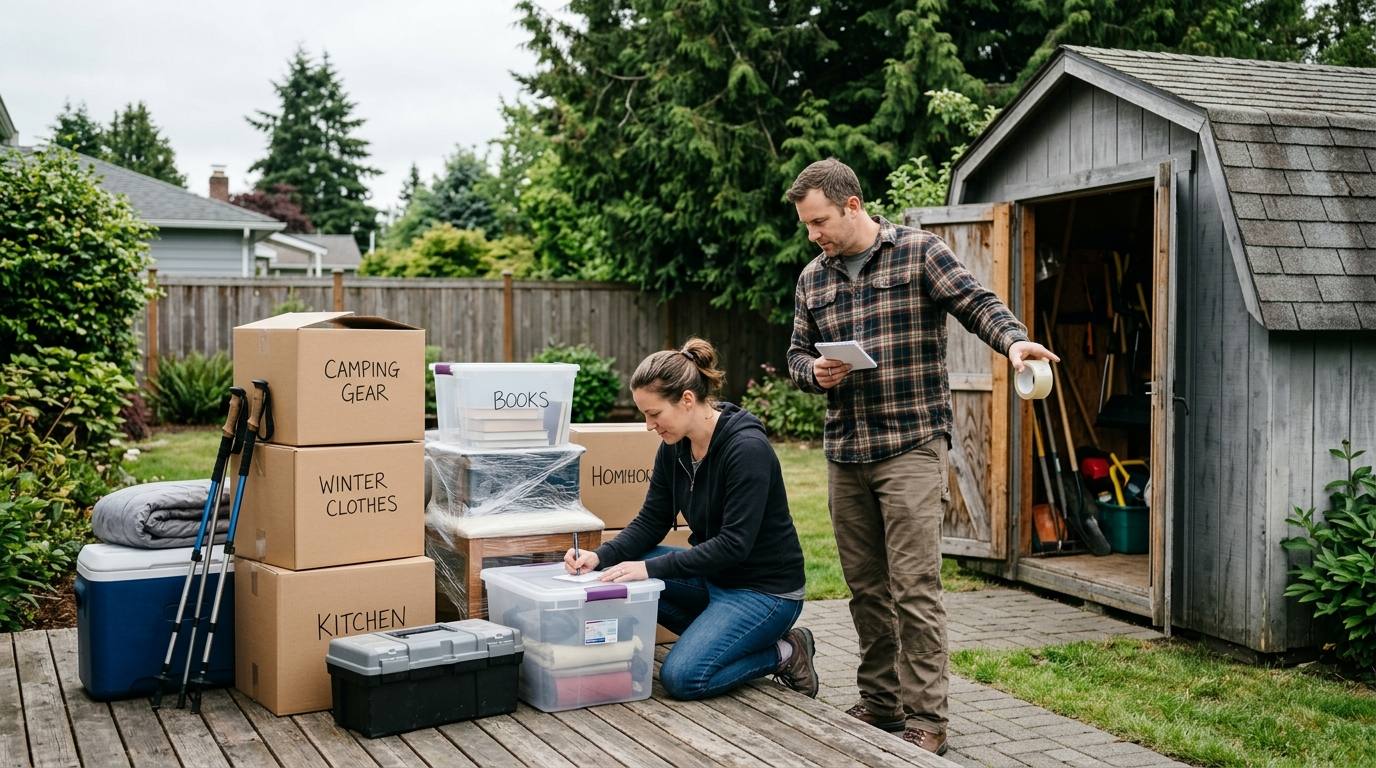
It may be tempting to calculate a universal break-even point by dividing the cost of a shed by the monthly price of a storage unit. That comparison can be misleading when the two options do not provide equivalent space or features.
A useful cost comparison should account for:
The usable square footage of each option
Site preparation and installation
Permit costs
Climate-controlled or heated storage needs
Shed maintenance and repairs
Storage rent and possible rate changes
Travel time to an off-site facility
The value of permanent yard space used by the shed
How long the extra storage will actually be needed
A shed may become economical for a homeowner who uses it consistently for years. A storage unit may make more sense during a move, renovation, downsizing project, or other situation with an uncertain timeline.
Before purchasing a shed, check the current City of Everett permit exemptions, zoning standards, and accessory-structure requirements. Rules can depend on the shed's size, height, placement, foundation, utilities, and the characteristics of the property.
Even when a building permit is not required, setbacks, lot coverage, easements, drainage, and neighborhood or HOA restrictions may still apply. Properties outside Everett city limits may be governed by Snohomish County rather than the city.
Do not rely solely on a shed retailer's general permit summary. Confirm the current requirements for the specific address before ordering materials or beginning site preparation.
Lighting, outlets, or other electrical work may require a separate permit and installation by a qualified professional. Include those costs and requirements in the project plan rather than treating electricity as part of the basic shed purchase.
Neither a storage facility nor a backyard shed can guarantee that belongings will never be lost, stolen, or damaged. The better approach is to review the specific features available and take reasonable precautions.
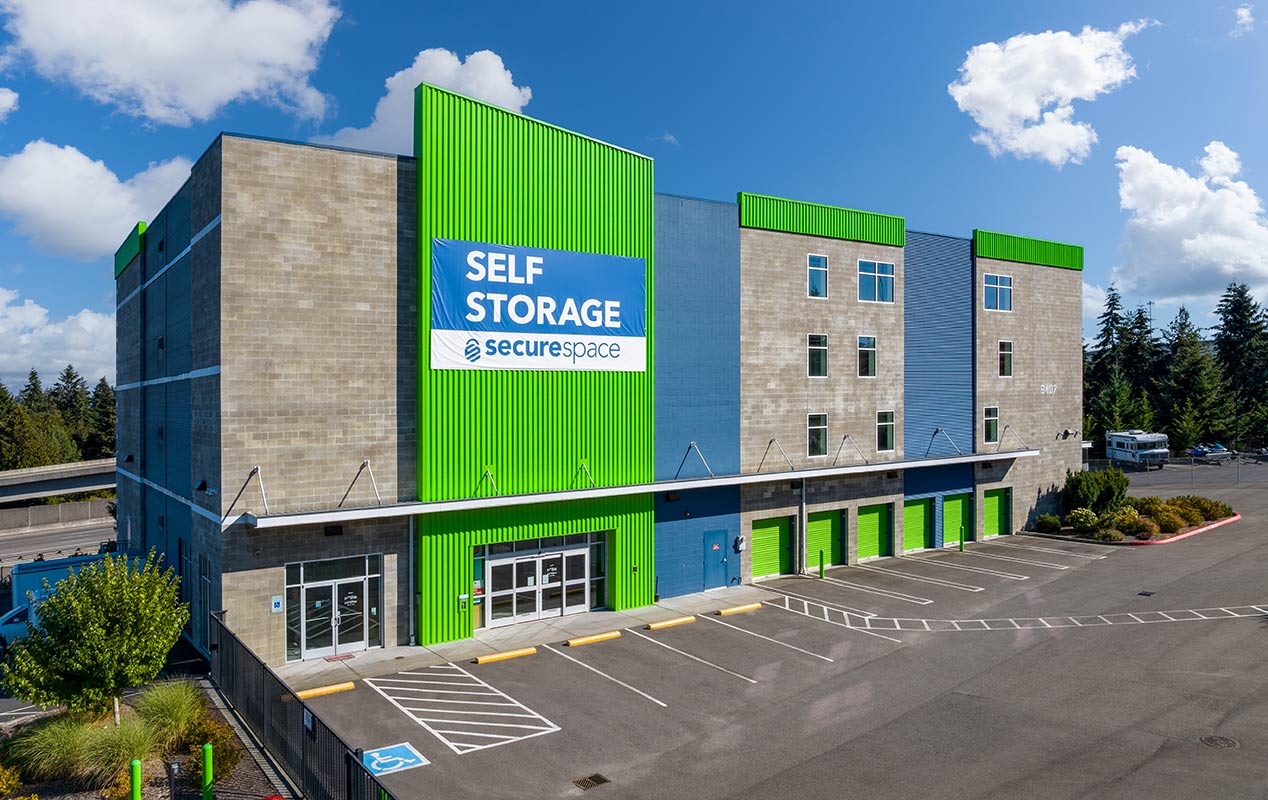
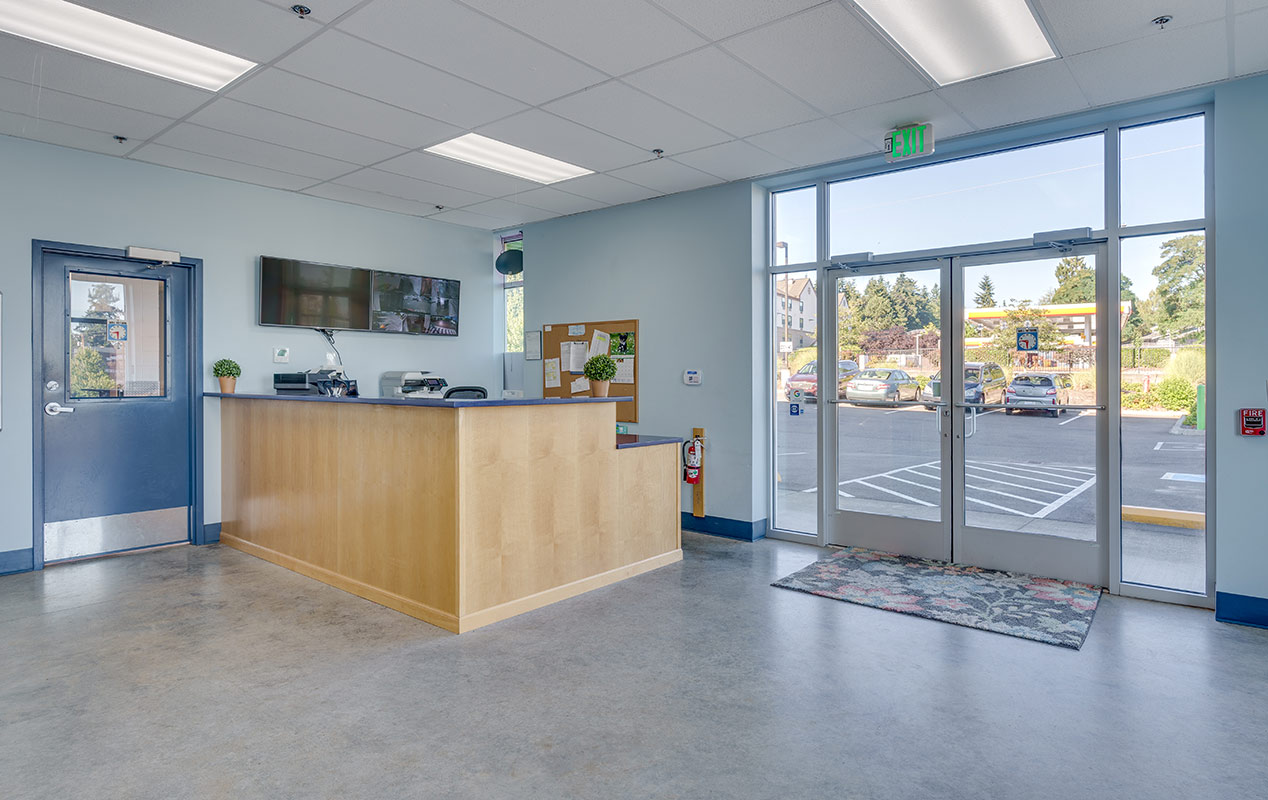
SecureSpace Everett includes:
An access gate
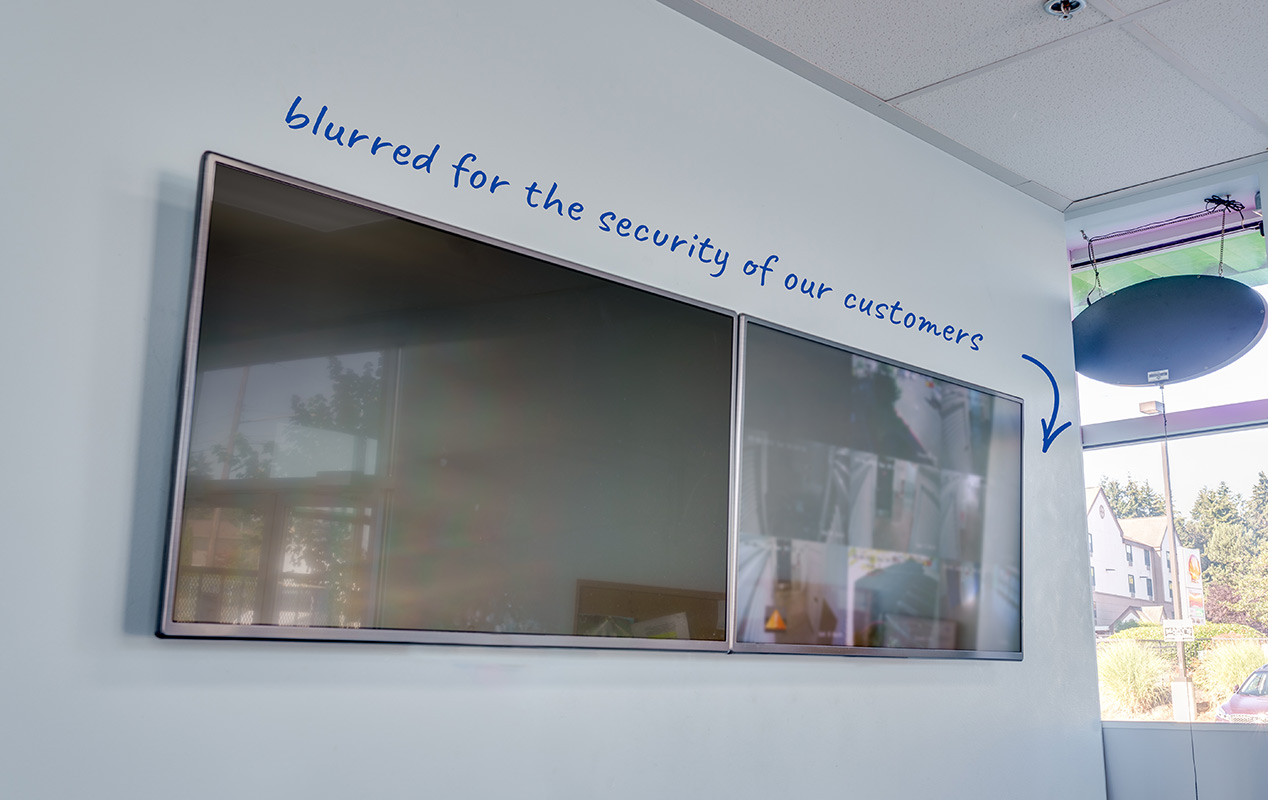
Digital video recording
Logged access
Overnight surveillance
Touchless computer-controlled access
Turing-enabled monitoring
These features support the facility's access and monitoring practices without guaranteeing protection against every incident.
Customers should also use a quality lock, maintain an inventory of stored belongings, review applicable coverage requirements, and avoid sharing access credentials.
A backyard shed may be located within view of the home, but its security depends on the structure, doors, hinges, locks, lighting, and the homeowner's broader security setup.
A reinforced lock, exterior lighting, and an alarm or camera connected to the home system may help discourage unauthorized access. Valuable items should not be placed in a shed simply because it is close to the house.
A typical backyard shed protects belongings from direct rain and snow when it is properly installed and maintained. It generally does not provide controlled indoor temperatures unless the homeowner adds insulation, heating, cooling, and appropriate electrical service.
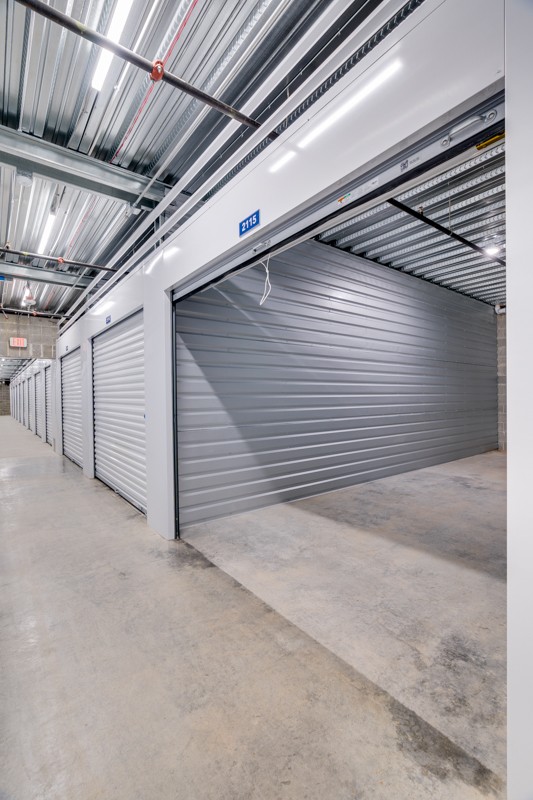
Climate-controlled and heated storage may help reduce exposure to temperature swings and cold conditions compared with an unconditioned shed or standard storage space. That may be useful for compatible furniture, electronics, business records, appliances, photographs, and certain household belongings.
Climate-controlled storage should not be described as precise humidity management or as a guarantee against mold, warping, deterioration, or other damage. Items should still be clean and dry before storage, packed in suitable containers, and prepared according to manufacturer guidance.
A shed may work well for garden tools, lawn equipment, bicycles, outdoor decorations, and other sturdy belongings when those items are prepared and maintained appropriately.
When renting a unit, the facility manages the building and common-area maintenance. Customers remain responsible for packing their belongings properly, securing the unit, maintaining required coverage, following facility rules, and reporting concerns promptly.
This arrangement may appeal to people who do not want to maintain another structure on their property.
A shed becomes part of the homeowner's ongoing property responsibilities. Depending on its construction, maintenance may include:
Inspecting and repairing the roof
Painting or sealing exterior materials
Checking doors, hinges, and locks
Managing drainage around the foundation
Watching for pests
Repairing weather damage
Maintaining electrical components
These costs may be modest in a given year but can add up over the life of the structure.
Storage needs often change during moves, remodels, family transitions, or major decluttering projects.
SecureSpace Everett offers month-to-month rentals, allowing customers to rent without committing to a multiyear warehouse or construction project. Moving to a different unit size depends on current availability, and customers should review their rental agreement for billing dates, notice requirements, and move-out procedures.
A shed is less flexible. Once it is installed, it continues to occupy the same yard space regardless of whether the homeowner still needs its full capacity. Removing, relocating, or replacing it creates another project and additional expense.
A storage unit may be the better fit when:
Storage is needed during a move or renovation
The timeline is uncertain
The home lacks suitable yard space
The customer rents rather than owns the property
Climate-controlled or heated storage is preferred
Storage needs may increase or decrease
The homeowner does not want to manage shed installation and maintenance
Belongings need to be separated from the home during a project
At SecureSpace Everett, available unit sizes include 5x5, 5x10, 10x10, 10x15, 10x20, and 10x25. Current availability and pricing can change.
A shed may make sense when:
The homeowner has adequate yard space
Local rules and HOA requirements allow the structure
The storage need is expected to continue for years
On-site access is a priority
The primary items are lawn equipment, tools, bicycles, or outdoor gear
The homeowner is prepared for installation and maintenance
The shed will not interfere with drainage, easements, or future property plans
A shed should be chosen based on the site, intended contents, and total installed cost-not only the advertised price of the structure.

Neither option is automatically better.
A storage unit provides month-to-month flexibility, avoids a construction project, and may offer features such as climate-controlled or heated storage. A shed provides on-site access and may be practical for homeowners with suitable property who expect to use it over a long period.
Before deciding, answer four questions:
The answers will usually make the better choice clear.
It depends on the rental period, unit size, shed size, installation work, permit requirements, and maintenance. A storage unit may be more practical for short-term or changing needs, while a shed may become economical when it is used consistently for many years.
Permit and zoning requirements depend on the structure and property. Check the City of Everett's current building-permit exemptions, setbacks, accessory-structure standards, and utility requirements before ordering or installing a shed.
Pricing changes with availability, unit features, facility location, and promotions. Review the current rate for the exact 10x10 unit being offered rather than relying on a general market average.
Yes. SecureSpace Everett offers climate-controlled and heated storage. These units may help reduce exposure to temperature swings and cold conditions, but they should not be treated as humidity-controlled archival spaces or as a guarantee against damage.
A properly installed and maintained shed can provide basic protection from direct weather. Its performance depends on the materials, foundation, drainage, roofing, sealing, ventilation, and ongoing maintenance. Most standard sheds do not provide controlled indoor temperatures.
Processing times depend on the jurisdiction and complexity of the project. Confirm current timelines with the City of Everett or Snohomish County before scheduling delivery or construction.
There is no universal break-even point. Calculate the total installed shed cost and compare it with the projected rental cost of a similarly useful storage space over the expected period. Include fees, maintenance, possible rent changes, and any features that differ between the two options.
A shed can work well for long-term, on-site storage when the property and intended use are suitable. A storage unit may be the more practical choice when you're moving, renovating, reorganizing, or unsure how long the extra room will be needed.
To review current unit sizes, rates, and availability, visit SecureSpace Self Storage Everett.
Everything you need to store your belongings securely, on your schedule.
Visit us online