Last updated Aug 12, 2026
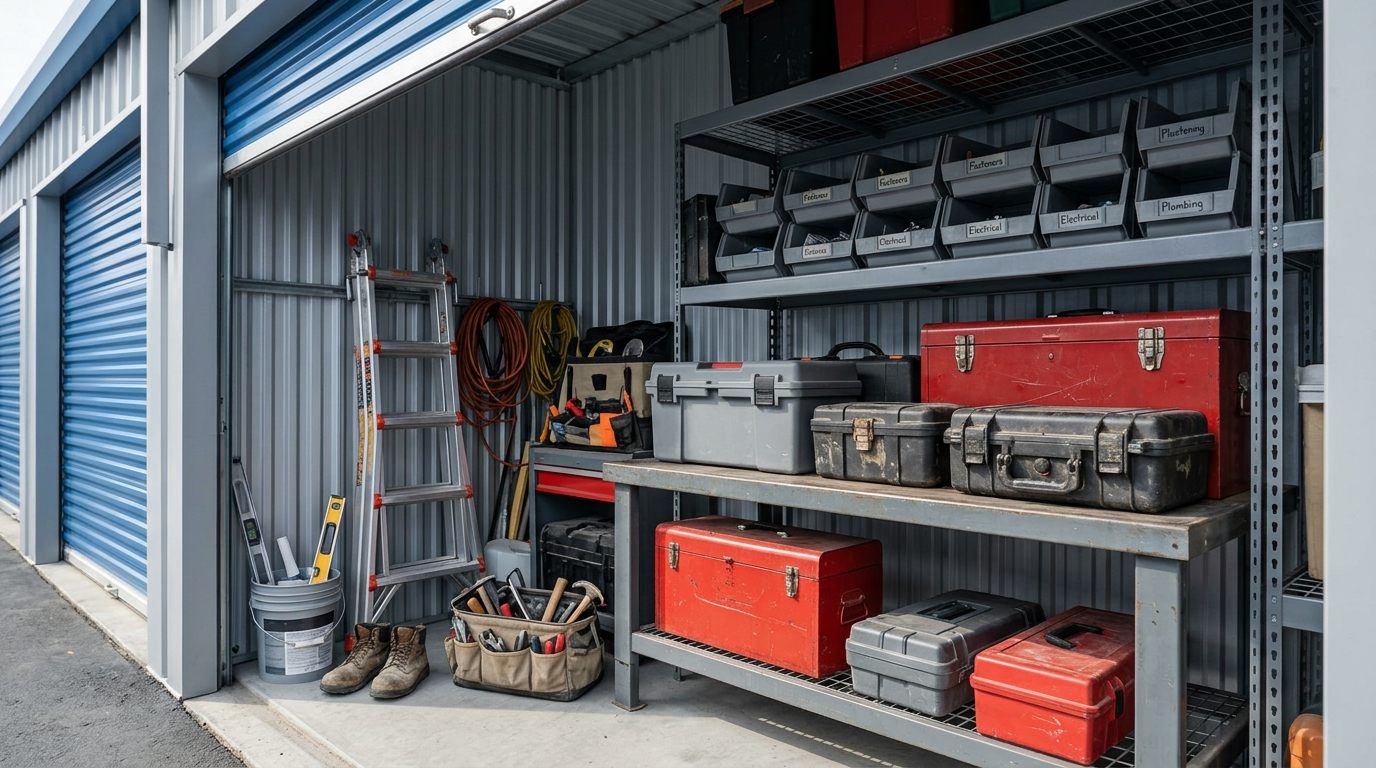
Everett has a strong industrial and skilled-trades presence shaped by aerospace, maritime activity, construction, and regional infrastructure planning. Long-term projects such as the Sound Transit Link light rail expansion also reflect the continued growth and development taking place across the area.
Contractors, landscapers, technicians, and home improvement enthusiasts often accumulate more tools than a garage, workshop, or utility closet can comfortably hold. A self-storage unit can provide dedicated space for permitted tools, equipment, supplies, and project materials when they are not in use.
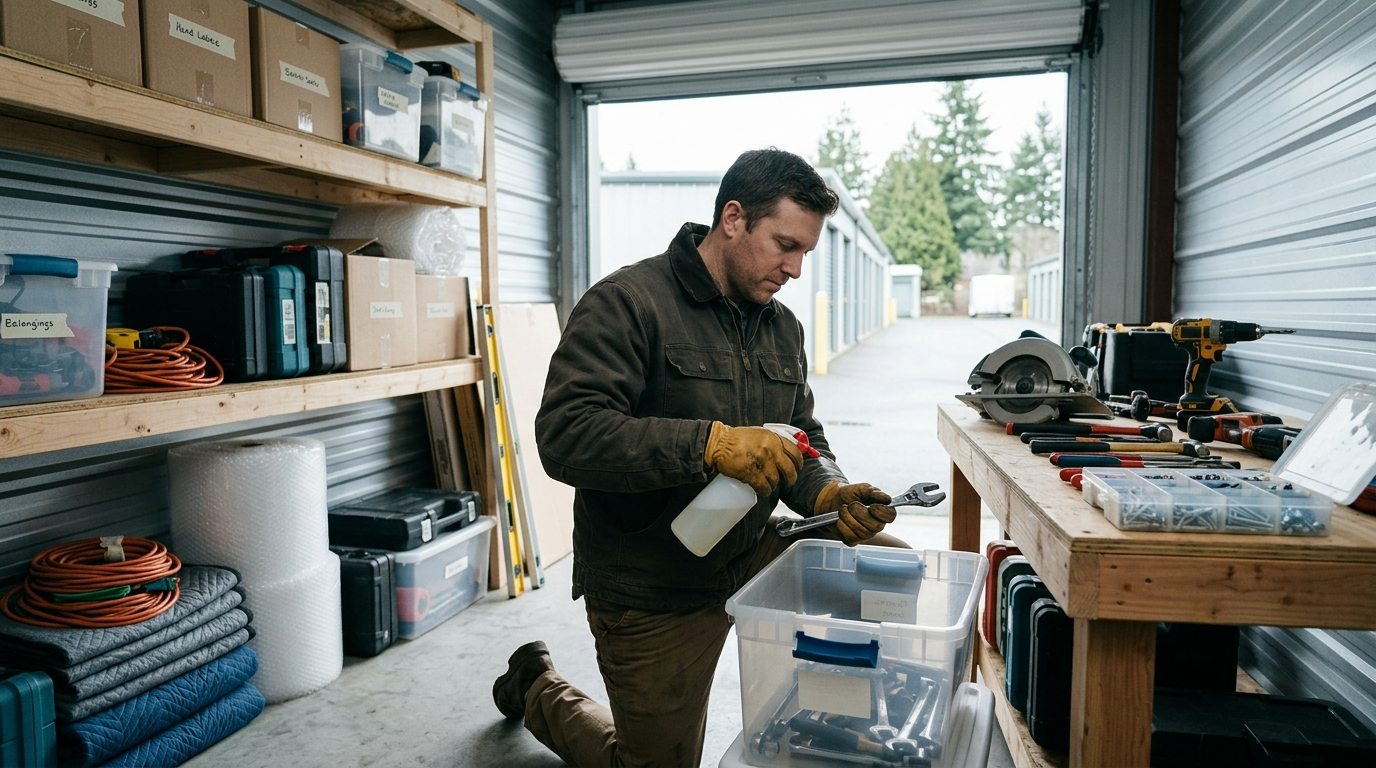
The right setup depends on the type of tools being stored, how often they need to be retrieved, and whether batteries, fuel, chemicals, or other restricted materials are involved.
Tool collections can grow quickly. Hand tools, power tools, ladders, rolling cabinets, garden equipment, hardware, and project supplies can make residential storage areas difficult to navigate.
Self storage may be useful for:
Clearing space in a garage or workshop
Separating work equipment from household belongings
Organizing tools between projects
Rotating seasonal landscaping equipment
Keeping spare materials and permitted supplies together
Temporarily storing tools during a move or renovation
Creating a more organized equipment inventory
A storage unit should be used for storage rather than as an active workshop, repair area, office, or commercial operating space.
Tool preparation should follow the manufacturer's care instructions. Different materials, motors, batteries, and components may require different handling.
Remove dirt, sawdust, grass, grease, and project residue before placing tools in storage.
Use cleaning products that are appropriate for the tool's materials and components. Pay particular attention to moving parts, cutting surfaces, vents, and handles.
Do not pack tools while they are damp.
Allow metal surfaces, cases, cords, hoses, containers, and equipment components to dry completely before placing them inside boxes, cabinets, or bins.
Check tools for loose parts, worn cords, damaged handles, dull blades, or other maintenance concerns.
Complete appropriate maintenance before storage or have the equipment serviced by a qualified professional. Follow manufacturer instructions when applying lubricants or protective coatings.
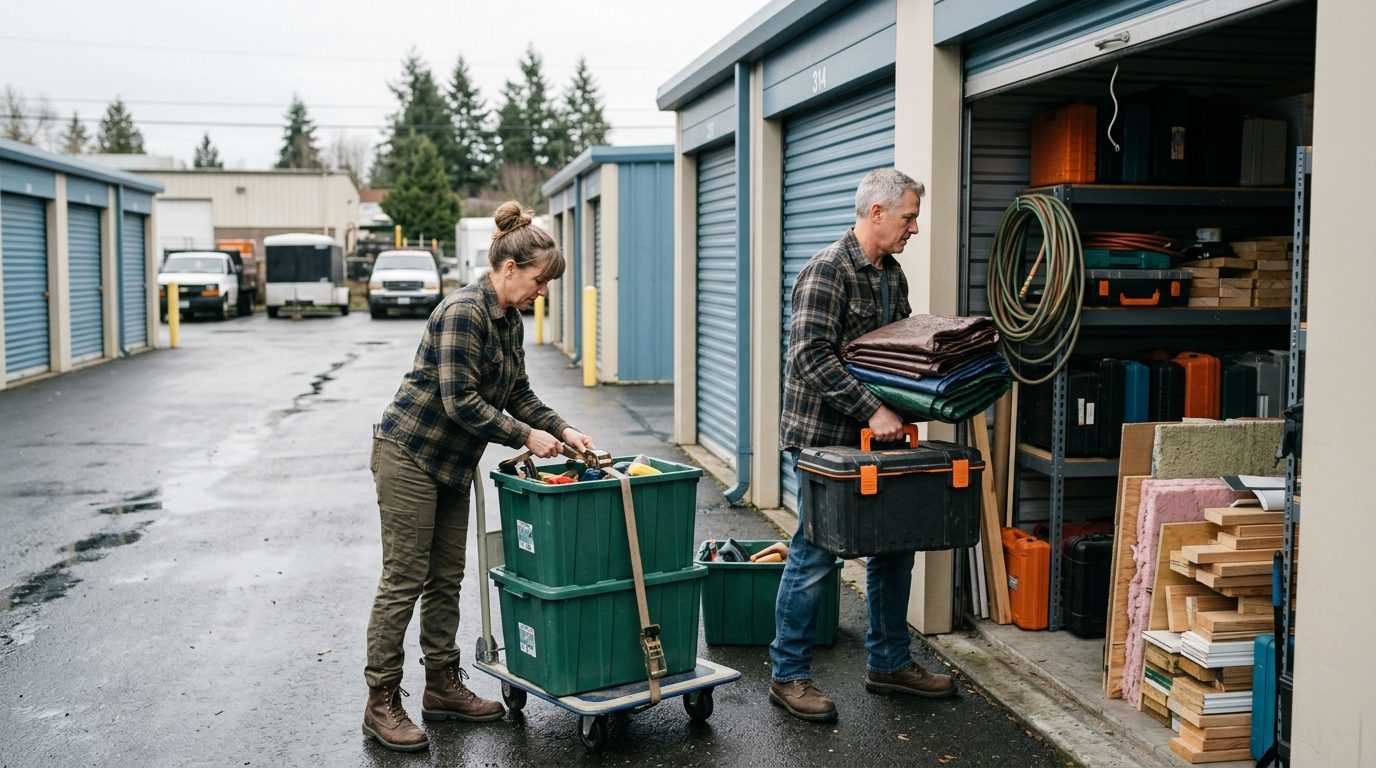
Coil cords loosely and secure them without creating sharp bends.
Keep chargers, attachments, blades, bits, guides, and accessories with the correct tool. Clearly labeled containers can help prevent small parts from becoming separated.
Use suitable guards, covers, cases, or protective wrapping for blades, bits, measuring tools, and delicate components.
Do not place heavy boxes on top of power tools or equipment that could be damaged by shifting weight.
Powered equipment requires additional planning before storage.
Follow the battery manufacturer's instructions for charging level, temperature exposure, inspection, and long-term storage.
Do not assume every battery type is permitted inside a storage unit. Confirm the facility's rules before storing removable batteries, chargers, or battery-powered equipment.
Charging tools or batteries inside a storage unit is not appropriate unless expressly authorized by the facility.
Gasoline, fuel, propane, and other flammable materials are generally restricted in self-storage environments.
Do not assume that a lawn mower, generator, trimmer, or other powered machine is permitted simply because the tank has been drained. Residual fuel, oil, fumes, and batteries may still affect eligibility.
Review the rental agreement and confirm the equipment with facility management before move-in.
Paints, solvents, adhesives, pesticides, compressed gases, and hazardous materials may be prohibited.
Inspect toolboxes, work vehicles, and project containers carefully so restricted materials are not moved into the unit unintentionally.
A practical layout can make tools easier to retrieve while reducing unnecessary handling.
Group related tools together, such as:
Electrical tools and supplies
Plumbing tools and fittings
Carpentry tools and hardware
Landscaping equipment
Painting accessories
Automotive hand tools
General repair equipment
Keep frequently used items closer to the entrance and seasonal or less frequently used equipment farther back.
Stable freestanding shelving can help organize cases, bins, and lightweight supplies.
Do not drill into walls, attach hooks, install pegboards, or otherwise modify the unit without written permission. Shelves should be assembled according to manufacturer instructions and should not block doors, aisles, or access points.
Specific labels make equipment easier to find.
Instead of using broad labels such as "hardware," identify the contents by tool type, project, or trade. An inventory list can provide additional detail without requiring every container to be opened.
Use divided organizers, tool cases, or securely closed containers for screws, fittings, drill bits, fasteners, and other small components.
Select containers based on the item and expected storage period. Regardless of the container type, tools and parts should be clean and dry before packing.
Place rolling cabinets, compressors, tool chests, and other heavy equipment on stable surfaces.
Avoid storing heavy items above fragile tools or creating stacks that could shift during retrieval.
Maintain enough open space to reach frequently used equipment without unloading the entire unit.
A narrow access path can improve organization and reduce the need to move heavy toolboxes repeatedly.
SecureSpace Everett offers climate-controlled and heated storage options.
These features may help reduce exposure to temperature swings and cold conditions compared with an unconditioned space. They should not be described as precise humidity-control systems or as guarantees against rust, corrosion, electrical damage, or other deterioration.
Climate-controlled or heated storage may be worth considering for compatible equipment containing:
Electronic components
Precision measuring mechanisms
Adhesives
Sensitive seals
Specialized materials
Manufacturer-specified temperature requirements
Not every tool requires climate-controlled storage. The appropriate unit depends on the equipment, preparation, expected storage period, and manufacturer guidance.
Everett's cool, wet weather makes it especially important to move only clean, dry equipment into storage. Outdoor weather patterns, however, do not establish the conditions inside a particular unit.
Practical preparation may include:
Drying tools completely before packing
Following manufacturer-approved maintenance procedures
Using suitable cases or containers
Inspecting equipment periodically
Keeping tools off unstable or visibly damp surfaces
Avoiding tightly sealed packaging around damp items
Replacing damaged cases or covers
Moisture-absorbing products may be suitable inside certain enclosed toolboxes or containers when used according to their instructions. They should not be treated as a substitute for drying equipment or as a guarantee against corrosion.
Tool collections vary widely, so unit selection should begin with an inventory and measurements.
A compact unit may work for toolboxes, small power tools, hand tools, hardware containers, and limited project supplies.
Use shelving or stable stacking methods to keep frequently used items accessible.
A medium unit may suit rolling tool cabinets, ladders, several equipment cases, landscaping tools, and organized material bins.
This option may offer more room for a clear access path and separation between delicate and heavy equipment.
A larger unit may be appropriate for substantial equipment collections, bulky ladders, permitted commercial inventory, or tools stored alongside household belongings.
Vehicles cannot be stored inside drive-up units at SecureSpace Everett. Customers should also confirm whether large powered equipment and intended business use comply with facility rules.
Choose a unit based on measured equipment rather than renting additional space without first assessing the inventory.
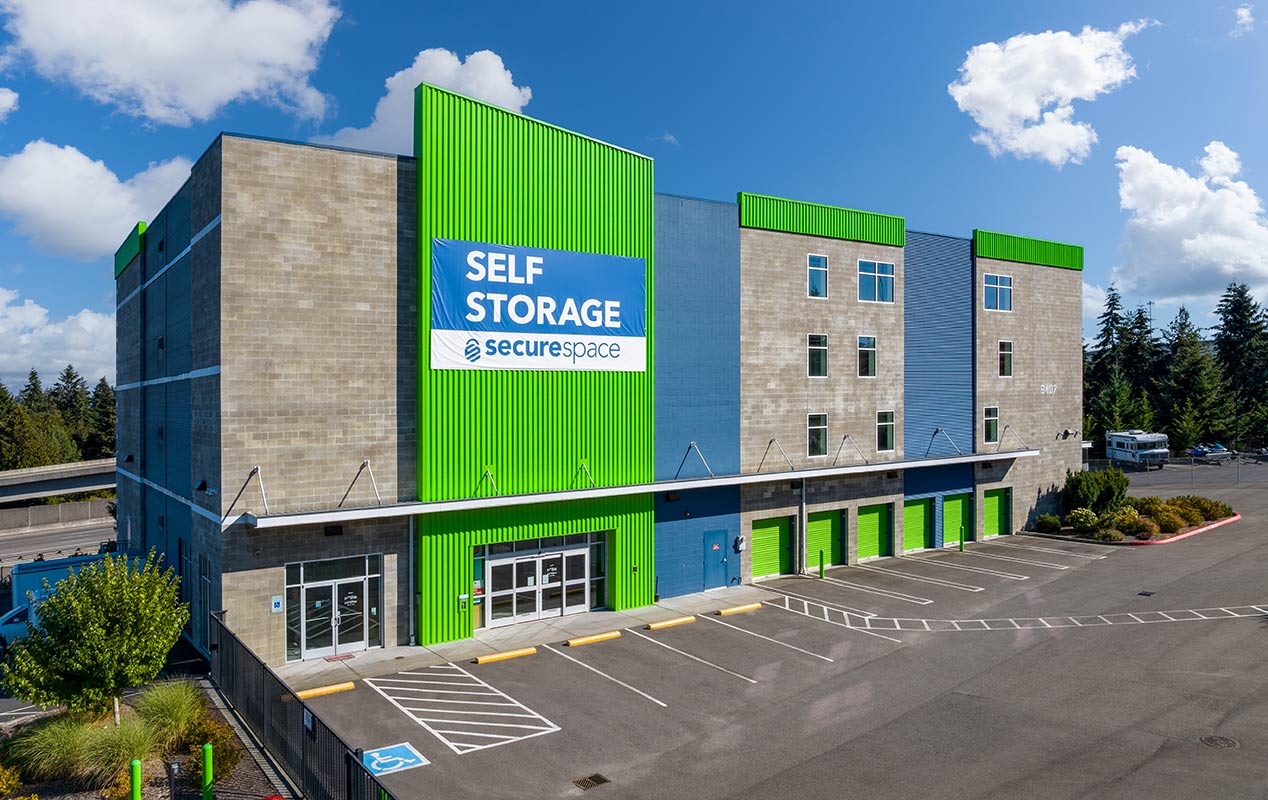
SecureSpace Everett offers drive-up units.
This arrangement allows customers to park closer to the storage door, which may simplify moving toolboxes, ladders, cabinets, and permitted equipment. It should not be interpreted as approval for freight operations, semi-truck access, vehicle storage inside units, or commercial loading activity.
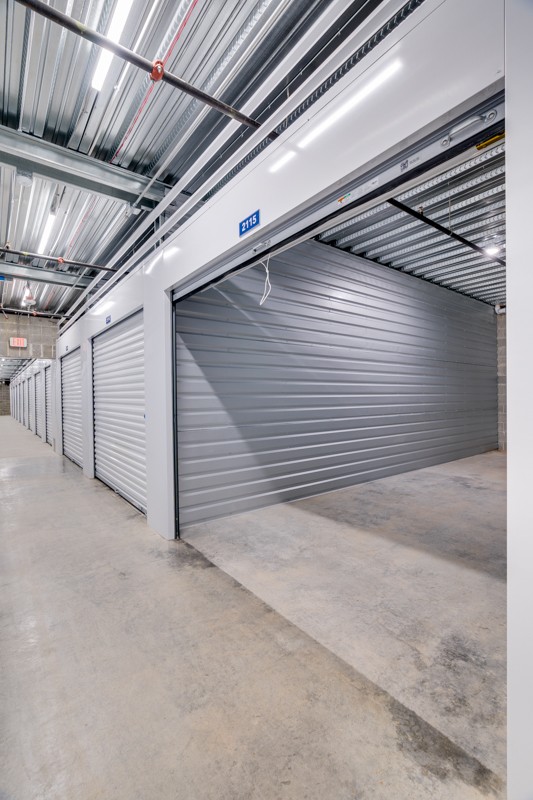
Indoor storage is also available, with elevator access for units located away from the ground level.
Customers should measure bulky equipment and consider the full move-in path, including entrances, corridors, elevator access, and the unit door.
Carts and dollies are available to assist with moving suitable containers and equipment through the facility.
Availability may vary during busy periods, so customers handling especially heavy or awkward tools should plan accordingly.
The facility provides daily gate access from early morning into the evening.
Review the current access schedule before planning job-site pickups or equipment returns. Manager hours are separate from unit-access hours.
Local news coverage has documented equipment theft in Snohomish County, as KIRO reported.
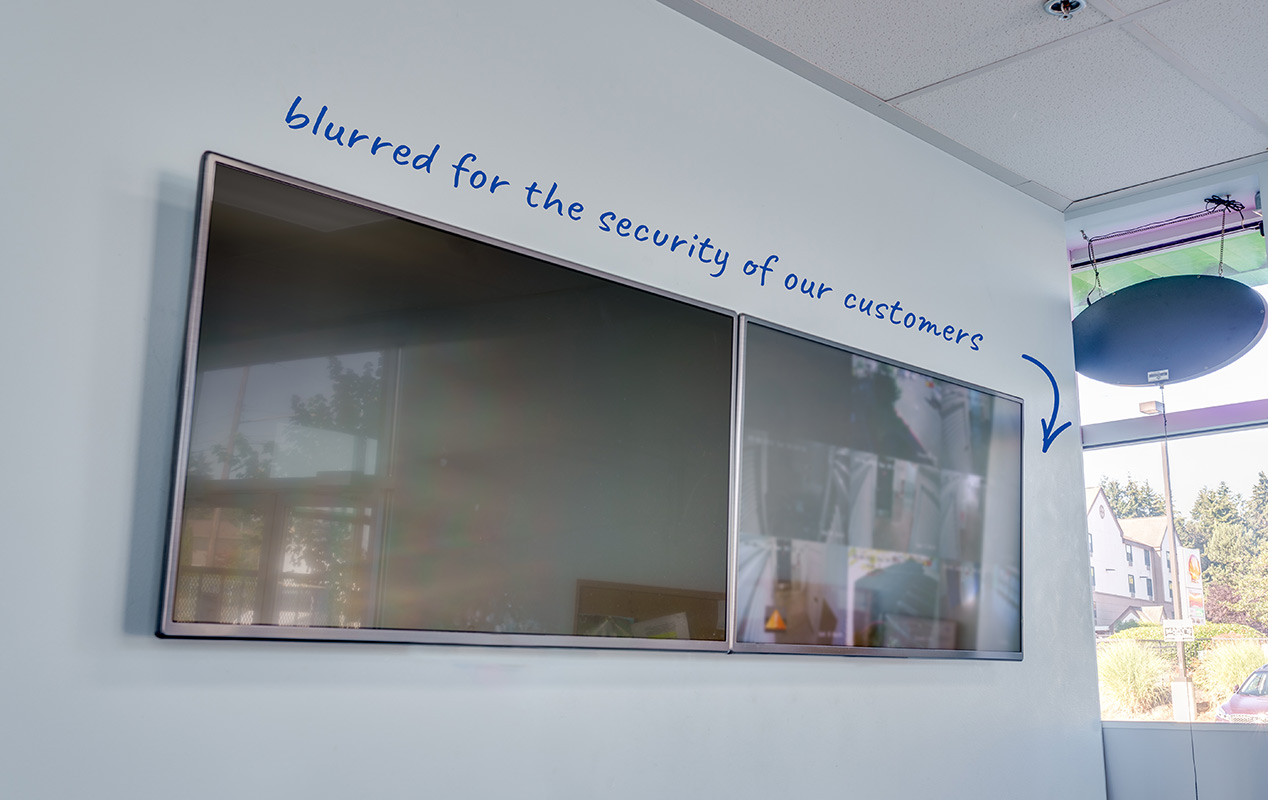
SecureSpace Everett includes an access gate, digital video recording, logged access, overnight surveillance, touchless computer-controlled access, and Turing-enabled monitoring.
These features support access and monitoring procedures but cannot guarantee protection against theft, loss, or damage. Customers should also maintain serial-number records, photograph valuable equipment, use a suitable lock, protect access credentials, and review applicable coverage requirements.
Month-to-month leases, online rental, online payments, electronic payment plans, and touchless move-in are available.
Month-to-month leasing does not eliminate billing dates, notice requirements, rate terms, or move-out procedures. Review the rental agreement before completing the rental.
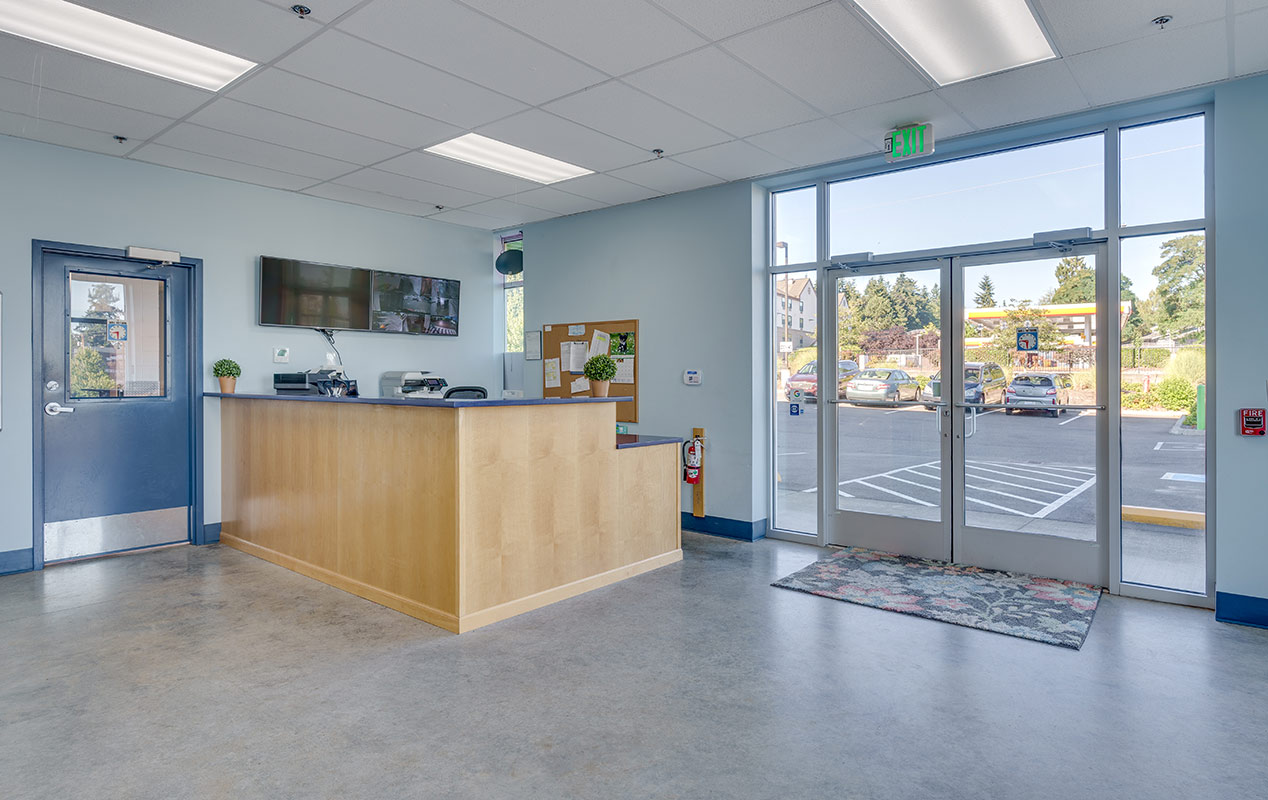
Basic moving supplies are available through the leasing office.
Customers needing a particular lock, container, cover, or packing product should confirm current inventory before relying on on-site availability.
Self storage may help contractors and small businesses organize permitted tools, supplies, and inactive inventory.
Before renting, confirm that the intended use complies with facility rules. A unit should not be used for:
Customer meetings
Employee work areas
Tool charging
Equipment operation
Repairs or fabrication
Hazardous-material storage
Receiving large freight deliveries
Running an active storefront
Vehicle storage inside the unit
Customers expecting frequent access or storing unusual equipment should discuss their needs with facility management before move-in.
Not every tool requires it.
Climate-controlled and heated options may help reduce exposure to temperature swings and cold conditions. The decision should be based on the tool's materials, electronic components, manufacturer guidance, preparation, and expected storage period.
These features do not guarantee humidity control or prevent rust, corrosion, or other damage.
Permitted power tools may be stored when they comply with the rental agreement.
Follow manufacturer guidance, remove restricted materials, and confirm the rules for batteries, chargers, fluids, and fuel-powered equipment.
Storage units should not be used as charging areas unless the facility has expressly authorized the activity.
Follow the battery manufacturer's instructions and confirm facility rules before move-in.
Do not assume gas-powered equipment is permitted.
Fuel, fumes, oil, batteries, and other components may be restricted even when a tank appears empty. Confirm the specific equipment with facility management and review the rental agreement.
Do not drill into walls or install permanent hardware without written permission.
Use stable freestanding shelves, racks, cabinets, and organizers instead.
A storage unit should not be used as a workshop, office, repair facility, or active business location.
It may be suitable for storing permitted tools and supplies, subject to the rental agreement.
Inventory and measure the equipment before selecting a unit.
Consider toolboxes, shelves, ladders, rolling cabinets, door clearance, retrieval space, and the route from the loading area to the unit.
No facility or storage method can guarantee protection against theft, loss, shifting, corrosion, or other damage.
Proper preparation, secure packing, inventory records, periodic inspection, appropriate coverage, and a suitable lock can help reduce avoidable risks.
A self-storage unit can provide dedicated space for permitted tools, equipment, and project supplies while helping keep garages and work areas organized.
Before moving in, clean and dry every item, follow manufacturer instructions, remove restricted materials, measure bulky equipment, and confirm any unusual tools or batteries with the facility.
Explore available options for tool storage in Everett, WA.
Everything you need to store your belongings securely, on your schedule.
Visit us online