Last updated Aug 12, 2026
If you live in Seattle, you already know tools need a little extra planning. They can take over an apartment, crowd a garage, or get in the way between projects. Contractors, hobbyists, and apartment dwellers all run into the same question: where do you keep tools, supplies, and equipment when you do not have enough room at home or on-site?
This guide breaks down why tool storage matters in Seattle, how to prepare tools before storing them, and what to look for in a storage unit. By the end, you'll know how to choose a practical setup for keeping tools organized and easier to access.
Two factors make tool storage in Seattle different from a simple garage shelf: wet weather and the need for organized, secure space.
Seattle sees plenty of rain, averaging 37.49 inches of precipitation a year, and humidity can be climbing to 80% in December. For tool owners, the practical takeaway is simple: do not put tools away damp, dirty, or exposed if you can avoid it.
Security planning also matters. Tool theft can be costly, especially for contractors and small-business owners. Seattle property-crime data varies by source and year, but eufy's safety analysis cites 5,008 incidents per 100,000 residents, and a Seattle Police Department annual report includes property-crime totals based on Seattle Police Department reporting. Rather than relying on a shed, vehicle, or crowded closet, it makes sense to choose a storage setup with clear access procedures and listed security features.
A storage unit can give tools a dedicated place when home, jobsite, or garage space is limited.
Rust forms when metal reacts with oxygen and moisture. Tools that are put away wet, stored in damp containers, or left against cold surfaces can develop corrosion over time.
The damage is not always just cosmetic. As Sta-Dri explains, rust can affect how tools perform and how long they last. A rusty blade can lose its edge, a wrench can become harder to use, and precision tools may no longer perform accurately.
The goal is not to rely on storage alone. Good tool care starts before items go into the unit: clean them, dry them, apply appropriate coatings, and store them in a way that keeps them organized.
You do not have to accept rust as inevitable. A few basic habits can make tool storage much easier.
Moisture left on a tool after use is the first step toward rust. As Storage Rentals of America recommends, wipe down tools before putting them away. For tools with crevices, hinges, or moving parts, use compressed air or a small brush to remove dust and debris.
Do not store tools immediately after rainy outdoor work. Let them dry completely first.
A light coat of machine oil, paste wax, or a rust-preventive spray can help create a barrier on metal surfaces. HUB Industrial Supply notes that anti-corrosion sprays, protective oils, and rust inhibitors can help reduce oxidation while keeping tools usable.
Follow the manufacturer's instructions, especially for blades, bits, measuring tools, and power-tool accessories.
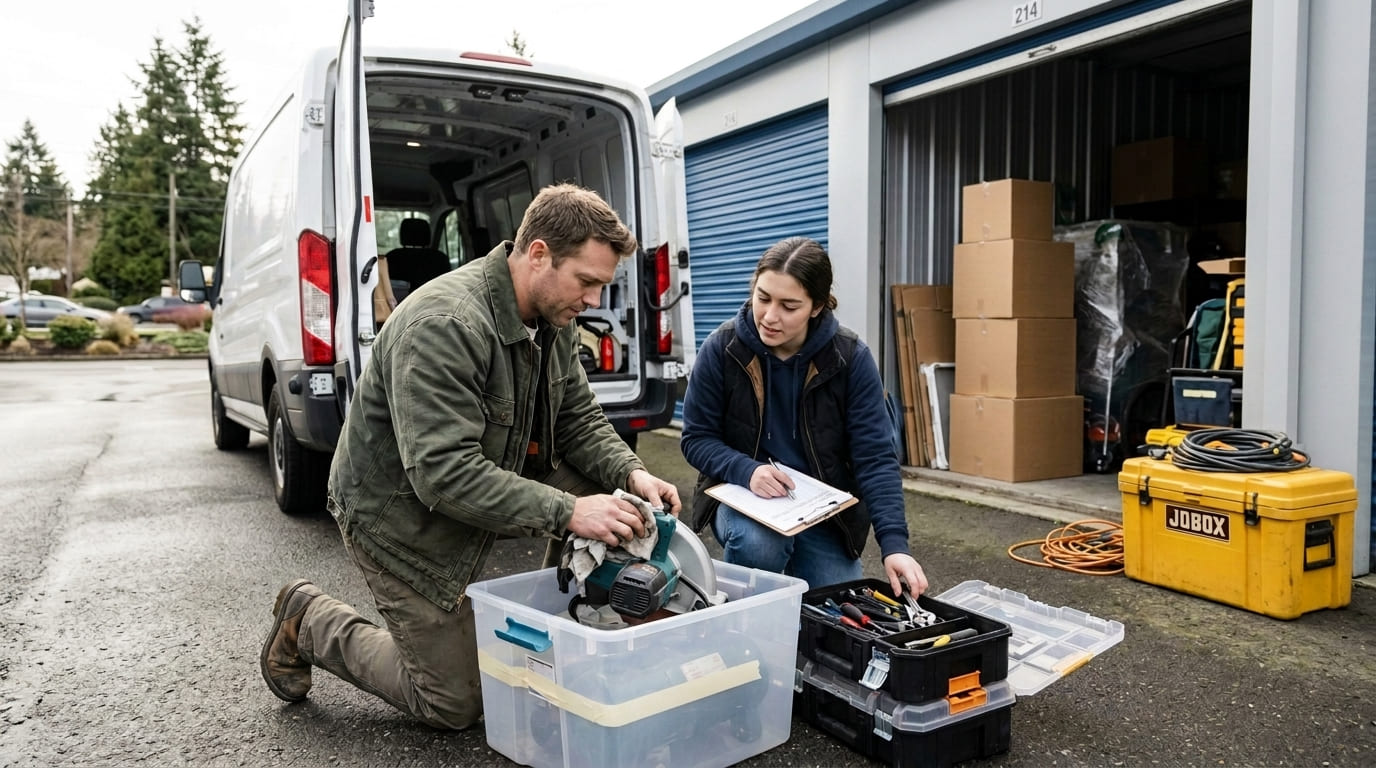
Silica gel packs can be useful inside toolboxes, drawers, and smaller enclosed cases. Replace or recharge them as needed. They are not a full storage solution, but they can help inside enclosed spaces where moisture can collect.
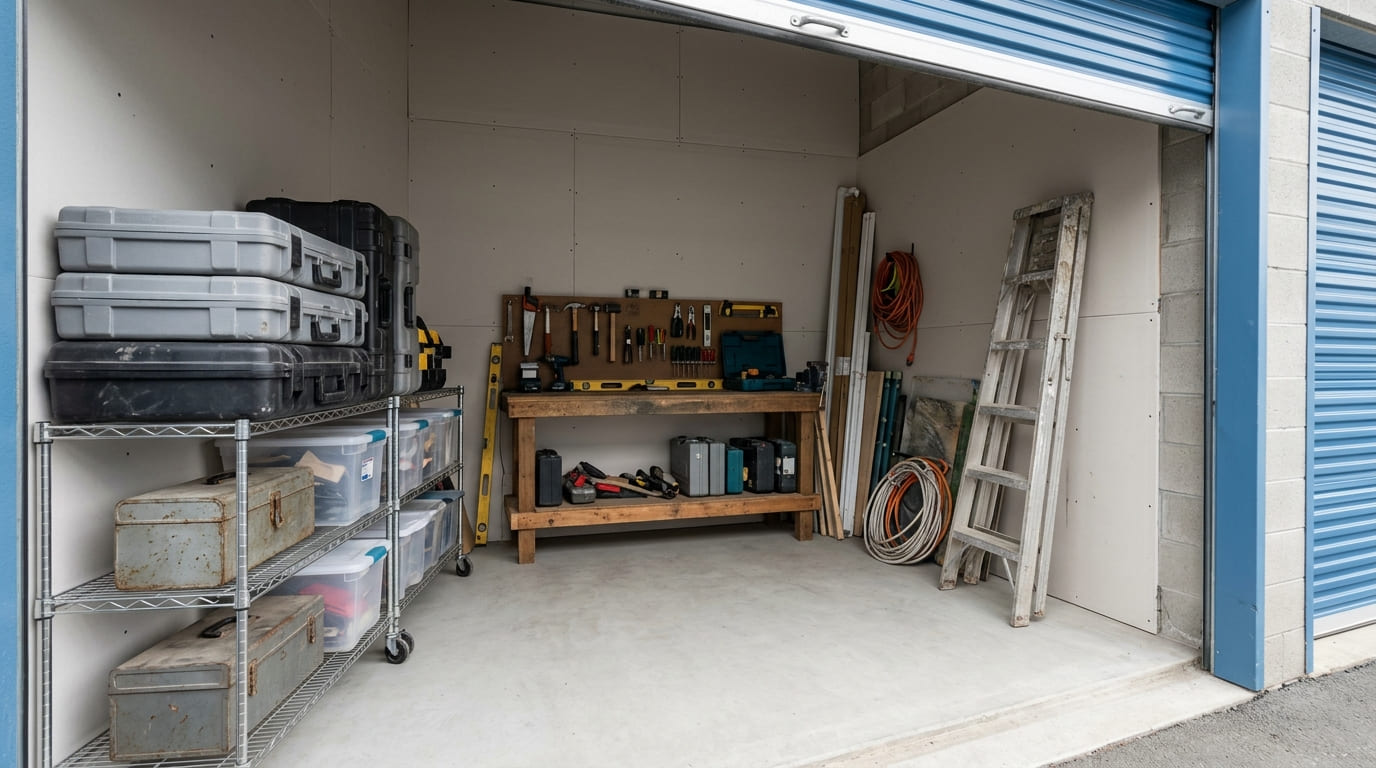
Use shelves, tool chests, cabinets, or sturdy bins to keep tools organized and off the floor. This also makes it easier to find what you need without digging through stacked boxes.
Heated indoor storage can be helpful in Seattle, especially during colder months. It keeps tools inside a building and may reduce exposure to colder conditions compared with non-heated spaces. Pair that with proper cleaning, drying, and tool maintenance for the best results.
Picking the right size saves money and makes the unit easier to use. Think about how often you need access, how many tools you have, and whether you need room to walk inside the unit.
A 5x5 unit can work for hand tools, small power tools, boxed hardware, seasonal supplies, and a compact tool chest. It is a good fit for apartment dwellers, DIY projects, or smaller tool collections.
A 5x10 unit gives more room for a rolling tool chest, shelving, larger power tools, and project supplies. It can work well for serious hobbyists or small-business overflow, as long as the space is used for storage rather than active work.
A 10x10 unit can help when you have multiple tool chests, larger equipment, boxed materials, or supplies that need to stay organized by project.
A 10x25 unit may fit larger business inventory, bulkier equipment, or more extensive contractor supplies, depending on availability and facility rules. Confirm what is allowed before planning around large or heavy items.
If you're unsure, estimate your tool chest dimensions, count the number of boxes or bins, and leave room near the front for items you use most often.
No. A storage unit should be used for storage, not as a workshop, repair bay, manufacturing space, or staffed business location.
You may be able to visit your unit to retrieve tools, organize supplies, or pick up materials, but active work is usually restricted. That means no running machinery, sanding, cutting, welding, open flames, auto repair, or creating dust and fumes inside the unit.
If you need workspace, look for a garage, studio, shop, makerspace, or commercial workspace designed for that use. Use the storage unit for tools, equipment, and materials when they are not in use.
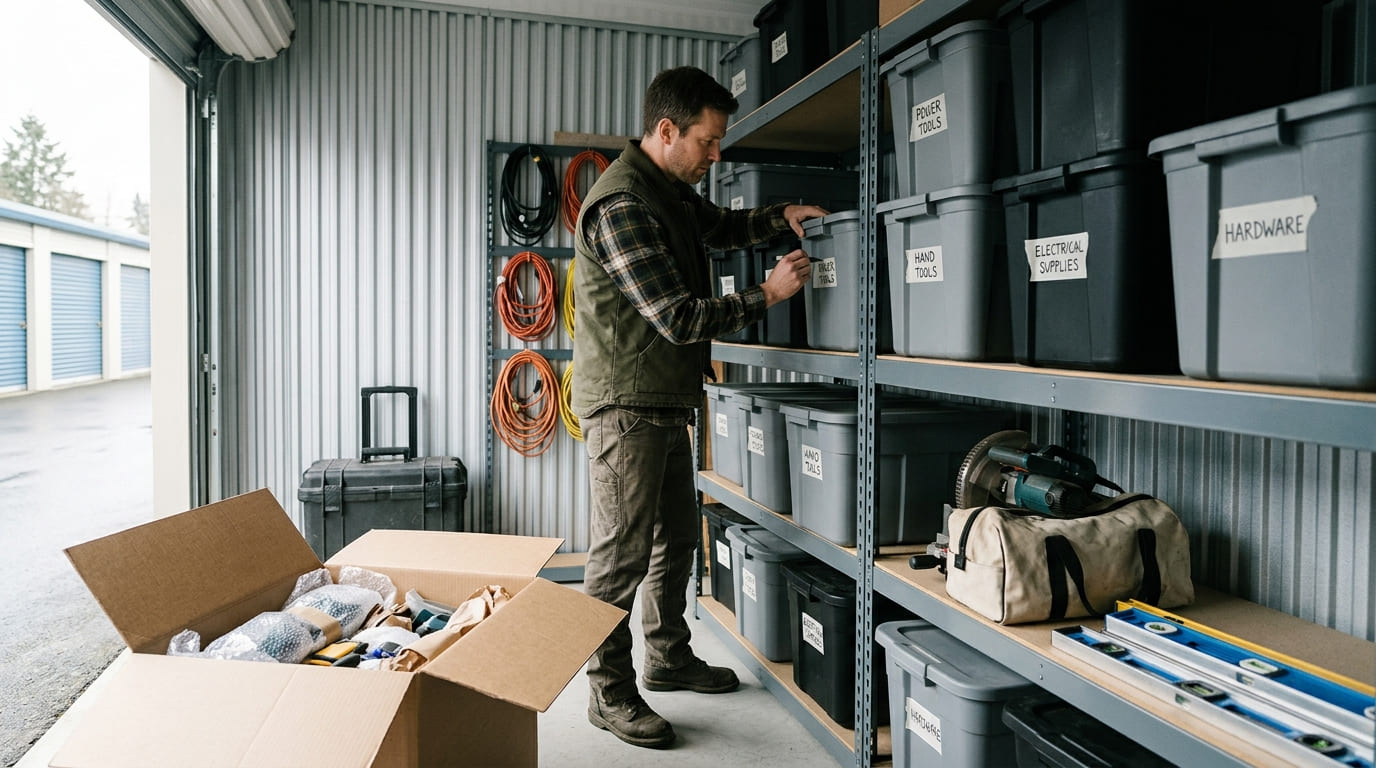
Not all storage units are equal, especially if you plan to visit regularly or store heavier items. Focus on the features that matter for tool storage.
Heated indoor storage can be useful for tool storage in Seattle. It is especially relevant for tools, hardware, and equipment that should be kept out of colder or more exposed areas.
Review current access hours before renting. If you need tools for weekend projects or jobsite prep, make sure the facility schedule fits your routine.
Tool chests and equipment can be heavy. Elevator access, carts, and dollies can make move-in easier, especially at indoor facilities. Confirm what is available before move-in day.
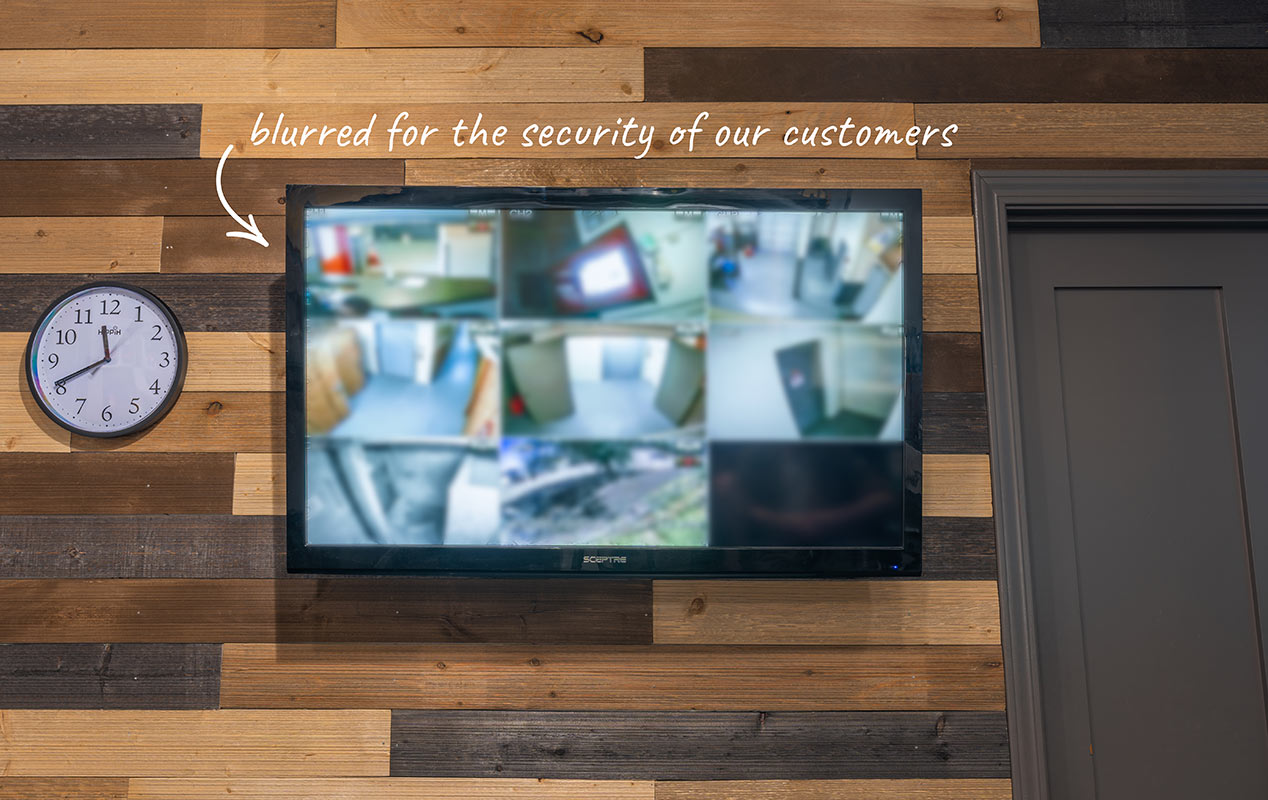
Look for specific features such as digital video recording, logged access, staff availability, and posted access procedures. Avoid relying on broad claims alone.
You can also take your own precautions: use a quality lock, keep a tool inventory, record serial numbers, photograph valuable equipment, and review your insurance or coverage options.
Month-to-month leases can be useful if your tool-storage needs change. They work well for moves, renovations, short-term projects, seasonal work, or business inventory that fluctuates.
Seattle's weather and limited space can make tool storage a challenge, but the solution does not need to be complicated. Clean and dry tools before storage, organize them in cabinets or bins, keep frequently used items near the front, and choose a unit size that gives you enough room to move safely.
A heated indoor storage unit can be a practical option when you need a dedicated place for tools, supplies, and project gear. Before renting, review the facility's unit sizes, access hours, moving features, lease terms, and security features.
Heated indoor storage can be useful for tools in Seattle, especially during colder months. It should be paired with basic maintenance: clean tools, dry them fully, apply appropriate coatings, and keep them organized in toolboxes, cabinets, or bins.
Pricing depends on unit size, location, availability, and current promotions. Smaller units usually cost less, while larger or feature-specific units may cost more. Check current rates before reserving.
Possibly, but fuel and hazardous materials are restricted. Drain fuel where required, follow the equipment manufacturer's storage instructions, and confirm the facility's rules before storing gas-powered tools or equipment. Do not store loose gasoline, propane, or other flammable materials in the unit.
Start with preparation. Clean and dry tools before storing, apply a light protective coating where appropriate, use desiccants inside enclosed toolboxes, and keep tools organized off the floor. Heated indoor storage may also be useful depending on the tools and season.
No storage option can guarantee theft prevention. Review the facility's listed security features, use a quality lock, keep an inventory of stored tools, record serial numbers, and check your insurance or coverage options for business or personal equipment.
Tools are easier to manage when they have a dedicated place. Whether you're storing a rolling tool chest, boxed hardware, power tools, or project supplies, choose a unit that fits your equipment and your routine.
Ready to make more room for your gear? Explore storage options at SecureSpace in Seattle and choose a space that works for your tools, schedule, and storage needs.
Everything you need to store your belongings securely, on your schedule.
Visit us online